TL;DR: Across nine real new launch vs resale condo case studies in Singapore, new launches consistently delivered double-digit returns, often two to three times higher than the comparable resale property nearby, regardless of MRT distance or proximity to the city centre. The one factor that mattered consistently was the age and remaining lease of the property. Newer developments with longer leases outperformed older resale units even when those resale units sat directly beside an MRT station. That said, resale still makes sense for buyers who need to move in immediately, can’t afford ABSD upfront, or are prioritising rental income over capital growth.
“James, why do you keep recommending a new launch when it costs more and I have to wait years for it to be built? Why not just buy a resale unit I can rent out immediately?” We get some version of this question from almost every client at SG Luxury Condo, and it’s a completely fair one to ask.
So instead of giving you a generic opinion, SG Luxury Condo pulled nine real, location-matched case studies spanning 2013 to 2018, comparing a new launch against a nearby resale property in each case. The goal was to answer four specific questions: does distance to MRT matter, does distance to the city centre matter, does the lease of the property matter, and which of these actually drives the strongest return.
New Launch vs Resale: The Basic Difference
A new launch, sometimes called a Building Under Construction (BUC), is a unit purchased directly from a developer before or during construction, typically paid for through a progressive payment scheme tied to construction milestones. A resale property is an existing, completed unit bought from its current owner, with the full price payable upfront and immediate move-in or rental potential.
Nine Real Case Studies: New Launch vs Resale Performance
Here’s the full data set, comparing psf price at the time of the new launch’s debut against a matched resale property, then tracking both through to a later comparison point.
Case Study | New Launch | Resale Comparison | New Launch ROI | Resale ROI |
Bishan, 2013 | Sky Vue | Bishan 8 | 21.5% | 6.1% |
Ang Mo Kio, 2014 | The Panorama | Grandeur 8 | 16.0% | 3.6% |
Bartley, 2015 | Botanique at Bartley | Bartley Residences | 20.5% | 11.3% |
Upper Serangoon, 2015 | Kingsford Waterbay | Rio Vista | 14.2% | 6.0% |
Upper Serangoon, 2015 | Kingsford Waterbay | The Florida | 14.2% | 5.1% |
Sengkang, 2015 | High Park Residences | Compass Heights | 26.6% | 5.3% |
Kovan, 2015 | Kingsford Waterbay | Kovan Melody | 14.2% | 9.2% |
Kovan, 2016 | Stars of Kovan | Kovan Residences | 14.9% | 10.3% |
Clementi, 2017 | Clement Canopy | The Queens | 16.1% | 6.6% |
Tiong Bahru, 2018 | Highline Residences | The Regency | 30.63% | 12.02% |
Every single pairing tells the same story. The new launch outperformed its matched resale comparison, usually by a factor of two to three times, sometimes more.
New Launches vs Resale (2013) – Sky Vue vs Bishan 8
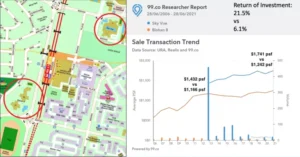
Sky Vue sat further from Bishan MRT than Bishan 8, yet still came out ahead. Back in 2013, Bishan 8 (resale) was going for $1,166 psf while Sky Vue (new launch) cost more at $1,423 psf. Fast forward to 2021, Bishan 8 crept up to $1,242 psf, a 6.1% gain. Sky Vue jumped to $1,741 psf, a 21.5% gain, more than three times better, despite being the pricier, further-from-MRT option.
Fast forward to 2021 though, and the story flips. Bishan 8 had only inched up to $1,242 psf, a modest 6.1% gain over eight years. Sky Vue, despite being pricier and further from the MRT at launch, shot up to $1,741 psf, a 21.5% gain. That’s more than three times the return, even though Sky Vue started out as the “worse located” option.
New Launches vs Resale (2014) – The Panorama vs Grandeur 8
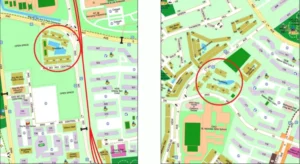
Same story, different neighbourhood. In Ang Mo Kio, Grandeur 8 (resale) was going for $997 psf back in 2014, while The Panorama (new launch) cost more at $1,289 psf. Years later, Grandeur 8 had barely moved to $1,035 psf, just a 3.6% gain.
The Panorama, meanwhile, climbed to $1,500 psf, a 16% gain, over four times better, even though it wasn’t the closer-to-MRT option either.
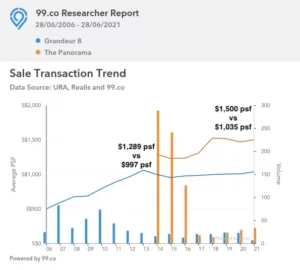
Years later, Grandeur 8 had barely budged, up to just $1,035 psf, only a 3.6% gain. The Panorama, meanwhile, climbed to $1,500 psf, a 16% gain. That’s more than four times the growth, again from the property that was further from the MRT and cost more to begin with.
New Launches vs Resale (2015) – Botanique at Bartley vs Bartley Residences
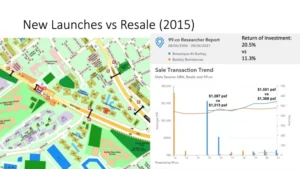
Both sat close to the MRT here, so this one’s a cleaner test of just age and lease. Bartley Residences (resale) moved from $1,213 to $1,368 psf, an 11.3% gain. Botanique at Bartley (new launch) moved from $1,287 to $1,551 psf, a 20.5% gain, almost double, even with no fresh land left nearby for future launches to push prices further.
Even with that flat backdrop, Bartley Residences grew from $1,213 to $1,368 psf, an 11.3% gain. Botanique at Bartley grew from $1,287 to $1,551 psf, a 20.5% gain, almost double, purely on the strength of being the newer property with a longer runway ahead.
New Launches vs Resale (2015) – Rio Vista vs The Florida vs Kingsford Waterbay

Three properties, same stretch of Upper Serangoon Road. Kingsford Waterbay (new launch) launched at $1,111 psf against Rio Vista’s $775 psf and The Florida’s $686 psf. By 2021, Kingsford Waterbay had returned 14.2%, while Rio Vista and The Florida managed only 6% and 5.1% respectively, less than half the gain, despite being the cheaper entry points at the time.
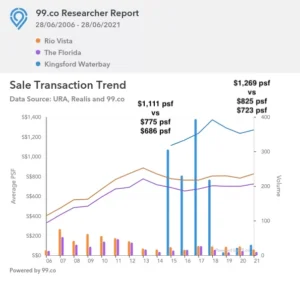
Kingsford Waterbay launched at $1,111 psf, considerably higher than Rio Vista’s $775 psf and The Florida’s $686 psf. By 2021, Kingsford Waterbay had delivered a 14.2% return. Rio Vista and The Florida managed only 6% and 5.1% respectively, less than half of what the pricier new launch achieved.
New Launches vs Resale (2015) – High Park Residences vs Compass Heights

This one’s a good MRT myth-buster. Compass Heights (resale) sat right by the MRT at $824 psf, while High Park Residences (new launch) sat further away at $982 psf. By 2021, Compass Heights had only grown 5.3%. High Park Residences grew 26.6%, nearly five times better, proving MRT distance mattered far less here than the property’s age and lease.
In 2015, Compass Heights, the closer, resale option, was priced at $824 psf. High Park Residences, further from the station, launched at $982 psf.
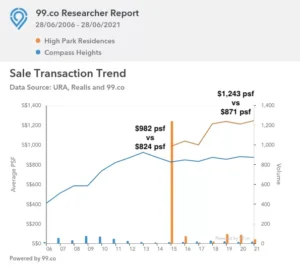
By 2021, Compass Heights had only grown 5.3%. High Park Residences grew 26.6%, nearly five times better, despite sitting further from the MRT the whole time. This is one of the clearest signals that lease and age matter more than walking distance to a station.
New Launches vs Resale (2015) – Kingsford Waterbay vs Kovan Melody
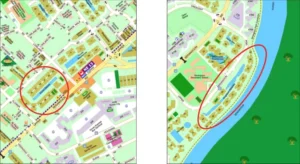
Another round with Kingsford Waterbay, this time against Kovan Melody, which actually sat right next to the MRT. Kovan Melody was priced lower at $1,076 psf against Kingsford Waterbay’s $1,111 psf. Even so, Kingsford Waterbay pulled ahead with a 14.2% return versus Kovan Melody’s 9.2%, further proof that lease and age outweigh MRT proximity.
Kovan Melody was the cheaper option at $1,076 psf, against Kingsford Waterbay’s $1,111 psf, a small but real price gap in Kovan Melody’s favour at the time.
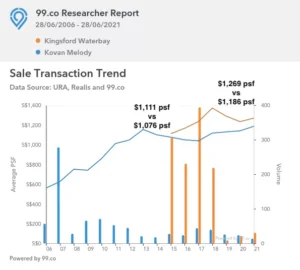
By 2021, Kingsford Waterbay still came out ahead with a 14.2% return, compared to Kovan Melody’s 9.2%. Even sitting right next to the MRT wasn’t enough to close the gap.
New Launches vs Resale (2016) – Kovan Residences vs Stars of Kovan
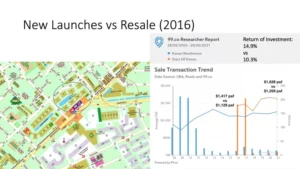
Both properties sat near an MRT station here, so this comparison strips out location almost entirely. Stars of Kovan, the newer launch directly across from Kovan Residences, delivered a 14.9% return. Kovan Residences, the resale option, came in at 10.3%, a smaller but still consistent gap in favour of the newer property.
New Launches vs Resale (2017) – Clement Canopy vs Queens

This pairing tests distance to the city centre specifically. The Queens (resale) sat closer to town and launched at $1,172 psf. Clement Canopy (new launch), further from the centre and pricier at $1,371 psf, still won out with a 16.1% return against The Queens’ 6.6%, suggesting city centre proximity isn’t the deciding factor either.
In 2017, The Queens, the resale property closer to the centre, sold at $1,172 psf. Clement Canopy, further from town, launched pricier at $1,371 psf.
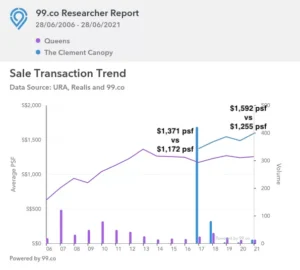
Despite being further from the city centre and more expensive at launch, Clement Canopy still returned 16.1%, well ahead of The Queens’ 6.6%. Proximity to the CBD didn’t end up being the deciding factor here either.
New Launches vs Resale (2018) – Highline vs The Regency
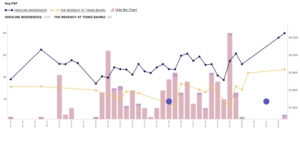
In Tiong Bahru, Highline Residences (new launch, TOP 2018) started at $1,724 psf in 2015 and reached $2,252 psf by 2018, a 30.63% gain. The Regency (resale) moved from $1,639 to $1,836 psf over the same stretch, a 12.02% gain, less than half of Highline’s growth.
By 2018, Highline Residences had climbed to $2,252 psf, a 30.63% gain. The Regency reached $1,836 psf, a 12.02% gain, less than half of what the newer property delivered over the same three years.
New Launches vs Resale (2019) – Poiz Residences vs Sennett Residence
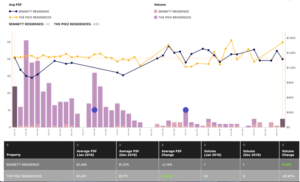
New Launches vs Resale (2020) – Forest Woods vs Casa Cambio
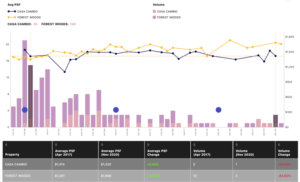
New Launches vs Resale (2021) – Queens Peak vs The Queens
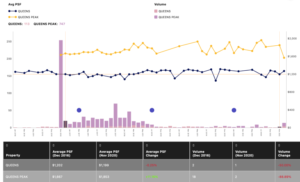
New Launches vs Resale (2022) – Park Colonial vs Avon Park
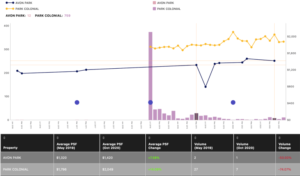
What Made These Comparisons Fair
To keep this a genuine apples-to-apples test rather than cherry-picked outliers, SG Luxury Condo selected each pairing using consistent criteria: the two properties sit close to each other geographically, so location quality is roughly held constant, and the comparison spans a similar multi-year holding period, so short-term market noise doesn’t skew the result.
A few of the pairings specifically isolate individual variables worth calling out:
- Bishan 8 sat directly next to Bishan MRT, while Sky Vue was further away, yet Sky Vue still delivered more than three times the return. This suggests MRT proximity alone doesn’t determine outperformance.
- The Queens sat closer to the city centre than Clement Canopy, yet Clement Canopy still won decisively on return, suggesting distance to the CBD isn’t the deciding factor either.
- Kovan Melody sat right beside the MRT station, while Kingsford Waterbay had no nearby MRT at all, and Kingsford Waterbay still posted the stronger return.
So What Actually Drives the Difference?
Based on this data, the single factor that mattered consistently was the age and remaining lease of the property. A new launch bought with a fresh 99-year lease, or a freehold title in some cases, simply has more runway ahead of it than a resale unit that may already be 10, 20, or 30 years into its lease term.
There’s also a structural, valuation-driven reason new launches tend to outperform. Developers can effectively influence how a bank values a new launch unit, since there’s limited comparable transaction history to argue against at the point of sale. Resale properties, by contrast, always have to match an independent bank valuation based on recent comparable transactions nearby, which naturally caps how aggressively prices can move in the short term.
One more consistent pattern worth knowing: property prices in an area tend to keep climbing until a new development launches nearby. Once that happens, prices in the older surrounding stock tend to stagnate, as buyer attention and capital shift toward the newer, fresher supply.
Who Should Actually Buy Resale Instead?
None of this means resale is a bad choice, it simply serves a different buyer profile. Resale properties tend to make more sense for:
- Buyers who need to move in immediately and can’t wait two to four years for a Building Under Construction project to complete
- Buyers who can’t afford ABSD upfront and haven’t sold their existing property yet, since resale purchases don’t require the same upfront cash commitment a second-property new launch purchase does
- Buyers prioritising immediate rental income over long-term capital appreciation, since a resale unit can start generating rent from day one
- Buyers who haven’t run the numbers and simply default to what feels like the safer, more familiar option without comparing the actual return data
Is It Worth Renting While You Wait for a New Launch?
This is the practical question that trips up a lot of buyers who can’t buy first and sell later. Say you’re deciding between a $1,000,000 resale unit you can move into immediately, versus a similarly priced new launch you’ll need to wait for.
If you rent a four-room HDB flat at roughly $2,500 a month while your new launch is under construction, that rental cost adds up, but it’s worth weighing against the full cost picture. Once you factor in mortgage interest, property tax, and maintenance across both scenarios, along with renovation costs (typically higher for a resale unit needing updates versus a brand-new unit), the total cost of ownership across the waiting period can actually work out lower for the new launch route in many cases, even after paying rent the whole time.
The honest takeaway: don’t assume buying resale is automatically the “cheaper” or “safer” path just because it avoids a rental gap. Run the actual total cost comparison, including the return data above, before deciding.
The 2025-2026 Market Context
This pattern hasn’t faded with time either. Developer sales in Singapore hit 10,815 new units in 2025, a 67% jump year-on-year, the strongest primary market showing in years, even as overall transaction volumes cooled somewhat into early 2026. That continued strength in new launch demand suggests buyers are still voting with their wallets for fresher stock over older resale alternatives, consistent with what this case study data has shown since 2013.
If you want to understand the mechanics behind why developers can sustain this kind of pricing power, our companion piece on why new launch condos beat resale for upgraders goes deeper into the upgrader-specific angle, while our breakdown of developer pricing strategy explains the valuation mechanics in more technical detail.
The Bottom Line
If there’s one thing to take away from comparing new launch vs resale performance across nine real Singapore case studies, it’s this: the age and lease profile of a property matters far more than its distance to an MRT station or the city centre. New launches have consistently delivered double-digit returns, often two to three times what comparable resale properties nearby achieved over the same period.
That said, resale still has a real place for buyers who need immediate housing, can’t afford ABSD upfront, or are prioritising rental income over capital growth. If you’re weighing this decision for your own situation, our ABSD guide and mortgage affordability calculator are worth checking before you commit either way.
A Word From SG Luxury Condo
Every buyer’s situation is different, and this data isn’t a guarantee that any specific new launch will outperform any specific resale unit. But the consistency across nine independent pairings, spanning different districts, different MRT distances, and different years, is hard to ignore. If you’re weighing a new launch against a resale option in the same area, SG Luxury Condo is happy to run the actual comparable data for you before you decide. Our property consultation sessions cover exactly this kind of side-by-side analysis, and you’re welcome to browse our full range of luxury condos for sale in Singapore if you’re ready to start comparing options.