Every city needs a plan. In Singapore, that plan comes from URA, the Urban Redevelopment Authority. Every five years they update it, deciding how land gets used for homes, jobs, transport, parks, and everything in between, for the next 10 to 15 years. It sounds dry on paper. It’s actually one of the most useful things a property buyer can read, because it tells you which neighbourhoods are about to change, years before anyone else notices.
This latest round, the URA Draft Master Plan 2025, went through the biggest public consultation URA has ever run. Close to 220,000 people had their say between late 2023 and mid 2025. For anyone buying or investing, that’s not just civic trivia. It’s a genuine head start on where growth, new infrastructure, and future demand are actually headed.
TL;DR
- It’s no longer a draft. Gazetted on 1 December 2025, it’s now the official, legally binding plan
- Built around four ideas: a happy healthy city, sustainable growth, urban resilience, and protecting nature and heritage
- Over 80,000 new homes planned across 10-plus emerging neighbourhoods
- Only 1.1% of Singapore’s land parcels actually changed zoning between the 2019 and 2025 plans, most of the island stayed the same
- Key growth spots to watch: Dover-Medway, Newton, Paterson, Paya Lebar Air Base, Bishan, Jurong Lake District
- Jobs keep moving out of the CBD into new hubs like Woodlands and Bishan
- Heritage areas and neighbourhood character get protected even as redevelopment happens around them
Why This Plan Actually Matters If You’re Buying Property
Think of the Master Plan as Singapore’s blueprint. It makes sure there’s enough housing, enough workplaces, enough green space, and it does this while trying not to bulldoze everything that gives a neighbourhood its character. For property buyers, it works almost like a treasure map. It shows you where growth is heading, what’s about to get built nearby, and where value tends to build up over the next decade, usually well before that shows up in actual sale prices.
The Interplay of Forces Shaping URA Master Plan 2025

It’s Not a Draft Anymore, Here’s What Changed
Quick but important update. This plan has already gone through its full process. It got officially gazetted on 1 December 2025. That means it’s now called Master Plan 2025, and it’s the real, legally binding land use plan running the show right now, not a draft waiting on feedback anymore. The public exhibition, which ran from June to November 2025 across URA Centre and 14 other spots, pulled in almost 250,000 visitors. That’s the biggest turnout URA’s ever had for one of these.
Here’s a number worth sitting with too. When people compared this plan against the old 2019 one, parcel by parcel, only about 1.1% of Singapore’s 113,394 land parcels actually had their zoning or plot ratio changed. So this isn’t some island-wide shake-up. It’s targeted, specific changes in a handful of growth corridors, which is exactly why knowing which pockets those are matters so much.
What’s Genuinely New This Time Around
The Master Plan itself isn’t new. It’s been shaping Singapore since independence, it’s the reason Tampines and Jurong became regional hubs, why Punggol got built out, why we have the Rail Corridor. What sets this particular edition apart:
- The biggest public engagement URA’s ever done. Nearly 220,000 people weighed in through workshops, surveys, and exhibitions, some even used AI tools to visualise their feedback
- More focus on inclusivity. Not just housing counts, but genuine accessibility for elderly residents, families, and different lifestyles
- Climate resilience baked in from the start. More land set aside for flood protection, cooling green spaces, and general climate infrastructure
- Decentralisation, but louder this time. URA’s pushed jobs out of the CBD since 1991, but this plan goes harder, building up new hubs in Bishan, Woodlands North, Dover-Medway, and Seletar
- A real push on heritage. Instead of just protecting a handful of famous landmarks, this plan names specific “identity nodes” meant to keep a neighbourhood feeling like itself even as things around it change
Theme 1: A Happy, Healthy City
New estates are being built so schools, clinics, supermarkets, and hawker centres actually sit within walking distance, not a bus ride away. Parks, cycling paths, and small “play spaces” get built right into the estate from day one instead of squeezed in as an afterthought. There’s also a stronger push for age-friendly design, lift access, step-free walkways, eldercare hubs nearby, so residents can actually stay in their neighbourhood as they get older.
For buyers, this basically means newer precincts should feel genuinely more liveable. Good news if you’re raising a family or thinking ahead to retirement.
Theme 2: Sustainable Growth Through Decentralisation
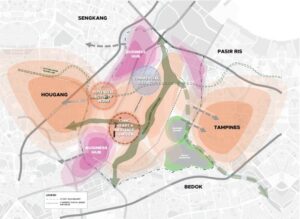
Jobs are moving closer to where people actually live, instead of everyone commuting into one crowded centre. A few hubs worth knowing:
Hub | What’s Happening There |
Jurong Lake District | Being built up as a “Western Gateway” for finance and research |
Bishan Sub-Regional Hub | New offices, a polyclinic, better transport links |
Dover-Medway | Growing one-north into a bigger research and innovation zone |
Paya Lebar Air Base | A huge new township mixing housing with commercial space |
Woodlands Regional Centre | Riding on the Johor-Singapore Special Economic Zone and the upcoming RTS Link |
If you’re investing, homes near these newer job hubs tend to see stronger rental demand and steadier price growth over time, since tenants tend to follow the jobs.
Theme 3: Urban Resilience
Planning is going underground too, and not just for carparks. Think future utility lines, walkways, even some commercial space, freeing up ground-level land for housing and greenery instead. New estates are also being built with climate risk in mind, better flood resistance, shaded walkways, more energy-efficient buildings, and land itself is being planned with more flexibility so it can adapt as needs shift over the decades.
This matters more than it sounds for long-term investing, especially if you’re the type of buyer who cares about sustainability credentials, not just square footage.
Theme 4: Stewarding Nature and Heritage
Growth here isn’t happening at the cost of identity. Buildings like the NatSteel Pavilion and Pasir Panjang English School are being protected, and areas like Siglap and Newton are called out specifically as places meant to keep their character intact, even with redevelopment happening around them.
On the nature side, expect the Rail Corridor to grow, along with the Greater Rustic Coast and more park connectors, plus a livelier Marina Bay with more dining, events, and waterfront activity. For buyers who care about lifestyle as much as returns, being near one of these heritage or green pockets tends to add a kind of value that’s hard to put a number on, but people clearly pay for it.
Where the 80,000 New Homes Are Actually Going
The headline number here is over 80,000 new homes, spread across more than 10 growth areas. The ones worth actually paying attention to:
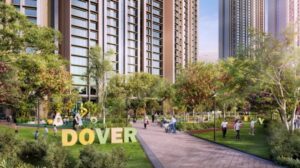
- Dover-Medway (Greater one-north): A tech-and-research-heavy community with housing built right in
- Newton & Paterson: City-fringe living, close to Orchard, likely to sit at the pricier end
- Paya Lebar Air Base: A massive new township, aviation-themed design, housing and commercial mixed together
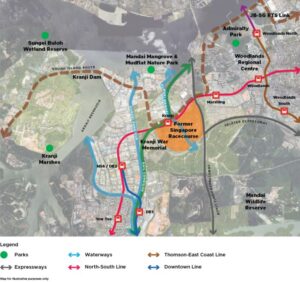
- Former Singapore Racecourse (Kranji): A northern, greener pocket blending nature and new homes
- Sembawang Shipyard: Waterfront living with a maritime heritage twist
- Tanjong Rhu: Waterfront living, possibly over 5,000 new homes here alone
- Bishan Sub-Regional Hub: New offices, healthcare, a genuinely refreshed town centre
- Jurong Lake District Expansion: A new 39.2-hectare business and industrial zone
Buying early into areas like these has historically paid off once infrastructure actually shows up. Just know it takes patience, these things unfold over years, not months.
Master Plan 2025 vs Master Plan 2019: What Actually Changed
It’s worth being upfront here. With only 1.1% of all land parcels seeing a real zoning or plot ratio change compared to 2019, most of Singapore’s land use didn’t move at all. That’s not a knock on the plan, URA tends to move carefully rather than rip everything up at once. But it does mean the real opportunity sits specifically in the pockets that did change, not some blanket “everything’s different now” story you might see in a headline. Knowing exactly which parcels shifted is worth more than skimming a summary article, this one included.
How Long Before This Actually Shows Up in Property Prices?
This is the question most buyers actually want answered, and it’s fair. Master Plan changes rarely move prices overnight. Historically, the pattern looks something like this: prices start creeping up once a rezoning or new infrastructure project is confirmed, they can dip slightly during years of noisy construction, and then climb again once things actually open and the area starts functioning the way the plan intended. That whole cycle can take anywhere from 5 to 15 years, depending on how big the change is. If you’re chasing a quick flip based purely on a Master Plan announcement, you’re probably a bit early. If you’re comfortable holding for the long run, that’s really where this plan becomes useful.
What This Means If You’re Buying or Investing
For buyers and investors, this plan is genuinely more useful as a guide than as trivia. A few practical takeaways:
- Get in early on the named growth nodes. Dover, Newton, and Paya Lebar Air Base all carry real long-term demand signals
- Follow the jobs. Jurong, Bishan, and Woodlands North should benefit as more companies move closer to where people live
- Don’t ignore lifestyle value. Properties near the Rail Corridor, Marina Bay, or one of the new identity nodes carry appeal beyond just the numbers
- Watch the sustainability angle. More buyers care about climate-resilient features than they did five years ago
- Remember timing matters. Buyers who got in early on past growth corridors tended to do better than those who waited until the area was already “discovered”
How to Check What’s Planned Near a Property You’re Eyeing
Don’t just take a summary’s word for it, including this one. You can search any specific address directly through URA’s own Master Plan 2025 land use layer and see the actual zoning, plot ratio, and any gazetted changes for yourself. Our other guide on using the URA Master Plan to navigate property investment walks through exactly how to read that data properly.
A Word From SG Luxury Condo
The URA Draft Master Plan 2025, now just Master Plan 2025, is more than a planning document. It’s Singapore’s roadmap for the next 10 to 15 years, built around a happy, healthy, sustainable, resilient city. For homeowners, it’s a promise of better amenities down the road. For investors, it’s genuinely a map worth studying before everyone else catches on.
If you want help figuring out what this plan actually means for your next move, whether that’s upgrading, investing, or picking your very first home, SG Luxury Condo is happy to sit down and go through it with you. Our property consultation sessions cover exactly this kind of forward-looking planning, and you’re welcome to browse our full range of luxury condos for sale in Singapore once you’ve got a growth area in mind.