TL;DR: Property investment in Singapore rewards patience over speculation. HDB resale has posted the strongest capital appreciation since 2019 at roughly 7.2% a year, ahead of landed property at 6.1% and CCR condos at a more modest 3.5%. Rental yields run in the opposite direction, CCR condos typically yield 2.5% to 3.8%, while OCR suburban condos often do better on cash flow. ABSD is the single biggest drag on returns for anyone buying a second property, and holding for less than four years exposes you to Seller’s Stamp Duty on top of that. The right strategy depends entirely on whether you’re chasing yield or appreciation, and matching the right district to that goal matters more than chasing the highest headline number.
When we first built out our Property P.L.U.S System at SG Luxury Condo, a handful of patterns kept showing up over and over in the data, the same questions, the same confusions, the same mistakes. Property investment Singapore style comes with its own quirks that don’t necessarily apply anywhere else, ABSD, TDSR, lease decay, and a government that actively manages the market rather than leaving it to run wild. So instead of generic advice, SG Luxury Condo pulled together what the actual numbers tell us right now.
Rental Yield vs Capital Appreciation: Know Which Game You’re Playing
This is the first thing worth sorting out before anything else. Property investment Singapore strategies generally fall into one of two camps, and trying to optimise for both at once usually means doing neither particularly well. Most buyers we meet haven’t actually decided which camp they’re in before they start viewing units, which is exactly how they end up with a property that doesn’t quite fit either goal.
Rental Yield Focus | Capital Appreciation Focus | |
Best unit type | 1-bedroom, smaller footprint | 2 to 3-bedroom |
Best region | OCR (Outside Central Region) | RCR and select CCR pockets |
Typical gross yield | 3.5% to 4.8% | 2.5% to 3.8% |
Liquidity on resale | Slower, more niche buyer pool | Faster, broader owner-occupier demand |
Best suited for | Investors prioritising monthly cash flow | Investors with a longer hold, chasing profit on exit |
Smaller Units Generally Win on Rental Yield
If cash flow is your main goal, a 1-bedroom unit tends to outperform larger layouts. It’s not just easier to rent out, it typically carries a better yield than a comparable 2-bedroom in the same building, since the psf tends to run higher on smaller units while rent doesn’t scale down at the same rate. We’ve gone deeper into the actual numbers behind this in our analysis of 1-bedroom properties in Singapore, worth a read if yield is genuinely your priority.
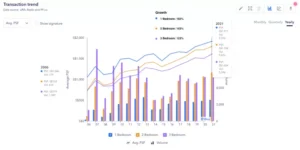
1-bedroom units consistently show the strongest rental yield range, roughly 3.3% to 4.6%, clearly ahead of 2 and 3-bedroom units in the same comparison.
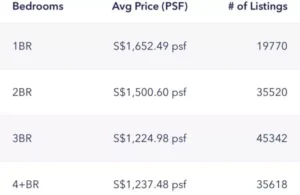
This lines up with the psf data too, 1-bedroom units consistently command the highest price per square foot compared to 2 and 3-bedroom layouts, part of why the yield math favours smaller units
Region matters here too. Gross rental yields for private condos broadly sit in the 3.0% to 3.8% range across Singapore in 2026, though OCR suburban towns near employment hubs tend to land at the higher end, while CCR increasingly behaves like a capital-preservation play rather than a cash-flow one.
Mid-Sized Units in RCR and OCR Win on Capital Appreciation
If your goal is profit on exit rather than monthly rent, the data points somewhere different. 2-bedroom units in the RCR, or 2 to 3-bedroom units in the OCR, tend to deliver stronger capital appreciation and resale demand than smaller units. These sizes are the sweet spot for owner-occupiers, affordable enough to be in genuine demand, spacious enough to suit a family, which keeps the resale pool consistently deep.
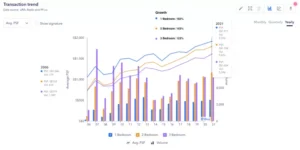
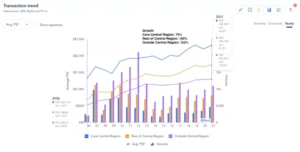
Comparing growth by unit size confirms the pattern, 2-bedroom units in the RCR and 2 to 3-bedroom units in the OCR have shown stronger capital appreciation than smaller 1-bedroom units, largely because they attract a deeper pool of owner-occupier demand
Zooming out to the broader market, capital appreciation since 2019 has actually been strongest in HDB resale, at roughly 7.2% a year, and landed property, at around 6.1%, both comfortably ahead of CCR non-landed condos at 3.5%. That chronic HDB resale strength comes largely from undersupply in mature estates and steady demand from buyers who missed out on a BTO ballot and are paying market price instead.
New Launches Generally Beat Resale on Profit Margin, But Timing Matters
Under-construction units tend to post stronger capital gains than resale properties bought at the same time, largely due to how developers price and structure new launches. We’ve covered the mechanics behind this in detail in our pieces on developer pricing strategy and our new launch versus resale case study research, both worth reading if you’re weighing this specific decision.
That said, this doesn’t mean CCR or RCR properties automatically deliver stronger sales just because they have higher rental demand. Rental demand and resale speed are genuinely two different things, and conflating them is a common mistake in property investment Singapore decision-making.
ABSD Is the Single Biggest Drag on Investment Returns
If there’s one number that changes the entire calculus of a second property purchase, it’s Additional Buyer’s Stamp Duty. A Singapore Citizen buying a second property pays 20% ABSD, payable entirely in cash, not CPF. On an $1.8 million purchase, that’s $360,000 locked up before you’ve earned a cent of rental income.
Once ABSD gets amortised over a typical 10-year hold, along with financing costs and operating expenses, an OCR condo investor might net somewhere around 3% to 4.5% annualised total return, and that’s assuming genuine capital appreciation of around 4% a year alongside it. First-property buyers, whether Singapore Citizens paying 0% ABSD or PRs paying 5%, see meaningfully better net returns simply because they’re not starting so far in the hole.
Location Alone Doesn’t Guarantee Faster Resale
Properties closer to the city centre are generally easier to rent out, keeping vacancy periods shorter. But that same closeness to the CBD doesn’t automatically translate into faster resale. CCR properties, despite strong rental demand, can actually take longer to sell than comparable units further out, partly because the buyer pool for prime, expensive stock is naturally smaller than the pool for more affordable OCR and RCR units.
Watch Out: When Property Investment Singapore-Style Doesn’t Make Sense
Not every scenario favours direct property ownership, and it’s worth being honest about when the numbers genuinely don’t work.
- You’re a foreigner. The flat 60% ABSD makes most scenarios uneconomic unless you’re buying primarily for lifestyle rather than yield
- You’re planning to hold less than 4 years. Seller’s Stamp Duty eats into your exit proceeds significantly if you sell within that window
- You’re chasing yield alone without considering appreciation. In Singapore, capital appreciation has historically been the primary wealth driver, rental yield is genuinely supplementary, not the main event
- You haven’t stress-tested your cash flow. A property that’s cash-flow negative every month, relying entirely on future appreciation to make the numbers work, is a riskier bet than most buyers realise going in
- You’re buying without a clear exit strategy. Knowing roughly when and why you’d sell shapes which unit type and region actually suits you
Putting the Facts Together: A Simple Framework
If your objective is long-term rental income and you’re comfortable with a longer holding period, a 1-bedroom unit in the CCR or RCR, closer to the city, tends to check the most boxes for a property investment Singapore strategy built around cash flow.
If you’re planning to exit within 3 to 5 years and want stronger capital gains, a 2 to 3-bedroom property in the RCR or OCR generally offers the better risk-adjusted setup.
And if you genuinely don’t know your exit timeline yet, which is common and completely fine, a 2-bedroom unit in the RCR or OCR tends to be the most flexible choice, broad enough appeal for resale, reasonable yield if you end up renting it out longer than planned. This is exactly the kind of framework SG Luxury Condo walks new investors through before they’ve even started shortlisting specific projects.
A Word From SG Luxury Condo
None of these facts function as a guarantee, property investment Singapore-wide still depends heavily on which specific project, district, and entry price you’re working with. But understanding these broad patterns before you start shortlisting saves you from chasing the wrong metric for your actual goal, or worse, not having a clear goal at all.
If you’re weighing your own property investment Singapore strategy and want the actual numbers run against your specific situation, SG Luxury Condo is happy to walk through it with you. Our property consultation sessions cover exactly this kind of goal-matching exercise, and our mortgage affordability calculator can show you what a second property purchase, including the ABSD hit, actually looks like for your budget. You’re also welcome to browse our full range of luxury condos for sale in Singapore once you’ve settled on a clear strategy.