15 or 30-Year Mortgage
Categoriesarticles

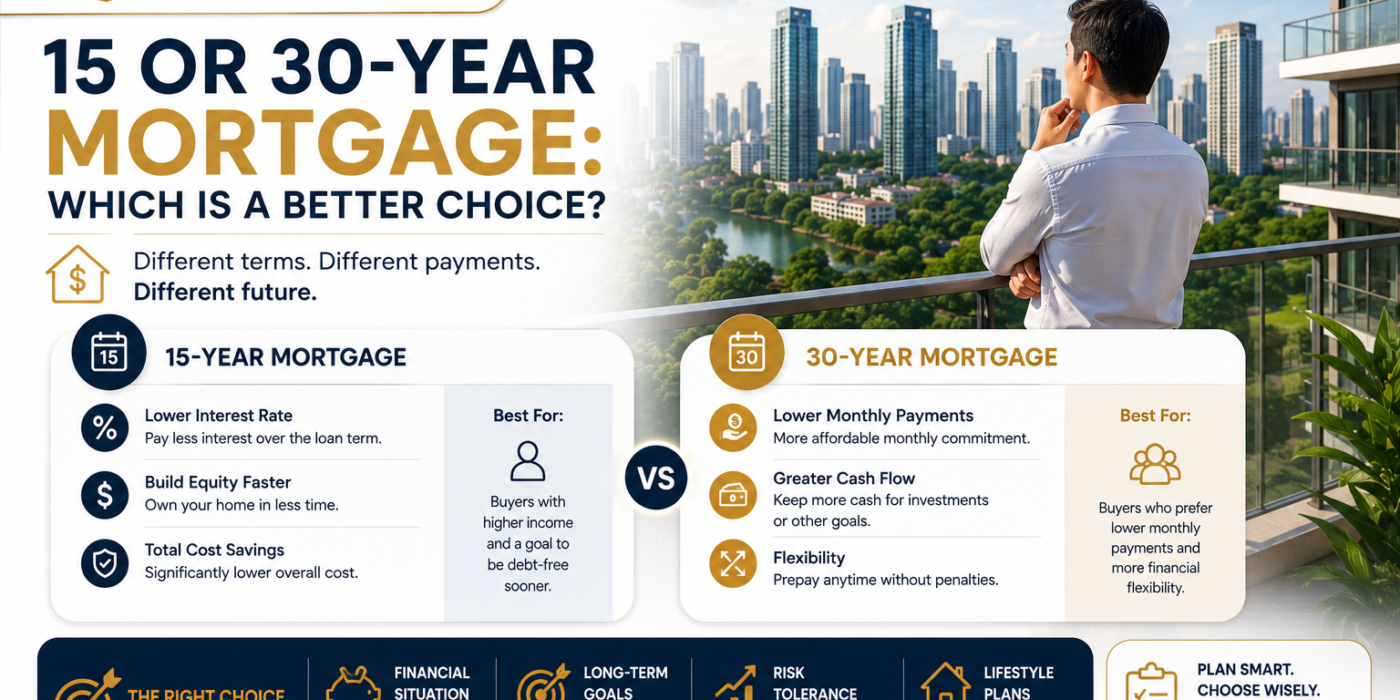
15 or 30-Year Mortgage: Which Is a Better Choice?

Quick Answer: 15-Year vs 30-Year Mortgage at a Glance

Factor

15-Year Mortgage

30-Year Mortgage

Monthly payment

Higher

Lower

Interest rate

Typically higher

Typically lower

Total interest paid

Less

More

Equity build-up

Faster

Slower

Cash flow flexibility

Tighter

More breathing room

Best for

Disciplined savers, higher income

Buyers who want flexibility, investors

Difference #1: Loan Term and Monthly Payment

Start with the obvious bit. One loan gets paid off in half the time of the other, so with a 15-year mortgage you’re making roughly half as many payments as you would with a 30-year one, just each payment is a lot bigger.

Take a $1,000,000 property with a $250,000 down payment, so $750,000 financed:

  • 15-year mortgage: around $6,207 a month
  • 30-year mortgage: around $3,451 a month, about $2,756 less

That gap right there is basically the whole decision. Thirty years buys you breathing room today. Fifteen years forces the debt down faster, whether you feel like paying that much or not.

Difference #2: Interest Rate and Total Interest Paid

Here’s something a lot of people get backwards: a 15-year loan usually carries a higher interest rate than a 30-year one, not lower. Banks are taking on a bigger monthly obligation from you relative to your income, and pricing reflects that.

But don’t let the rate fool you. Because you’re paying the loan off in half the time, you still end up paying a lot less in total interest over the life of the loan, even with the higher rate attached to it.

Same $750,000 loan:

  • 15-year mortgage: roughly $117,338 in total interest
  • 30-year mortgage: roughly $242,433 in total interest, about $125,000 more

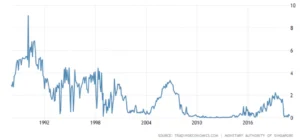
So if minimising total interest is your priority, the 15-year loan still wins, just not for the reason most people assume. If you want to see where Singapore housing interest rates actually stand right now, it’s worth checking before you run your own numbers.

Singapore-Interest-Rate-1

What Actually Moves Your Mortgage Rate

It’s tempting to assume the loan term is the only thing setting your rate. It’s not. A few things stack together to decide what you’re actually offered:

  • Loan term — shorter terms often price higher because of the larger monthly commitment
  • Loan-to-value ratio — a bigger down payment can pull the rate down
  • Prevailing benchmark rates — SORA here in Singapore moves with the broader economy

Two people applying for the same 30-year mortgage can walk away with different offers. The loan term is just one piece of that pricing puzzle. If you want to see how this plays out at the market level, our breakdown on how interest rates affect Singapore property prices is worth a read.

How Interest Rates Ripple Through Singapore’s Property Market

It’s not just your personal payment that moves when rates shift. Interest rates set the tone for buyer demand across the whole market. When rates climb, monthly payments climb with them, and that cools how much buyers are willing to stretch for a unit. When rates fall, borrowing gets cheaper, buyers get bolder, and prices tend to firm up.

That’s part of why timing matters almost as much as term length. If you’re weighing this against a purchase decision right now, it’s worth checking how much property you can realistically afford before locking in a term either way.

Difference #3: How Fast You Build Equity

Here’s the thing about a 15-year loan: more of every payment goes toward the actual amount you owe, not the interest sitting on top of it. So you own a bigger chunk of the home sooner. If you want to be mortgage-free before you retire, or you like the idea of having equity ready to tap into later, that’s the appeal.

A 30-year loan works the other way around. In the early years, most of what you’re paying is interest, so your ownership stake grows slowly at first. That’s not a design flaw. It’s just the price of a smaller monthly bill.

Why Property Investment

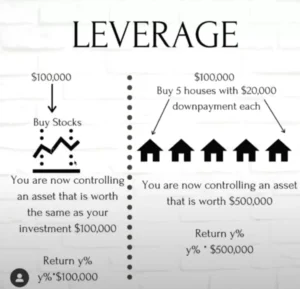
Difference #4: Cash Flow, Investing, and the Power of Leverage

This is the part almost nobody actually runs the numbers on, and it might be the most important one on this whole page.

A 15-year mortgage saves you on interest, sure. But it also locks up more of your income every single month. If you’re still building an emergency fund, paying off other debt, or you’d rather have money working for you elsewhere, that bigger payment can quietly hold you back for years.

With a 30-year loan, you keep that $2,756 monthly difference. Say you put it into a broad index fund, something tracking the S&P 500, earning a conservative 7% a year based on long-run averages. Stay consistent for 15 years and that habit could grow to somewhere around $231,490.

Compare that against the $125,000 you’d save in interest with the 15-year loan. Even netting that out, choosing the shorter term in this scenario could mean leaving over $100,000 of investment growth on the table. That’s the opportunity cost nobody mentions at the bank.

The catch, obviously, is that this only works if you actually invest the difference and leave it alone. That’s the whole game, and it’s harder than it sounds.

This is also why plenty of property investors and upgraders stick with a 30-year mortgage even when they could comfortably afford the shorter term. Extra cash on hand each month means capital ready for a renovation, a second property’s down payment, or just getting through a slow income year without missing a payment.

Where Your Mortgage Term Fits Into a Bigger Property Investment Strategy

If this is your only property, the calculus mostly stops at “what fits my household budget.” But if you’re thinking about this purchase as one piece of a longer property investment plan, the mortgage term changes what other moves are available to you.

A 30-year loan keeps more cash free for a second acquisition, a renovation that lifts rental yield, or cushioning you through a market dip without a forced sale. A 15-year loan builds equity you can eventually leverage through refinancing or selling, but it ties up capital you might have deployed elsewhere in the meantime. Neither is automatically the smarter investment move. It depends on what you’re trying to build over the next decade, not just the next mortgage statement. Our guide to property investment strategy in Singapore goes deeper into how financing choices tie into long-term returns.

Pros and Cons of a 15-Year Mortgage

Advantages:

  • Pay off your home in half the time
  • Save a meaningful chunk of money in total interest over the life of the loan
  • Build home equity much faster
  • Debt-free sooner, which matters heading into retirement

Disadvantages:

  • Higher interest rate than a 30-year loan, generally
  • Much higher monthly payment
  • Less room left over to save or invest elsewhere
  • Tighter cash flow if your income takes an unexpected hit

Pros and Cons of a 30-Year Mortgage

Advantages:

  • Lower, more manageable monthly payment
  • Lower interest rate than a 15-year loan, generally
  • Frees up cash for investing, savings, or other goals
  • More flexibility through unpredictable years, a career change, kids, a new venture

Disadvantages:

  • Pays noticeably more in total interest across the life of the loan
  • Builds equity more slowly in the early years
  • Only “wins” financially if you’re disciplined enough to actually invest the difference

So, Should You Take a 15-Year or a 30-Year Mortgage?

After all the maths, here’s the honest answer: it comes down to discipline, not arithmetic.

Take a 30-year mortgage if:

  • You’re confident you’ll actually invest the monthly savings instead of spending them
  • You want room for other goals, a business, a second property, your kids’ education
  • Your income is likely to grow and you’d rather keep payments manageable now
  • Liquidity matters more to you than shaving off interest

Take a 15-year mortgage if:

  • You find it hard to stick to an investment plan or investing feels intimidating
  • You want the forced-savings effect of a bigger, non-negotiable payment
  • Your income comfortably covers the higher amount with room left over
  • Being mortgage-free well before retirement matters to you

A Middle Ground: Hybrid Strategies

You don’t have to pick a lane forever. A couple of approaches blend the benefits of both:

  • Take the 30-year loan, but pay it down faster. Make voluntary extra payments toward the principal whenever your cash flow allows, without being locked into a bigger required payment during leaner months. You get the lower minimum payment as a safety net, and the option to chip away faster when you can afford to.
  • Refinance later. Start with a 30-year term for flexibility, then refinance into a 15-year term once your income grows or your other financial goals are already funded.

If you want to see how any of these play out against your own numbers before deciding, our mortgage calculator is a quick way to test scenarios without committing to anything.

Advanced Heading

Frequently Asked Questions

Is a 15-year mortgage always better than a 30-year mortgage?

Not necessarily. It saves more on total interest and builds equity faster, but only makes sense if the higher monthly payment doesn’t crowd out your other financial goals.

It varies by loan size and rate, but it’s common to see over $100,000 more paid across the life of the loan compared to a 15-year term.

Yes, either through refinancing, or by simply making extra principal payments on your existing 30-year loan without a formal refinance.

No, it’s actually the opposite. A 15-year loan typically comes with a higher rate than a 30-year loan, because you’re committing to a much larger monthly payment relative to your income. The trade-off is that you still pay less interest overall since the loan is paid off in half the time.

Credit score requirements don’t change based on which term you pick. The bank looks at your overall financial profile either way.

Usually the 30-year. The lower payment gives you flexibility, and the long-term interest savings of a 15-year loan matter less if you won’t hold the property for decades anyway.

Not really. A mortgage that leaves no room for emergencies or other goals isn’t really saving you money, it’s just moving the risk somewhere else. The interest saved only matters if you can comfortably absorb the higher payment.

Not really. A mortgage that leaves no room for emergencies or other goals isn’t really saving you money, it’s just moving the risk somewhere else. The interest saved only matters if you can comfortably absorb the higher payment.

Not typically. Down payment requirements are usually driven by the lender’s loan-to-value policy and your own finances, not the loan term itself.

Run both payments against your actual monthly budget, not just your current income. If the 15-year payment still leaves you comfortable with savings and some room to breathe, it’s a reasonable pick. If it feels tight even on paper, the 30-year term is the safer starting point. You can always pay it down faster later.

This decision shapes your finances for a couple of decades, so it’s worth getting right. If you know you’ll actually invest the difference a 30-year mortgage frees up, that route tends to build more long-term wealth. If you’d rather have the home paid off sooner and know, realistically, that you won’t stick to an investment plan, a 15-year mortgage does the discipline for you.

Run your own numbers, be honest about your habits, and pick the term that fits the life you’re actually living, not the one that looks best on a spreadsheet. And if you’re still weighing this decision against your next purchase, browsing luxury condos for sale in Singapore is a good place to see what different loan terms could realistically get you.

How to Find the Most Profitable Unit in the Entire Condo Development
Categoriesarticles

How to Avoid Unprofitable Properties in Singapore

TL;DR

  • Freehold status alone doesn’t guarantee profit, leasehold properties in the right location regularly outperform freehold ones nearby
  • Location matters, but it’s not the only factor, a great address with a poorly performing property still loses money
  • Amenities and eateries nearby are a bonus, not a core driver of resale value
  • Layout quality affects both daily living and long-term resale appeal more than most buyers realise
  • Developer reputation shapes how well a project ages and how much buyers are willing to pay over time
  • Developments with fewer than 150 units often carry weaker facilities and higher per-owner maintenance costs
  • Buyer’s profile, who can actually afford and want your property later, is the single most important factor of all
  • A real Singapore case study shows a leasehold condo outperforming a freehold one by a wide margin over 10 years

Real estate can genuinely build serious wealth, but only if you buy the right property. Buy the wrong one, and instead of an asset, you’re stuck with a financial burden that quietly drains money every month while barely moving in value. Learning how to avoid unprofitable properties really comes down to knowing which factors actually matter, and which ones just feel like they should.

EdgeProp recently published an analysis of four Geylang freehold condos that have actually lost money over time, a genuinely useful reminder that “freehold” and “good investment” aren’t the same thing. At SG Luxury Condo, this is exactly the gap our Property P.L.U.S System is built to close, so let’s walk through what actually separates a profitable property from an unprofitable one.

1-Loft Sims-Urban-Oasis-Property-Value

The Real Case Study: Sims Urban Oasis vs #1 Loft

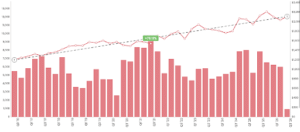
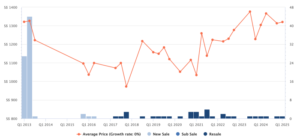
Sims Urban Oasis Price Trend

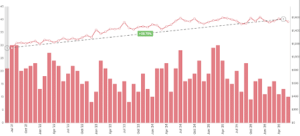
#1 Loft Price Trend

This comparison is genuinely one of the clearest illustrations of why avoiding unprofitable properties requires looking past the obvious factors. Sims Urban Oasis, a 99-year leasehold condo on Sims Drive, and #1 Loft, a freehold condo at Geylang Lorong 24, sit in the same district, District 14, and both are near an MRT station.


Sims Urban Oasis (99-Year Leasehold)

#1 Loft (Freehold)

District

14

14

MRT Proximity

Near a station

5-minute walk to a station

Surrounding Amenities

Fewer nearby eateries

More nearby eateries

10-Year Growth

38% (roughly 4% per year)

0%

Despite #1 Loft holding freehold tenure, being closer to the MRT, and sitting near more amenities, it made zero growth over ten years, while the leasehold Sims Urban Oasis grew 38% over the same period. If tenure, MRT distance, or nearby amenities were truly the deciding factors, #1 Loft should have won comfortably. It didn’t.

Myth 1: Freehold Always Beats Leasehold

Many buyers assume freehold properties are automatically the better investment. That isn’t necessarily true. The real value lies in the specific details, the property’s actual demand, its developer, its layout, and its buyer profile, not simply whether the tenure says “freehold” or “99-year leasehold.”

At SG Luxury Condo, tenure isn’t even a top factor we screen for when identifying genuinely profitable properties. Developer reputation, location fundamentals, unit count, layout quality, and buyer profile all carry more weight. For a deeper look at how tenure actually plays out across real transactions, our comparison of freehold versus leasehold properties and our breakdown of undervalued versus profitable properties both go further into this.

Myth 2: Location Alone Determines Profit

“Location, location, location” is true to a point, but it’s not the whole story. Both properties in our case study sit in the same district, near the same MRT line, yet one delivered a real return and the other delivered nothing.

Location attracts demand, but other elements, the property’s condition, future development plans in the area, rental yields, market timing, and even ongoing management costs, all shape long-term performance just as much. Overpaying for a poorly performing property in a great location can be just as risky as buying in a less popular neighbourhood at a fair price.

Myth 3: More Amenities Means More Profit

#1 Loft actually has more surrounding amenities than Sims Urban Oasis, more eateries nearby, and a shorter walk to the MRT, yet it still delivered 0% growth. Amenities are genuinely a bonus, not the core driver of value.

What’s worth weighing instead is the fuller picture: not just eateries and convenience stores nearby, but internal facilities too, pool size, gym quality, playground space, and how well those facilities are actually maintained. Amenities are good to have. They’re not, on their own, what determines whether a property is profitable.

Layout: The Factor Most Buyers Underrate

Many buyers focus heavily on location, price, and size, while overlooking layout almost entirely. But how a home’s rooms flow and connect can affect daily life, and eventual resale value, more than almost any other single feature.

  • Everyday functionality matters. A poorly designed layout, kitchen far from the dining area, awkwardly placed bathrooms, makes daily routines genuinely frustrating, no matter how nice the finishes look.
  • Layout determines how space actually feels. A smaller unit with a smart, open layout can feel more spacious than a larger one chopped into disconnected rooms. Natural light, sightlines, and flow between rooms all shape that feeling.
  • A good layout stays flexible for the future. A ground-floor bedroom, or an open-plan space that can be reconfigured, adapts to changing family needs without forcing a move.
  • Layout drives resale appeal. Homes with poor layouts tend to linger on the market longer and sell for less than similarly sized properties with better design.
  • Renovations can only fix so much. Cosmetic updates are easy. Reworking a genuinely bad layout, moving walls, adding bathrooms, often requires permits, structural engineers, and significant cost.

Since the pandemic, buyer preferences have shifted noticeably too, more demand for study rooms, bigger living rooms, master bedrooms that fit a king-sized bed, and enclosed kitchens. Developers responsive to these shifts tend to produce layouts that age better and hold buyer interest longer.

Developer Reputation Shapes Long-Term Value

Reputable, established developers tend to stay closer to what buyers actually want, often more responsive to shifting preferences than smaller or newer developers. This directly affects how a project’s layouts evolve, how well-built it is, and how buyers perceive it years down the line. A strong developer track record is one of the clearer signals worth checking before committing to any purchase, new launch or resale.

Why Unit Count Matters More Than People Think

A development’s total unit count is a genuinely underrated factor in avoiding unprofitable properties. Generally, developments with at least 150 units, and ideally more, tend to perform better for two structural reasons.

More facilities. A larger development sits on more land, and Singapore’s planning rules generally cap building footprint at around 40% of the land, with the remainder reserved for facilities. Some developments even push this further, with a land use ratio closer to 20-80 in favour of open and facility space. More land for facilities generally means a more attractive, better-equipped development.

Lower maintenance fees. With more owners sharing the cost of upkeep, individual maintenance fees, and the required sinking fund, tend to run lower. Small developments, while offering more privacy, often carry noticeably higher per-unit sinking fund contributions, which can turn off resale buyers down the line.

Buyer’s Profile: The Single Most Important Factor

If there’s one factor that ties everything else together, it’s this: before buying any property, ask yourself honestly who your eventual buyer will actually be. Can they afford it? Will they see genuine value in it? Will they actually make money if they buy it from you?

A property with a broad, realistic buyer profile sees stronger demand, and demand is what ultimately drives price, rental speed, and resale speed. A beautiful, well-priced property in a location nobody wants still won’t sell well, because without demand, none of the other factors matter. Properties with a strong buyer profile tend to see lower vacancy rates, better rental yields, and steadier price appreciation, while properties with a narrow or shrinking buyer pool can become a genuine liability, sitting empty and eating into your returns regardless of how nice they look on paper.

A Quick Checklist to Avoid Unprofitable Properties

  • Don’t assume freehold tenure alone guarantees a better return, check the actual performance data for comparable projects nearby
  • Weigh location against the property’s actual condition, future area development, and management quality, not the address alone
  • Treat amenities as a bonus, not a deciding factor
  • Study the floor plan closely, a poor layout limits both your daily comfort and future resale appeal
  • Check the developer’s track record on past projects before committing, especially for new launches
  • Favour developments with 150 or more units where possible, for better facilities and lower long-term maintenance costs
  • Above all, ask honestly who your future buyer will be, and whether they’ll genuinely see value in what you’re buying

A Word From SG Luxury Condo

Avoiding unprofitable properties in Singapore really comes down to research, a clear strategy, and disciplined decision-making, not falling in love with a property’s appearance or its address alone. Investors who dig into demand, layout, long-term costs, and genuine growth potential, rather than chasing tenure or nearby cafes, consistently make smarter, better-informed purchases.

If you’d like a second opinion on whether a specific property genuinely fits a profitable profile, SG Luxury Condo is happy to walk through it with you. Our property consultation sessions cover exactly this kind of due diligence, and our Property P.L.U.S System is built specifically to screen for the factors that genuinely matter. You’re also welcome to browse our full range of luxury condos for sale in Singapore once you know what to look for.

Advanced Heading

Frequently Asked Questions

Does freehold tenure guarantee a property will be profitable?

No. Our case study shows a 99-year leasehold condo, Sims Urban Oasis, growing 38% over ten years while a nearby freehold condo, #1 Loft, delivered 0% growth over the same period, despite being closer to the MRT and having more surrounding amenities.

It’s important, but not the only factor. Two properties in the exact same district, both near an MRT station, still delivered wildly different returns, showing that condition, developer, layout, and buyer demand all matter alongside location.

Not necessarily. #1 Loft had more nearby eateries and a shorter walk to the MRT than Sims Urban Oasis, yet still underperformed significantly, confirming that amenities are a bonus rather than a core value driver.

A poor layout limits daily functionality, makes a space feel smaller than its actual size, and tends to result in the property sitting longer on the resale market at a lower price compared to similarly sized units with better design.

Generally at least 150 units, since larger developments tend to offer more facilities relative to land size and lower individual maintenance fees, thanks to more owners sharing the same fixed costs.

Reputable developers tend to stay more responsive to evolving buyer preferences and deliver stronger build quality, both of which affect how well a project ages and how much future buyers are willing to pay.

It refers to who can realistically afford, and want, your property when you eventually sell or rent it out. Without a broad, genuine buyer profile, demand stays weak regardless of how attractive the property looks on paper.

Yes. Overpaying for a poorly performing or badly maintained property in a great location can be just as risky as buying in a less popular area at a fair price.

A smarter layout, generally. A smaller unit with an efficient, well-flowing design can feel more spacious and function better day to day than a larger unit with a poor, disconnected layout.

Don’t rely on a single factor, tenure, location, or amenities, in isolation. Profitable properties tend to score well across several factors together, developer reputation, layout, unit count, and genuine buyer demand, rather than excelling in just one area.

How to Find the Most Profitable Unit in the Entire Condo Development
Categoriesarticles

How to Find the Most Profitable Unit in the Entire Condo Development

TL;DR: Finding the most profitable unit in a condo development

  • Collect every unit’s price and size across the entire development, then calculate the psf for each
  • Plot this psf data as a bell curve (normal distribution) to see how pricing actually spreads across the project
  • The sweet spot for profitability consistently falls between the 25th and 55th percentile of that curve
  • Buying below the 25th percentile often means compromising on floor, facing, or stack quality
  • Buying above the 55th percentile means you’re paying a premium that’s harder to recoup on resale
  • Own-stay buyers should lean toward the higher end of that range (closer to the 55th percentile) for a better unit
  • Pure investors should lean toward the lower end (closer to the 25th percentile) to maximise margin
  • This method has helped clients achieve 20% to 40% stronger returns than neighbouring units in the same project

Here’s something most buyers never think to check. Within the exact same condo development, some units genuinely make more money than others, sometimes 20% to 40% more than a unit just a few floors away or one stack over. Same building, same facilities, same launch date, wildly different outcomes. So how do you actually find the most profitable unit in the entire condo development before you buy, instead of finding out the hard way years later?

At SG Luxury Condo, we’ve used a specific mathematical model, the bell curve, to help clients consistently identify these units, and it’s genuinely simpler to apply than it sounds. Here’s exactly how it works, and how you can use it yourself

What “Most Profitable Unit” Actually Means in a Single Development

Every condo development isn’t priced uniformly. A ground floor unit facing a car park sells for a genuinely different psf than a high floor unit with an unobstructed view, even though they might be in the exact same block, same layout, same year of completion. Most buyers instinctively understand this, but very few actually quantify it before choosing which specific unit to buy.

That’s the gap this method closes. Rather than guessing based on gut feeling, “high floor feels safer” or “corner unit feels nicer”, the bell curve method uses the development’s own actual pricing data to show you, mathematically, where the best value genuinely sits.

Step 1: Collect the Development’s Full Pricing Data

Bellcurve-Data

Before you can build a bell curve, and before you can genuinely find the most profitable unit in the entire condo development you’re considering, you need the raw numbers. For every unit in the development, whether it’s a new launch or a completed resale project, gather:

  • The unit’s price (asking price for new launch, transacted price for resale comparisons)
  • The unit’s size in square feet
  • From these two, calculate the psf (price per square foot) for every single unit

 Bell Curve Data Set for Condo in Terms of Price, Size, and PSF

For new launches, this data is usually available through the developer’s official price list. For completed developments, URA’s transaction data gives you actual caveats lodged for that specific project, which is more reliable than asking prices since it reflects what buyers genuinely paid.

Step 2: Build the Bell Curve

bell-curve-for-condo-pricing

Once you’ve got psf figures for every unit, plot them as a normal distribution, a bell curve. Most units will cluster around a central average psf, with fewer units priced significantly above or below that midpoint, the classic bell shape.

Finalised Bell Curve Showing PSF Distribution Across a Condo Development

Step 3: Identify the 25th to 55th Percentile Range

This is the core of the method, and it’s the part most buyers never think to calculate. Based on repeated analysis across multiple developments, the most consistently profitable units sit between the 25th and 55th percentile of the psf bell curve, not the cheapest units, and not the priciest ones either.

Percentile Range

What’s There

Should You Buy Here?

Below 25th percentile

Cheapest units, usually low floor, poor facing, or facing a wall/carpark

Often too compromised on quality to attract strong resale demand

25th to 55th percentile

The sweet spot, genuinely good units at a fair, undervalued price

Yes, this is where the strongest, safest returns consistently sit

Above 55th percentile

Premium units, high floor, best facing, corner units

Still fine for own-stay, but harder to recoup the premium on resale

Above 90th percentile

change to exceptional, premium stacks at the highest floor. 

Prestige buys, but the psf premium rarely translates proportionally into resale profit

Step 4: Choose Where You Sit Within That Range Based on Your Goal

Not every buyer should aim for the exact same spot within the 25th to 55th percentile band. Your own objective should shape where within that range you land.

  • If you’re buying for investment, lean toward the lower end of the range, closer to the 25th percentile. This maximises your margin, since you’re buying as close as possible to the floor of the “safe zone” without dropping into the compromised units below it.
  • If you’re buying for your own stay, lean toward the upper end, closer to the 55th percentile, or slightly beyond it if a specific feature genuinely matters to your family. You’ll pay a bit more, but you’re also getting a noticeably better unit to actually live in.

The one number worth avoiding either direction is straying meaningfully outside this range altogether. Units below the 25th percentile often carry a real reason for their discount, poor layout, bad facing, unfortunate stack, that a low price alone doesn’t fix. Units above the 55th percentile can still be excellent homes, but the extra premium becomes progressively harder to recover when you eventually sell.

Why This Method Actually Works

The logic behind this isn’t arbitrary. Units priced below the 25th percentile are usually cheap for a specific, structural reason, often something a buyer can’t easily change, like a low floor facing a busy road or a wall. Units above the 55th percentile are commanding a premium buyers are willing to pay upfront, but that same premium then becomes the ceiling you need a future buyer to also pay, a harder ask, especially in a softer market.

The 25th to 55th percentile band is where you get genuinely solid units, not the most compromised stock in the development, without paying for the very top-tier premium that’s hardest to recoup. It’s essentially finding where quality and price actually align, rather than chasing either extreme.

How This Connects to Floor and Stack Selection

This bell curve method pairs naturally with floor-level analysis too. Across hundreds of transactions, units in the roughly 5th to 15th floor range of a typical mid-rise development have historically delivered some of the strongest profit margins, broadly consistent with where they tend to fall within a development’s own psf bell curve. Our guide on strong property investment fundamentals covers this floor-and-stack pattern in more depth if you want the fuller picture.

A Worked Example

Here’s how you’d actually apply this to find the most profitable unit in the entire condo development you’re shortlisting. Say a development’s psf bell curve shows a 25th percentile of $1,098 psf and a 55th percentile of $1,129 psf. If you’re buying purely for investment, you’d target units priced close to $1,098 psf, right at the floor of the safe zone. If you’re buying for your own family to live in, you’d look closer to $1,129 psf or just under it, accepting a slightly higher entry price in exchange for a better unit. Either way, you’d avoid anything priced meaningfully above $1,129 psf, since that premium becomes harder to justify to a future buyer.

A Word From SG Luxury Condo

This bell curve approach has helped clients at SG Luxury Condo consistently outperform neighbouring units in the same development, sometimes by 20% to 40%, simply by replacing gut instinct with actual pricing data. You can check our track record to see how this kind of disciplined unit selection has played out for real clients over time.

If you’re shortlisting a specific development and want help applying this method to the actual units available, SG Luxury Condo is happy to run the numbers with you. Our property consultation sessions cover exactly this kind of detailed unit selection, and you’re welcome to browse our full range of luxury condos for sale in Singapore once you’re ready to apply this approach to a real shortlist.

Advanced Heading

Frequently Asked Questions

What does "most profitable unit in the entire condo development" actually mean?

It refers to the specific unit, out of all units in a single project, that offers the strongest combination of fair pricing and genuine quality, identified using the development’s own psf pricing distribution rather than guesswork.

Units in this range tend to avoid the structural compromises found in the cheapest units, while also avoiding the hard-to-recoup premium attached to the priciest units, making them the most consistently profitable band across many developments.

Not necessarily. Investors generally do better closer to the 25th percentile to maximise margin, while own-stay buyers often do better closer to the 55th percentile for a genuinely better unit to live in.

No, a standard spreadsheet with a normal distribution function is enough. A ready-made template can also speed up the process considerably.

For new launches, the developer’s official price list. For completed developments, URA’s transaction data gives you actual caveats lodged, which reflects real transacted prices rather than asking prices.

Not always, but it’s worth understanding exactly why it’s priced that low. Sometimes it’s simply undervalued, but more often it reflects a genuine drawback like poor facing or an unfavourable stack that’s harder to change later.

Yes, as long as you can gather enough transaction data across the development to build a meaningful distribution, this method works for both new launches and completed resale projects.

Floor level is one of the biggest drivers of where a unit falls on the psf curve. Mid-range floors, roughly 5th to 15th in a typical mid-rise, often land within or near the profitable 25th to 55th percentile band.

Rarely. Penthouses and top-tier stacks typically sit well above the 55th, often above the 90th percentile, commanding a prestige premium that doesn’t proportionally translate into resale profit.

Based on real client outcomes, applying this method has helped achieve returns 20% to 40% stronger than neighbouring units in the same development, though individual results always depend on the specific project and market conditions.

MRT Lines That Add the Most Value to Your Property Purchase
Categoriesarticles

MRT Lines That Add the Most Value to Your Property Purchase

TL;DR: Not every MRT line moves property value the same way. The Thomson-East Coast Line and Circle Line currently punch above their weight because they link mature residential pockets straight into the CBD and Orchard without forcing a transfer. The Downtown Line does something similar for the western side of the island. Older lines like the North-South and East-West lines give you stability rather than upside — the growth already happened decades ago. The Cross Island Line is the one to watch if you’re buying early and can wait, since it’s opening up estates that have never had a station at all. Buy within 400–500 metres of a station, on a line that’s actually going somewhere useful to you, and you’re playing the odds correctly.

I get this question constantly from clients scrolling through listings: “does it matter which MRT line, or is ‘near an MRT’ close enough?” It matters. A unit five minutes from a station on an MRT line that dead-ends at an industrial estate behaves very differently, price-wise, than one on a line that drops you at Orchard in fifteen minutes flat. Let’s go through which MRT lines are actually worth paying attention to before you sign anything, and which ones just look good on a map.

Why MRT Proximity Matters for Property Value

Singapore’s rail network is the backbone of how people actually get around, and buyers price that in whether they realise it or not. A widely cited 2017 study found buyers were willing to pay around 13% more for a unit within 400 metres of a station, and more recent URA and SRX data still puts that premium in the 10–15% range depending on the estate.

A few things tend to hold true wherever you look:

  • Higher rental yields. Tenants, especially professionals and expats on a work pass, weight commute time heavily when picking a unit.
  • Stronger capital appreciation. Properties near new or upcoming stations often re-rate once the line actually opens, sometimes well before that.
  • Faster resale. Buyers filter by walking distance to MRT almost as a first step, so accessible units simply move faster.
  • A measurable price premium. That 10–15% gap over similar units further from a station shows up consistently across research from URA, SRX, and independent property analysts.

None of this means every station is equally valuable, though. Which MRT line a unit sits on matters just as much as how far you have to walk to reach it.

MRT Lines That Add the Most Value to Your Property Purchase

1. Thomson-East Coast Line (TEL): The Prestige Connector

Popular areas: Orchard Boulevard, Great World, Marine Parade, Siglap, Katong Park

The TEL has become one of the island’s most talked-about lines fast, and for good reason. It threads upscale East Coast neighbourhoods straight into the CBD and the Orchard shopping belt without a transfer. Units in Marine Parade and Katong have seen real appreciation since stations along this MRT line opened, purely because the commute got so much shorter.

Why the TEL adds value:

  • Direct run into the city core, no interchange needed
  • Serves both mature estates and fresh developments along the same corridor
  • Strong pull for HDB upgraders and private condo buyers alike

Example developments: Meyer Mansion, Amber Park

2. Downtown Line (DTL): The CBD Commuter’s Lifeline

Popular areas: Bukit Timah, Beauty World, Bugis, Ubi, Tampines

The DTL does for the west and northeast what the TEL does for the east — it links residential hubs straight to downtown. Beauty World is the textbook case here. Before the station opened in 2015, it was a quiet, slightly dated neighbourhood. Within a few years of the MRT line arriving, foot traffic picked up, new condos went up, and cafes moved in. It’s now a genuinely desirable pocket, and the URA Master Plan’s pedestrian and green-space upgrades are reinforcing that.

Why the DTL adds value:

  • Connects popular residential estates directly into the city
  • Sparks mixed-use development and rejuvenation in older neighbourhoods
  • Appeals to families and young professionals in roughly equal measure

Example projects: Beauty World Residences, The Poiz Residences

3. Circle Line (CCL): The Connectivity King

Popular areas: Buona Vista, Holland Village, Serangoon, Paya Lebar

The CCL is the line that quietly makes everything else work better, because it interchanges with almost every other MRT line on the island. That cross-connectivity alone lifts property demand around its stations. Paya Lebar in particular stands out — it sits at the junction of the CCL and the original East-West Line, and that dual-line access tends to command a noticeable premium over single-line stations nearby.

Why the CCL adds value:

  • Interchanges with most major lines, cutting cross-island travel time
  • Runs through lifestyle and business nodes like One-North and Holland Village
  • The 2026 full loop completion (HarbourFront to Marina Bay via Keppel, Cantonment, and Prince Edward) opens up fresh upside in the southern and central fringe

4. North-South Line (NSL) and East-West Line (EWL): The Established Mainstays

Popular areas: Bishan, Toa Payoh, Orchard, Woodlands, Tampines, Jurong East, Pasir Ris

These are Singapore’s original MRT lines, and honestly, most of their growth story already played out. That’s not a knock — it’s exactly why they behave differently from newer lines. Bishan and Toa Payoh sit on stable, well-established demand rather than dramatic upside. Woodlands, as it develops into a regional centre, is one of the few pockets on the NSL still seeing meaningful re-rating.

Why the NSL and EWL still add value:

  • Serve mature, well-connected residential and commercial zones
  • Provide a dependable price floor rather than speculative upside
  • Interchange stations along these lines, like Bishan and Paya Lebar, tend to price at a premium over single-line stops nearby

If your priority is stability over growth, a unit on one of these older lines can still be a smart, low-drama buy.

5. Cross Island Line (CRL): The Future Growth Catalyst

Upcoming areas: Serangoon North, Ang Mo Kio, Hougang, Pasir Ris, Sunset Way, West Coast, Tampines North, Loyang

The CRL is Singapore’s longest fully underground MRT line, built in phases, with the first stretch closest to completion and later phases stretching out toward 2032. What makes it interesting isn’t the line itself so much as which neighbourhoods it touches. Estates like Sunset Way and West Coast have never had rail access at all — going from zero to a station within walking distance tends to produce the steepest re-rating of any upgrade, because the connectivity gap being closed is the widest.

Why the CRL adds value:

  • Opens genuinely new growth corridors rather than reinforcing existing ones
  • Improves connectivity for residents in estates that were previously MRT-deprived
  • Aligns with URA’s Master Plan push for regional decentralisation

Early movers who buy before a CRL station is operational take on more uncertainty, but the upside case is also the strongest of any line on this list.

Are There Downsides to Buying Too Close to an MRT Station?

Sometimes, yes, and it’s worth being upfront about it. Units directly overlooking the tracks, particularly on lower floors, can pick up train noise and vibration. Ground-floor and podium units right next to a station entrance can also lose some privacy, with pedestrian traffic passing close to windows or balconies. None of this cancels out the value premium, but it’s worth walking the unit at different times of day before committing, not just relying on the floor plan.

Districts and Interchanges to Watch in 2026–2027

  • Lentor Hills (TEL): An emerging hub with new condos and genuinely strong connectivity into town.
  • Tampines North (CRL): Attractive for upgraders and investors positioning ahead of the line opening.
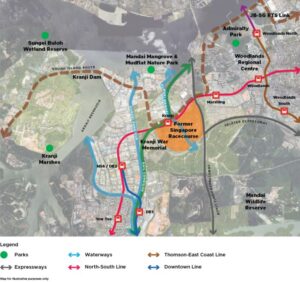
  • Pasir Panjang (CCL extension): Set for a transformation tied to the Greater Southern Waterfront plans.
  • Ang Mo Kio (TEL/CRL interchange): A key node as Singapore’s rail network keeps expanding outward.

Our URA Master Plan breakdown goes deeper into how these rezoned districts line up with upcoming rail infrastructure, if you want the fuller planning picture.

How to Actually Evaluate an MRT-Linked Property Before You Buy

Knowing which MRT line matters is only half the job. Before you commit, it’s worth running through a short checklist:

  1. Walk the actual distance, don’t trust the listing. “5 minutes to MRT” on a floor plan can mean very different things depending on the route and any road crossings involved.
  2. Check which line, not just “near MRT.” A station on the CCL or TEL behaves very differently from one on a line that terminates outside the CBD.
  3. Look at interchange status. Interchange stations, where two or more lines meet, tend to hold value better than single-line stops.
  4. Factor in the noise and privacy trade-off. If you’re eyeing a unit close to the tracks, visit at peak hours before deciding.
  5. Cross-reference with the URA Master Plan. Upcoming lines and rezoning plans often signal where the next wave of appreciation is heading.
  6. Run the numbers, not just the vibe. Use a mortgage calculator to see whether the premium you’re paying for MRT proximity still fits your budget comfortably.

Making the MRT Work for Your Property Goals

Picking a property near the right MRT line can genuinely change how a purchase performs over time, both as a home and as an investment. Right now, the Thomson-East Coast, Downtown, and Circle lines offer the strongest combination of connectivity, amenities, and lifestyle appeal, while the Cross Island Line is the one worth watching if you’re comfortable buying ahead of the curve.

Weigh MRT accessibility alongside your budget and lifestyle needs, not instead of them, and you’ll be in a much stronger position to protect both your resale value and your rental potential. If you’re comparing options across different lines right now, browsing luxury condos for sale in Singapore is a good starting point to see how location and connectivity actually play out in current listings. You can also track how these corridors are shifting over time with our Singapore Property Price Index, or get a broader view of how location fits into a long-term plan through our property investment guide.

Advanced Heading

Frequently Asked Questions

How close should a property be to an MRT station to gain value?

Units within 400 to 500 metres generally capture the strongest premium, since that’s roughly a comfortable walk for most buyers and tenants.

No. Lines that connect straight into prime districts and major commercial hubs, like the TEL and CCL, tend to have a stronger effect than lines serving mostly residential or industrial stretches.

Some units, particularly lower floors facing the tracks, can pick up noise or lose some privacy. It’s worth checking in person rather than going off the floor plan alone.

Both have a case. Existing stations offer immediate convenience and proven demand, while upcoming lines like the CRL carry more risk but potentially bigger long-term capital gains.

The Thomson-East Coast Line and Circle Line are generally seen as the strongest performers right now, thanks to direct CBD access and extensive interchange connectivity respectively.

For patient buyers, yes — estates going from no MRT access to a station nearby tend to see the sharpest re-rating once the line actually opens. Just be comfortable holding through the construction years.

Generally, yes. Stations like Bishan and Paya Lebar, where two lines meet, tend to price above comparable single-line stops nearby because they offer more travel flexibility.

Recent data from URA and SRX points to roughly a 10–15% premium for units near a station compared to similar units further away, though this varies by estate and line.

 It tends to help both. Tenants prioritise commute time when choosing a rental, and buyers filter by MRT distance early in their search, so it supports faster resale too.

No single factor should dominate. MRT proximity is one strong lever among several — layout, developer reputation, and overall budget still matter just as much when you’re comparing units.

Property Owner Mistakes in Singapore-3 Costly Errors to Watch Out For
Categoriesarticles

Property Owner Mistakes in Singapore: 3 Costly Errors to Watch Out For

TL;DR: The three biggest property owner mistakes in Singapore are staying passive as an HDB owner instead of considering an upgrade path, overpaying for an older resale HDB flat after selling your current one, and overcommitting financially to a new home without a proper affordability buffer. Each mistake compounds over years, doing nothing costs you decades of missed appreciation, buying an ageing flat at a premium exposes you to lease decay and uncertain SERS or VERS outcomes, and overcommitting leaves you dangerously exposed if your income situation ever changes.

Are you currently a property owner in Singapore? If so, this is worth ten minutes of your time, because a surprising number of otherwise careful homeowners fall into the exact same three traps, whether they own an HDB flat, an Executive Condominium, or a private property.

Homeownership here runs high, roughly 87.9% of the resident population owns their home, one of the highest rates of any developed country. But owning a home and managing it well aren’t the same thing. These three property owner mistakes in Singapore show up again and again, and each one is genuinely avoidable once you know what to look for. SG Luxury Condo has walked enough clients through the aftermath of these exact mistakes to know how much they cost, in money and in stress, when they go unnoticed for too long.

Mistake 1: Doing Nothing as an HDB Owner

Private property has historically delivered stronger price growth than HDB resale flats, largely because cooling measures are specifically designed to keep public housing affordable for the masses.

Private-Property-Price-Index-vs-HDB-Resale-Price-Index

Private Property Price Index vs HDB Resale Price Index

Say you bought a 4-room HDB flat in the 1990s for $110,000 and held onto it for 30 years. Depending on location, that unit could be worth $300,000 to $400,000 today, a genuinely solid profit of up to $290,000 if you sold now.

Now compare that to an alternative path. Suppose over those same 30 years, steady career progression let you upgrade from that 4-room flat to a condominium, and eventually to a landed home. That asset progression could realistically put your property’s value well above $10 million, an enormous jump from the original $110,000.

There are practical reasons to consider upgrading too, beyond pure capital growth. Many BTO flats sit in newer estates like Canberra or Tengah, which can mean a longer commute to work. Your family may have grown, or elderly parents may have moved in, both genuine reasons to want more space. And if you have young children, living within 1km of your preferred primary school can meaningfully improve your registration odds while cutting daily travel time. Upgrading from your first HDB flat isn’t just a long-term investment decision, it’s often a genuine quality-of-life one too.

Mistake 2: Overpaying for an Older Resale HDB Flat

Is selling your current flat to buy another always the right move? Not necessarily, and this is where a lot of buyers get it wrong. Purchasing an older resale HDB flat at a premium price, after selling a perfectly good existing unit, is generally a mistake, even though plenty of buyers do exactly this for understandable reasons.

Asset-Progression-Plan

The Widening Price Gap Between HDB Flats Under and Over 40 Years Old

Here’s why people still do it, and why each reason carries more risk than it first appears.

1. Chasing SERS Compensation

Some owners buy older flats specifically hoping their estate gets selected for the Selective En Bloc Redevelopment Scheme (SERS), which offers compensation and rehousing benefits, including a fresh 99-year lease nearby, if chosen.

Widening-Price-Gap-HDB-40-years

Selective En Bloc Redevelopment Scheme (SERS) Overview

The catch is that SERS is far from guaranteed. Only a small fraction of HDB flats in Singapore have ever been selected for SERS since the scheme began in 1995. Meanwhile, the price gap between HDB flats older than 40 years and those under 40 years has been reported as high as 65%, a significant premium to pay for a chance that may never materialise.

2. Waiting for VERS

The Voluntary Early Redevelopment Scheme (VERS) offers a similar hope for precincts older than 70 years, potentially allowing residents to redevelop before their 99-year lease actually expires.

Sers

 Voluntary Early Redevelopment Scheme (VERS) Overview

But VERS compensation is generally less generous than SERS, and just like SERS, selection is never guaranteed. Betting on either scheme as your primary reason for buying an older, pricier flat is a genuinely risky strategy.

3. Wanting to Stay Near Parents

Some buyers accept the premium on an older flat purely to stay close to ageing parents, hoping HDB grants will help offset the cost. That’s a reasonable emotional priority, but it’s worth knowing the trade-offs clearly. A shorter remaining lease means the flat’s value naturally erodes faster over time, and since you’re no longer a first-time buyer, you won’t qualify for the same housing loan terms, meaning more cash out of pocket upfront.

There’s also a CPF wrinkle worth knowing. If you’re the youngest buyer on the application and the flat’s remaining lease is under 95 years, you can’t use 100% of your CPF toward the purchase, which means you’ll need considerably more cash to close the deal than you might expect.

Mistake 3: Overcommitting to a New Home After Selling

The third common property owner mistake in Singapore is the opposite problem: overcommitting financially to a new property after selling your existing HDB flat. This might sound contradictory to the upgrading advice above, but the real lesson is about pacing, upgrade when your finances genuinely support it, not just because you technically can.

Before committing to a new home, run through this quick affordability checklist:

  1. Do you have at least 6 months of living expenses saved, on top of your new mortgage, before you even purchase the new home? This buffer needs to exist beforehand, not be something you plan to build up afterward.
  2. Is your new property’s price roughly 5 years of your household’s annual income? Ideally, keep this under 7 years to avoid genuinely overcommitting.
  3. Are your monthly mortgage repayments under 40% of household income? You need enough left over to comfortably cover everyday expenses after the mortgage is paid.

It’s tempting to assume retrenchment or a major health issue “won’t happen to us.” But life is genuinely unpredictable, a global disruption, a sudden illness, or a job loss can all hit without warning, and if that happens while you’re stretched thin on a lavish new mortgage, the consequences compound quickly. On top of that, Seller’s Stamp Duty can meaningfully eat into your proceeds if you’re forced to sell within the current holding period, so a rushed, distressed sale rarely nets what you’d hope.

How-to-Avoid-the-3-Mistakes-of-Property-Owners

 How to Avoid the 3 Biggest Property Owner Mistakes

Putting It Together

These three property owner mistakes in Singapore aren’t really separate problems, they’re two ends of the same balancing act. Staying passive costs you decades of missed growth. Overcommitting on the other end exposes you to real financial risk the moment life throws something unexpected your way. The sweet spot is upgrading deliberately, at the right time, with your numbers properly checked, not out of fear of missing out or blind optimism that nothing will go wrong.

A Word From SG Luxury Condo

Being a property owner in Singapore is genuinely something to be proud of, and it’s also a long-term commitment worth managing carefully. Avoiding these three property owner mistakes, staying passive, overpaying for an ageing flat, and overcommitting financially, puts you in a far stronger position to build real, lasting property wealth.

If you’d like help thinking through your own upgrade timeline or affordability numbers, SG Luxury Condo is happy to walk through it with you. Our HDB to condo upgrade guide walks through the process step by step if you’re ready to consider it. You’re also welcome to browse our full range of luxury condos for sale in Singapore once your numbers are clear.

Advanced Heading

Frequently Asked Questions

What's the biggest mistake HDB owners make in Singapore?

Staying passive and never considering an upgrade path, even when their finances and life circumstances genuinely support it. Private property has historically delivered stronger price growth than HDB resale, and staying put indefinitely can mean missing out on decades of potential appreciation.

It can be, particularly if you’re paying a significant premium purely in hopes of SERS or VERS selection, both of which are far from guaranteed and apply to only a small fraction of eligible flats.

Historically rare, only a small percentage of HDB flats have been selected for SERS since the scheme began in 1995, making it a risky primary reason to justify paying a premium for an older unit.

SERS applies to older estates selected for redevelopment with relatively generous compensation and rehousing benefits. VERS applies to precincts over 70 years old and offers less generous compensation, with selection also not guaranteed.

At minimum, 6 months of living expenses on top of your new mortgage, saved before you commit to the purchase, not something you plan to build up afterward.

Ideally under 40% of your household income, leaving enough room to comfortably cover everyday living expenses alongside the mortgage.

If you’re the youngest buyer and the flat’s remaining lease is under 95 years, you can’t use 100% of your CPF toward the purchase, requiring more cash upfront than a similar, newer flat would.

Not automatically, it depends on your finances, family needs, and risk tolerance. The mistake isn’t upgrading itself, it’s upgrading without properly checking whether your finances can genuinely support it.

If you’re forced into a distressed sale within the current SSD holding period, often because of overcommitting financially, it can meaningfully reduce your net proceeds right when you can least afford it.

Run through the three-point checklist: do you have 6 months of savings set aside, is the property price within roughly 5 to 7 years of your household income, and are your monthly repayments under 40% of that income? Failing any of these is a signal to reconsider your budget.

3 Tips to Help You Pick Your Dream Condo Unit
Categoriesarticles

3 Tips to Help You Pick Your Dream Condo Unit

TL;DR: Choosing the right condo unit comes down to matching four things to your actual life: the floor level that suits your family’s needs (kids, elderly parents, noise tolerance), the unit’s position relative to amenities and noise sources, the size and layout that’ll still work in five years, not just today, and the orientation that determines how hot or cool the unit feels day to day. None of these show up clearly in a showflat, so it pays to think them through deliberately rather than picking on first impression.

Picking a condo unit isn’t just about which building you buy into, it’s about which specific unit within that building. Two families can buy the exact same floor plan in the exact same development and end up with completely different living experiences, purely because one chose a ground floor unit near the playground and the other picked a high floor facing the pool. At SG Luxury Condo, this is exactly the kind of detail we walk clients through before they commit, because it’s genuinely easy to overlook once you’re focused on the bigger decisions like price and location.

Here’s a practical, updated guide to actually choosing the right unit, not just the right development.

Tip No. 1: Choose Your Floor Based on Your Family’s Actual Needs

Floor level is one of the first real decisions you’ll face, and it’s genuinely a trade-off, not a simple “higher is better” call.

  • Families with young children, since there’s more direct access to facilities without relying on the lift, and generally lower fall risk around windows
  • Households with elderly parents or grandparents, especially anyone using a wheelchair, since ground floor units usually sit near larger lobby spaces and remove the daily uncertainty of lift breakdowns
  • Anyone who loves hosting, ground floor units often come with a larger Private Enclosed Space (PES), effectively a private patio, rather than just a standard balcony
  • Buyers who want to garden, since a PES gives you real room for potted plants or a small lawn in a way a high-floor balcony simply can’t

Higher floors tend to suit:

  • Buyers who value quiet and privacy above convenience, since you’re further from road noise, foot traffic, and activity around shared facilities
  • Anyone chasing an unobstructed view, particularly valuable if the development doesn’t have taller neighbours blocking the outlook
  • Households concerned about pests, higher floors generally see fewer issues with rodents drawn to nearby garbage chutes or BBQ pits

Midtown-Suites-Bugis-03

Tip No. 2: Pick the Unit Position Based on What You’ll Actually Tolerate Daily

This is the trade-off between convenience and quiet, and it’s worth thinking through honestly rather than assuming proximity is always a win.

A unit close to a school gate sounds convenient for drop-off, until you factor in morning assembly announcements, the recess bell every hour, and CCA noise stretching into the late afternoon. A unit near the MRT entrance or bus interchange cuts your commute, but also means dealing with peak-hour foot and vehicle traffic passing right outside your window.

Priority

Better Unit Position

Convenience to school, MRT, mall

Units near main entrances and shared amenities

Quiet and privacy

Units further from function rooms, gyms, driveways, and shared entry points

Cross-ventilation

Corner units, though check exposure to extra afternoon sun on two sides

Minimal shared-wall noise

Units not directly above a pool deck, gym, or car park ramp

Our guide on the importance of location and layout goes deeper into how unit placement within a development affects both daily comfort and long-term resale value.

8-st-thomas-overal-pool-vrY100

Tip No. 3: Choose a Size That Still Works in Five Years, Not Just Today

It’s tempting to buy for exactly where you are in life right now. The trouble is, a condo purchase usually needs to serve you for years, sometimes decades, and life changes faster than most buyers plan for.

  • 1-bedroom or studio units suit two people comfortably, but leave little room for guests or a future child. Some studio layouts also route bathroom access through the bedroom, which gets awkward the moment you have overnight visitors.
  • 2-bedroom units give you genuine flexibility, a spare room for guests, a home office, or a nursery down the line, and remain one of the most liquid unit types for eventual resale.
  • 3-bedroom units suit growing families or households planning to have a live-in helper, though it’s worth checking that bedroom sizes genuinely fit a queen bed comfortably rather than just meeting the minimum on paper.

Since remote and hybrid work have become permanent fixtures for many households, a dedicated study or flexible fourth space has become a much bigger priority than it used to be. If a floor plan doesn’t offer this directly, check whether a corner of the living room or an oversized balcony could realistically double as a workspace. Our detailed guide on how to read a floor plan shows you exactly how to check this before committing to a unit.

Parc-Esta-SG-Luxury-Condo

Check the Unit’s Orientation and Sun Exposure

This one rarely comes up during a showflat visit, since staged lighting hides how a unit actually feels at 3pm on a hot afternoon. North-south facing units generally dodge the harshest direct sun Singapore throws at east-west facing units, which matters both for comfort and for your long-term air-conditioning bills. If you’re choosing between two otherwise similar units, ask specifically which way each one faces before assuming they’re interchangeable.

Don’t Forget Usable Space vs Quoted Floor Area

Two units listed at the same square footage can feel completely different once you’re actually standing in them. Air-con ledges, bay windows, and in some units, genuine void space, all count toward the quoted total without being space you can furnish or walk through. Always ask how much of a unit’s floor area is truly usable before comparing it against another option purely by psf. Our breakdown of void areas in condominium properties explains exactly how to check this.

A Simple Checklist Before You Commit

  • Does the floor level match your household’s actual needs, kids, elderly family, or a preference for quiet?
  • Is the unit’s position close enough to what you need, without sitting right beside a noise source you’d resent daily?
  • Will this unit’s size and layout still make sense in five years, not just today?
  • Which way does the unit face, and have you checked how that affects afternoon heat?
  • How much of the quoted floor area is genuinely usable, once ledges, bay windows, and void space are accounted for?

A Word From SG Luxury Condo

Picking your dream condo unit isn’t about chasing first impressions from a beautifully staged showflat. It’s about being honest with yourself about how you’ll actually live in the space, day in, day out, for years to come. Take the time to walk through these questions with your partner or family before you commit to anything.

If you’d like a second, more objective opinion while comparing specific units, SG Luxury Condo is happy to walk through it with you. Our guide on 3 questions to ask before buying your first condominium pairs well with this one if you’re just starting your search. You’re also welcome to browse our full range of luxury condos for sale in Singapore once you know what to look for.

Advanced Heading

Frequently Asked Questions

Is a high floor or low floor unit better for a family with young children?

Generally, a low or ground floor unit works better, offering easier access to facilities without relying on the lift, lower fall risk around windows, and often a larger private outdoor space.

Many ground floor units come with a Private Enclosed Space (PES), a private patio-style area, which is typically larger than the standard balcony offered on upper floors.

It depends on your noise tolerance. Proximity brings genuine convenience, but also more daily noise and foot traffic, especially near school gates during assembly and dismissal times, or near transport hubs during peak hours.

A 2-bedroom unit generally offers the most flexibility, room for guests, a home office, or a future child, while remaining one of the more liquid unit types for eventual resale.

North-south facing units generally avoid the harshest afternoon sun that east-west facing units catch, affecting both daily comfort and long-term air-conditioning costs.

Check the Sale and Purchase Agreement or Subsidiary Strata Certificate of Title, both of which break down how much of the quoted area is void space, air-con ledge, or bay window versus genuinely usable floor space.

Often, yes, for better cross-ventilation and natural light, but check whether that comes with extra sun exposure on two sides, which can increase heat and cooling costs.

A good view is a genuine bonus, but weigh it against noise and privacy. Units directly overlooking a pool deck or function room may offer a nice outlook at the cost of shared-facility noise.

Not necessarily, but it’s better suited to two people with no near-term plans for guests to stay over or children. Some studio layouts also route the bathroom through the bedroom, which can be inconvenient.

Look for a floor plan with a dedicated study, or at minimum, a layout flexible enough that a corner of the living room or an oversized balcony could realistically double as a workspace.

Buying Property in Singapore Using Search Analytics
Categoriesarticles

James Lim’s Property Agent Track Record: Real Client Results

TLDR: Return on Investment (ROI) measures total profit against total cash invested. Return on Equity (ROE) measures that same profit specifically against the downpayment, which tends to look much larger since it isolates the effect of bank leverage. Both numbers matter, but ROE especially shows why leverage is such a powerful part of property investing in Singapore.

Looking to invest in property and wondering whether the numbers you’re being promised are actually real? Fair question. That’s exactly why this page exists, not as a sales pitch, but as an honest, detailed property agent track record showing the actual profit, or loss, our clients have made working with James Lim at SG Luxury Condo.

Every case study below is a genuine transaction, with real purchase prices, real sale or valuation figures, and real timelines. Nothing here is guaranteed to repeat for the next buyer, past performance never is, but it does show the kind of thinking behind each purchase, entry price, timing, unit selection, and how those decisions played out.

Summary of Results

Case

Property

Profit

Growth

ROI

Annualised ROI

1

Lake Grande (HDB upgrade)

$267,000

28%

2

Treasure @ Tampines

$290,000

23.5%

7.8%

3

Waterfront Isle

$178,475

20.4%

98%

24.5%

4

Sims Urban Oasis (1BR)

$141,234

22%

111%

36.8%

5

Centris

$1,050,000

108%

540%

54%

6

Sims Urban Oasis (Case A)

$108,000

17%

119%

40%

7

Sims Urban Oasis (Case B)

$186,000

21%

106%

26.5%

8

The Panorama (Client A)

$274,000

22.5%

113%

38%

9

Commonwealth Tower

$192,000

14.5%

137%

55%

10

The Panorama (Client B)

$218,000

17%

118%

39%

Case 1: Lake Grande, HDB to Condo Upgrade

TRACK RECORD 1

Lakge-Grande-HDB-Upgrader-Result

This client upgraded from an HDB flat to a 2-bedroom condo on my recommendation. Lake Grande TOP’d in 2020, so she waited roughly four years for the unit to complete. After living in it for two years, she decided to upgrade again to a bigger unit.

Applying our Property P.L.U.S System to guide the entry point and unit selection, she made an overall profit of $267,000 in six years, a 28% ROI. With a downpayment of $142,650, her ROE came in at 32% per annum.

Case 2: Treasure @ Tampines, Decoupling for a Second Investment Property

TRACK RECORD 2

This couple decoupled specifically to free up capacity for a second investment property. They bought a 3-bedroom unit at Treasure @ Tampines, not directly next to an MRT station, but selected using our Property P.L.U.S System framework rather than location alone.

They bought a low-floor, pool-facing 3-bedroom for $1,230,000 in 2020, and upon TOP decided to sell and roll the proceeds into another investment property. Their sale price of $1,520,000 meant a $290,000 profit in three years. On a $307,500 downpayment, that’s a 23.5% ROI, or 7.8% annualised. Measured by Return on Equity, the investment netted 31.4% per annum.

Case 3: Waterfront Isle, Bedok Reservoir

TRACK RECORD 3

This client bought an investment property at Waterfront Isle in Bedok Reservoir and sold it four years later for $1,050,000, a $178,475 overall profit, or 20.4% growth. With a downpayment of just $174,305, leveraging through the bank produced a 98% return on investment over four years, working out to roughly 24.5% ROI per annum.

Case 4: Sims Urban Oasis, First Investment Property at 26

OTHER EXAMPLES

This client was 26 years old and looking for his first investment property. After going through his finances together, we settled on a 1-bedroom unit, giving him the flexibility to either rent it out or move in himself if his circumstances changed.

When the property TOP’d in early 2018, he rented it out for six months before deciding to sell, freeing up capital to purchase a second investment property. With a downpayment of $127,753, he made an overall profit of $141,234, a 22% growth in value, translating to a 111% return on investment in three years, or roughly 36.8% ROI per annum.

Case 5: Centris, Boon Lay, Upgrading After Starting a Family

Centris-2-Bedroom-Profit-Growth

A young couple bought a 2-bedroom, 2-bathroom unit at Centris, a mixed development in Boon Lay. After having a daughter, they decided to upgrade to a bigger condo. Selling for a profit of $1,050,000 in total, they achieved 108% growth on the property’s value, an 11% annualised gain. With a downpayment of only $101,000, leverage pushed their return on investment to a striking 540% over ten years, or 54% ROI per annum.

Case 6 & 7: Two More Sims Urban Oasis Results

Sims-Uran-Oasis-2-SG-Luxury-CondoSims-Uran-Oasis-1-SG-Luxury-Condo

Overall Profit: $108,000, 17% growth, 119% return on investment, 40% ROI per annum.

Overall Profit: $186,000, 21% growth, 106% return on investment, 26.5% ROI per annum.

Case 8 & 10: The Panorama, Two Friends, Same Recommendation

TRACK RECORD 4

This client bought his unit primarily for own stay, while a close friend of his (Case 10 below) purchased a unit in the same development after we discussed both their needs together. Both wanted a place that felt right to live in while still offering solid growth potential.

He bought his unit for $1.216 million in 2016. He hasn’t sold, but today’s valuation sits at $1.49 million, a 22.5% growth. If he chose to sell now, he’d realise a $274,000 profit. With leverage factored in, that’s a 113% return on investment over the holding period, roughly 38% ROI per annum.

TRACK RECORD 5

His friend, after our conversation, decided to buy in the same development. He purchased his unit for $1.282 million in 2016. Current valuation sits at $1.5 million, a 17% gain. If sold today, that would translate to a $218,000 profit, or a 118% return on investment with leverage, roughly 39% ROI per annum.

Case 9: Commonwealth Tower

TRACK RECORD 6

This client, a single woman, was searching for a 2-bedroom private condo with genuine growth potential. She was initially drawn to a different project purely for its proximity to her workplace, but after discussing the trade-offs, she bought a 2-bedroom unit at Commonwealth Tower in 2017 instead.

With a current valuation of $1.51 million, she stands to make an overall profit of $192,000 over 2.5 years, a 14.5% growth. With leverage, selling now would put her return on investment at 137%, roughly 55% ROI per annum.

A Freehold Case Study: Finding Value Even Against the Grain

TRACK RECORD 7

A close friend of mine wanted to invest in a freehold property. I advised against it at the time, given where the market cycle sat, but he had personal reasons for preferring freehold, so we worked within that constraint rather than against it. After scouting extensively across Singapore, we found a unit on the 8th floor priced $20,000 below the equivalent 9th floor unit in the same stack, and secured an auspicious unit number in the process.

What Actually Drives Results Like These

Across every case above, a few consistent principles show up again and again in how these purchases were approached:

  • Understanding where genuine demand is strong and supply is limited
  • Identifying undervalued properties relative to their actual location and fundamentals
  • Assessing a location’s future growth potential before the wider market catches on
  • Sticking to a disciplined entry price, rather than chasing whatever’s available
  • Favouring properties with low to minimal risk exposure
  • Weighing proven rental yield and rental demand alongside capital growth potential

If you’re curious how these principles apply to specific decisions, our guides on mixed developments, MRT proximity, new launch versus resale, en bloc potential, and freehold versus leasehold all go deeper into the reasoning behind these calls.

An Honest Note on Past Results

Every figure on this page reflects a real, individual transaction. None of it is a guarantee of what any future purchase will do, property markets move, and past growth in any specific project or district doesn’t predict future performance for a different buyer at a different entry price. What this property agent track record does show is a consistent, disciplined approach applied across very different situations, HDB upgraders, first-time investors, families, and long-term holders alike.

If you’d like to see how this approach applies to your own situation, you’re welcome to check our testimonials for what past clients have said directly, or reach out for a one-to-one consultation to talk through your own numbers.

A Word From SG Luxury Condo

Building this property agent track record over the years has really come down to the same discipline every time, entry price, timing, and matching the right property to each client’s actual goals, not a generic formula applied blindly. If you’re weighing your own property decision and want a second, honest opinion, SG Luxury Condo is happy to walk through it with you. Our property consultation sessions cover exactly this kind of planning, and you’re welcome to browse our full range of luxury condos for sale in Singapore whenever you’re ready.

Advanced Heading

Frequently Asked Questions

What is the PropertyGuru Popularity Index?

It’s a score combining page views (40% weight) and enquiries (60% weight) for a specific listing or area, giving a quick measure of genuine buyer or renter interest beyond just casual browsing.

Because sending an enquiry shows real intent to act, while a page view could just be casual browsing. Weighting enquiries higher makes the score a better reflection of genuine interest.

Transaction data shows what’s already happened. Search analytics shows what people are actively interested in right now, which can reveal demand building in an area before it shows up in completed sales.

Yes, quite differently. Sale-side searches tend to favour newer, more affordable OCR properties, even without MRT proximity, while rental searches skew heavily toward CCR and city-fringe locations near MRT stations.

Both districts contain a large concentration of HDB estates, and the strong search interest for nearby condos in these areas largely reflects HDB owners actively looking to upgrade rather than pure investors.

No, it’s best used alongside other research, developer track record, URA transaction data, and the Master Plan, rather than as a standalone decision-making tool.

It can shift meaningfully over months or quarters, so treat any specific ranking as a snapshot in time rather than a permanent fact, and check for updated data periodically.

Buyers searching for sale listings appear willing to trade MRT proximity for a lower price per square foot, which can mean a cheaper unit or more space for the same budget.

It can signal cooling interest in that specific project, which is worth watching closely if you’re an owner considering your exit timing, since search interest sometimes moves ahead of actual price trends.

It can offer useful early signals, a district climbing steadily in search rankings may be worth watching closely, but it should complement, not replace, fundamental checks like pricing, developer reputation, and future supply in the area.

Buying Property in Singapore Using Search Analytics
Categoriesarticles

Buying Property in Singapore Using Search Analytics

TL;DR: Search analytics tracks what people are actually searching for and clicking on, not just what they eventually buy. PropertyGuru’s Popularity Index blends page views (40%) and enquiries (60%) into a single score, giving a quick read on genuine buyer interest. Layering this against keyword trends, top-searched condos, and top districts reveals patterns transaction data alone won’t show you, like which areas are quietly gaining momentum before prices catch up. A quick note: search rankings shift over time, so treat the specific rankings below as a snapshot of the data at the time this was pulled, and refresh the numbers periodically rather than treating them as permanently fixed.

Most people still shop for property the old-fashioned way, location, amenities, developer name, gut feeling. There’s nothing wrong with that, but it misses a genuinely useful signal hiding in plain sight: what people are actually searching for online, right now, before they’ve even spoken to an agent.

At SG Luxury Condo, we’ve started pulling data directly from PropertyGuru, Singapore’s largest property portal, to see what buyers and renters are genuinely typing into the search bar. It turns browsing behaviour into a real dataset, one that shows demand forming before it shows up in transaction numbers. Here’s how we use it, and what it’s currently telling us.

Understanding the Popularity Index

At the centre of this approach is the Popularity Index, a simple score that measures how much genuine interest a listing or area is getting. It combines two things:

  • Page views (40% weight), how many people are looking at a listing
  • Enquiries (60% weight), how many people are actually taking the next step and reaching out

Enquiries count for more because clicking a listing is passive, but sending an enquiry shows real intent. Here’s how the maths works in a simple example: a listing with 100 page views and 50 enquiries gets a Popularity Index of (100 × 0.4) + (50 × 0.6) = 70. The higher the score, the stronger the genuine buyer or renter interest behind that listing.

What Keyword Trends Actually Tell You

Beyond individual listings, it’s worth watching the keywords people search for overall, terms like “sea view condo,” “near MRT,” or “freehold property.” These searches reveal what buyers currently care about, sometimes months before that demand shows up in actual sales data.

Looking at the Top 20 and Top 40 most-searched terms lets you spot which districts and property types are pulling attention right now. If a specific district keeps climbing the rankings, that’s often an early signal of growing tenant or buyer interest, well before prices in that area start moving.

Top 20 Keywords People Search For

Top-20-Keywords

Top 20 Keywords People Search on PropertyGuru

This ranking is based on how often each district or area name gets searched. It doesn’t break down whether someone’s looking for an HDB flat, a condo, or a landed home, just raw interest in the location itself.

A few patterns stand out. Areas like East Coast, Marine Parade, Tampines, District 19, and District 10 have stayed consistently popular over time, showing steady, reliable demand rather than a short-lived spike. Meanwhile, District 18 (Pasir Ris/Tampines) and District 22 (Boon Lay/Jurong/Tuas) both saw noticeable jumps in ranking, more than 6 positions each, suggesting growing interest in these two areas specifically.

Top 40 Keywords People Search For

Top 40 Keywords Search

Top 40 Keywords People Search on PropertyGuru

Moving further down the list, into ranks 21 through 40, District 1 (Boat Quay/Raffles Place/Marina) and District 9 (Orchard/River Valley) both show up with strong jumps in search interest. That’s not entirely surprising, the Core Central Region carries real long-term potential, something we’ve covered in our piece on undervalued vs profitable properties.

Most other rankings stayed fairly stable, aside from Jurong West and Bukit Panjang, which both slipped a handful of positions. One notable name worth flagging, Parc Esta was the only individual condo project to crack this Top 40 list, but its ranking had dropped compared to before, a signal worth watching if you’re holding a unit there and thinking about your exit timing.

Top 10 Condos People Search For (By Sale)

Top 10 Condo Search via Sales

Top 10 Most Searched Condos via Sales

This chart shows the specific private condo projects generating the most sale-side search interest. Two clear patterns emerge here. First, aside from a couple of older exceptions, most of these projects were brand new, typically just 1 to 2 years post-TOP, suggesting buyers strongly favour newer stock when actively house-hunting.

Second, roughly half of these projects sit in Districts 18 and 19, both firmly in the Outside Central Region. Combined with the age pattern above, it points to two things mattering most to this group of searchers: how new the property is, and how affordable it is. If liquidity and a fast resale matter to you, this data suggests OCR new launches remain a genuinely strong strategy, a point we’ve explored further in our new launch versus resale comparison.

Worth noting too, most of these top-searched projects weren’t within comfortable walking distance of an MRT station, several even run their own shuttle bus service instead. Buyers searching for sale listings appear willing to trade MRT proximity for a lower psf, translating either into a cheaper unit or more space for the same budget. None of the top 10 in this category were freehold either, reinforcing that this particular buyer segment prioritises price and newness over tenure. For more on that trade-off, see our piece on freehold versus leasehold properties.

Top 10 Condos People Search For (By Rental)

Top 10 Most Search Condo via Rental

Top 10 Most Searched Condos via Rental

Rental searches tell a genuinely different story. Aside from a couple of outliers, most of the top-searched rental condos sit in the Core Central Region or nearby city fringe areas, and around six of the ten are close to an MRT station. If you’re buying specifically for rental income, this data suggests the priorities flip almost entirely compared to sale-side buyers, MRT proximity and closeness to the city centre matter far more to tenants than they do to owner-occupiers hunting for a home to buy.

Top 5 Condo Districts by Search Interest (Sale)

Top 5 Condo Districts (Sale)

Top 5 Condo Districts by Search Interest, Sale

District-level data shows a genuine mix across all three regions. In the Core Central Region, Orchard and River Valley lead, followed by District 10 (Bukit Timah/Holland Road). In the Rest of Central Region, District 15 comes out on top. On the outskirts, Districts 18 and 19 dominate.

Districts 18 and 19 sit close to a large concentration of HDB estates, which suggests a lot of this search interest is coming from HDB upgraders shopping for their next home rather than pure investors. If that’s your situation, a 3-bedroom unit or larger tends to be the more sensible choice given this buyer profile.

Top 5 Condo Districts by Search Interest (Rental)

Top 5 Condo Districts (Rent)

Top 5 Condo Districts by Search Interest, Rental

No real surprises here. Districts 9 and 10, right in the heart of the city near the CBD, dominate rental search interest. District 15, close to East Coast Park, also remains consistently popular, largely thanks to its long-standing appeal among expat tenants.

Top 5 HDB Districts by Search Interest (Sale)

Top 5 HDB Districts (Sales)

Top 5 HDB Districts by Search Interest, Sale

Rounding things out, here’s the HDB side of the picture. Tampines, Sengkang, and Punggol lead the pack, matching closely with the top condo sale districts covered earlier. That overlap reinforces the same conclusion, a large share of buyer interest in these areas is coming from HDB owners actively looking to upgrade into a condo nearby, rather than starting their search from scratch elsewhere.

What This Means for Your Own Search

Search analytics won’t replace proper due diligence, checking a developer’s track record, running your own numbers, or reading a floor plan properly all still matter. But layering this kind of data on top of the fundamentals gives you an early read on where genuine demand is building, sometimes before it shows up in official transaction figures. If a district is climbing steadily in search interest quarter over quarter, that’s worth paying attention to, especially if you’re deciding between two similarly priced options.

A Word From SG Luxury Condo

Search behaviour is one of the more underused signals in Singapore property research, mostly because it takes real effort to pull and interpret properly. At SG Luxury Condo, we treat this kind of search analytics as one input among several, alongside URA transaction data, the URA Master Plan, and our own Property P.L.U.S System, rather than relying on any single source in isolation.

If you’d like a current read on what the search data is showing for a specific district or project you’re considering, SG Luxury Condo is happy to walk through it with you. Our property consultation sessions cover exactly this kind of research, and you’re welcome to browse our full range of luxury condos for sale in Singapore once you’ve got a clearer sense of where demand is heading.

Advanced Heading

Frequently Asked Questions

What is the PropertyGuru Popularity Index?

It’s a score combining page views (40% weight) and enquiries (60% weight) for a specific listing or area, giving a quick measure of genuine buyer or renter interest beyond just casual browsing.

Because sending an enquiry shows real intent to act, while a page view could just be casual browsing. Weighting enquiries higher makes the score a better reflection of genuine interest.

Transaction data shows what’s already happened. Search analytics shows what people are actively interested in right now, which can reveal demand building in an area before it shows up in completed sales.

Yes, quite differently. Sale-side searches tend to favour newer, more affordable OCR properties, even without MRT proximity, while rental searches skew heavily toward CCR and city-fringe locations near MRT stations.

Both districts contain a large concentration of HDB estates, and the strong search interest for nearby condos in these areas largely reflects HDB owners actively looking to upgrade rather than pure investors.

No, it’s best used alongside other research, developer track record, URA transaction data, and the Master Plan, rather than as a standalone decision-making tool.

It can shift meaningfully over months or quarters, so treat any specific ranking as a snapshot in time rather than a permanent fact, and check for updated data periodically.

Buyers searching for sale listings appear willing to trade MRT proximity for a lower price per square foot, which can mean a cheaper unit or more space for the same budget.

It can signal cooling interest in that specific project, which is worth watching closely if you’re an owner considering your exit timing, since search interest sometimes moves ahead of actual price trends.

It can offer useful early signals, a district climbing steadily in search rankings may be worth watching closely, but it should complement, not replace, fundamental checks like pricing, developer reputation, and future supply in the area.

3 Reasons Why Property Is the Best Form of Investment
Categoriesarticles

3 Reasons Why Property Is the Best Form of Investment

People ask me often how I got into property investment in the first place. Honestly, it started with a book, Rich Dad Poor Dad by Robert Kiyosaki. If you haven’t read it, the short version is this: it compares two father figures, one who worked hard for money his whole life, and one who made money work for him through assets like real estate. That idea, using other people’s money and time as leverage, genuinely reshaped how I thought about building wealth.

Over the years, watching how property has actually performed for clients at SG Luxury Condo, I keep coming back to the same three reasons why property is the best form of investment I recommend to almost everyone starting out. Let me walk you through them.

Reason 1: Property Offers the Best Form of Leverage

To understand why leverage matters so much, it helps to look at what’s sometimes called the Wealth Triangle, a simple framework built around three ways people generate wealth.

Wealth Triangle Component

What It Means

Examples

High Income Skills

A skill valuable enough to trade for strong, consistent pay

Coding, consulting, sales

Scalable Business

A business that grows without needing huge overheads

E-commerce, online services

High Return Investments

Assets that build long-term wealth and passive income

Stocks, bonds, real estate

best form of leverage

The Wealth Triangle: three paths to building long-term wealth

For this first reason, we have to take a look at what we call a Wealth Triangle, a conceptual framework made up of three fundamental components to generate wealth: High Income Skills, Scalable Business and High Return Investments. 

Firstly, High Income Skills form the base of the pyramid. It is any valuable skill that can earn you a consistent and substantial amount of money each month. If you are able to develop a high income Skill, you can deliver value to the marketplace and trade your skill and expertise for very good money. Some examples of high income Skills include coding, web design, and consulting.

The second component of the Wealth Triangle is Scalable Business. Essentially, this refers to a business that you can grow and develop without the need of a lot of overheads or infrastructure. You do not need to spend large amounts of money to grow this business. Examples of scalable businesses are businesses that operate online, like e-commerce (Amazon, Drop-shipping) or traffic driven businesses. Scalable businesses are therefore systems that are in place that provide you with cash flow and makes you money, even while you are deep in sleep!

The final component of the Wealth Triangle is High Return Investments, which help to build your wealth, net worth and passive income. Some examples include stocks, bonds, mutual funds, and of course, real estate.

As mentioned earlier, Rich Dad Poor Dad got me into investing. While I am unable to tell you all the nitty gritty details of the book, I am proud to say that more than a decade later, I find that this one quote from the book still stands out to me.

It reads “People with leverage have dominance over people with less leverage. In other words, just as humans gained advantages over animals by creating leveraged tools, similarly, humans who use these tools of leverage have more power over humans who do not. Saying it more simply, leverage is power.”

So, you may be wondering “how does this quote relate to the Wealth Triangle?” While the Wealth Triangle seems simple, it is able to tell us a lot. Each time I look at it, I ask myself three questions:

  • What is scalable?
  • What can you leverage on?
  • What are the risks involved for all three components?

While brainstorming on the answers to these questions, I come to the conclusion that the third component—High Return Investments—has the best form of leverage, using other people’s money and time. The power of leverage in real estate therefore makes it the best form of investment that not only is scalable and also you can leverage on others yet having the lowest risk.

Reason 2: Singapore Property Is Genuinely Predictable

It is Easy and Predictable

Singapore’s property market moves in patterns that are easier to read than most other asset classes

Singapore is a small, land-scarce country, which actually works in an investor’s favour. Government Land Sales, birth rates, and immigration numbers are all tracked and published, which means future supply and demand can be reasonably estimated well ahead of time, something you simply can’t do with a stock’s future price movement.

Property prices here have also tended to track inflation over the long run. When the general cost of living rises, property prices tend to rise with it, which makes property a genuine hedge against inflation eating into your savings. That doesn’t mean prices never fall, they absolutely can during an economic downturn, but a property that’s well chosen and doesn’t demand much upkeep is far easier to simply hold through a rough patch until the market recovers, compared to assets that require active, ongoing management.

Being able to actually use this predictability well comes down to having a proper system for reading the data. At SG Luxury Condo, this is exactly why we built our own Property P.L.U.S System, a structured way of screening properties using real transaction data rather than gut feeling. You don’t need decades of experience to use a system like this, you need the right framework and the discipline to follow it. Our guide on choosing the best selling condos in Singapore shows this kind of data-driven approach in action.

Reason 3: Property Is Far Safer to Enter Than Stocks

Why Property Investment

Property tends to carry far less entry risk than trading stocks

Stocks demand real skill to trade well, reading charts, timing entries and exits, understanding company fundamentals, managing emotional discipline under pressure. Get any of that wrong and it’s genuinely easy to lose a meaningful chunk of your capital quickly. We’ve all heard stories of people “burning their fingers” on a bad trade.

Property doesn’t ask nearly as much of a first-time investor. Beyond giving you a place to actually live in, it tends to deliver steadier, more predictable returns over time, even accounting for the occasional downturn. You don’t need to watch a screen daily or time your entry to the hour. A well-chosen property, held through a reasonable market cycle, has historically rewarded patience far more reliably than trying to actively trade in and out of stocks.

Why These Three Reasons Matter Together

None of these three reasons stand entirely on their own. Leverage without predictability is just a bigger bet. Predictability without safety doesn’t help if the entry itself is risky. It’s the combination, controlled leverage, a market you can reasonably forecast, and low entry risk, that makes property such a consistently recommended starting point for building wealth in Singapore.

A Real Example: How Leverage Plays Out in Practice

Numbers make this easier to picture than theory alone. Say you buy a $1,000,000 condo with a 25% downpayment, that’s $250,000 of your own money, with the remaining $750,000 financed through a bank loan.

If that property appreciates by 20% over five years, it’s now worth $1,200,000. Your gain is $200,000. But measured against your actual cash outlay of $250,000, that’s an 80% return on your own money, not 20%. That gap between the asset’s growth and your actual return is leverage doing exactly what it’s supposed to do. Try replicating that kind of amplified return with a stock purchase you paid for entirely in cash, and the math simply doesn’t stretch the same way.

Property vs Other Common Investments

It helps to see property lined up directly against the other assets people usually consider, rather than just taking the case for property at face value.

Asset

Typical Entry Barrier

Leverage Available

Skill Needed to Manage

Volatility

Property

Moderate to high (downpayment + fees)

High (up to 75% LTV)

Low, mostly research upfront

Low to moderate

Stocks

Low

Limited, unless margin trading

High, active monitoring helps

High

Bonds

Low to moderate

Minimal

Low

Low

Cryptocurrency

Very low

Varies widely

Very high

Very high

This isn’t to say stocks or bonds don’t have their place in a balanced portfolio, they absolutely can. But if you’re weighing where to put your first serious chunk of investment capital, property’s combination of manageable skill requirements and strong available leverage is hard to match on this table.

Addressing the Common Doubts

A few objections come up constantly whenever this topic gets discussed, and they’re worth addressing honestly rather than glossing over.

  • “Property isn’t liquid, I can’t sell it quickly.” True, and this is a genuine trade-off. Property suits patient capital, not money you might need back within months. If liquidity is your top priority, keep a separate emergency fund outside of property entirely.
  • “The entry cost is too high for most people.” It’s higher than buying a single stock, certainly, but the 25% downpayment threshold is exactly what makes the leverage work in your favour once the property appreciates.
  • “What if the market crashes right after I buy?” This is precisely why holding power matters so much, a property with low maintenance needs is far easier to simply hold through a downturn than a leveraged stock position facing a margin call.
  • “Isn’t property investment risky if I don’t know the market well?” This is exactly the gap a structured system, rather than gut instinct, is meant to close, which is why having the right research framework matters more than raw experience.

A Word From SG Luxury Condo

I’ve shared these three reasons why property is the best form of investment with countless clients over the years, and the logic has held up consistently: strong leverage, genuine predictability, and far lower entry risk than most alternatives. None of this means every property purchase automatically succeeds, the right system and the right numbers still matter enormously.

If you’d like help applying this thinking to your own situation, SG Luxury Condo is happy to walk through it with you. Our property consultation sessions cover exactly this kind of planning, and you can check our track record to see how this approach has worked for past clients. You’re also welcome to browse our full range of luxury condos for sale in Singapore whenever you’re ready to start.

Advanced Heading

Frequently Asked Questions

Why is property considered the best form of investment in Singapore?

Mainly because of three things working together: strong, accessible leverage through mortgage financing, a genuinely predictable market due to controlled land supply and tracked demand data, and far lower entry risk compared to actively trading stocks.

A downpayment, typically 25% for a first home loan, lets you control 100% of a property’s value using the bank’s money, meaning your potential returns are calculated against the full asset value rather than just your own cash outlay.

Relative to many other asset classes, yes. Land supply through Government Land Sales, birth rates, and immigration data are all tracked and published, giving investors a reasonable basis to estimate future demand and supply.

No investment is entirely risk-free. Property values can fall during an economic downturn, but a well-chosen property with low upkeep needs is generally easier to hold through a downturn than more actively managed investments like stocks.

Not in the same way stocks demand. Property investment benefits more from having a solid research system and patience than from active trading skill or constant market monitoring.

It’s a simple framework describing three paths to building wealth: developing high-income skills, building a scalable business, and making high-return investments, with property falling into that third category alongside stocks and bonds.

 Historically, yes. Property prices in Singapore have generally tracked or outpaced inflation over the long run, helping protect the real value of an investor’s money compared to holding cash alone.

Structured, data-driven systems that screen properties using real transaction history and demand indicators, rather than gut feeling, tend to produce more consistent results over time.

For many first-time investors, yes, mainly due to the lower skill barrier to entry and the ability to use leverage safely through a mortgage, though a diversified approach across multiple asset types is generally still wise.

Property investment generally rewards a longer holding period, often spanning a full market cycle of several years, since this allows leverage, predictability, and safety to work together as intended rather than being tested by short-term volatility.

Strong Property Investment Fundamentals
Categoriesarticles

Strong Property Investment Fundamentals: What Actually Makes a Property “Safe” in Singapore

TL;DR: Strong property investment fundamentals in Singapore come down to understanding who’s actually buying (investors chasing yield versus owner-occupiers chasing lifestyle fit), then checking eight specific traits: location, MRT and school accessibility, developer reputation, a sensible floor and stack, a development size that isn’t too small or too large, a maintenance fee that doesn’t scare buyers off, a fair entry price, and genuine first-mover advantage if you’re buying a new launch. None of these traits work alone, it’s the combination that actually protects your investment through a full market cycle.

Everyone wants a property that holds its value no matter what the market’s doing. The question is what actually makes a property fundamentally strong, versus one that just looks good in a showflat and struggles the moment the market cools. This is exactly the question we walk through with every client at SG Luxury Condo before any specific project comes up.

A fundamentally strong property, in simple terms, is one that keeps demand high and rarely loses money, regardless of where the broader market cycle happens to sit. These properties tend to have something genuinely unique or consistently sought-after about them, not just a nice paint job. Understanding the strong property investment fundamentals behind these properties is really the difference between buying something that happens to look nice, and buying something that actually protects your capital.

Step 1: Understand Who’s Actually Buying

Before diving into the eight traits, it helps to understand the two buyer types who ultimately determine whether your property holds its value.

Investors compare developments purely on numbers, they want the highest rental yield at the most reasonable price. If you’re holding a property this crowd wants, offering strong yield without an inflated price tag, that alone makes it fundamentally attractive to a genuine pool of buyers. Our breakdown of undervalued versus profitable properties goes deeper into how investors actually screen for this.

Own-stay buyers think differently. They’re willing to pay a premium, but only for something that genuinely fits their daily life, layout, location, and the specific features covered in the eight traits below.

The Eight Traits of a Fundamentally Strong Property

1. Location

Condo-Volume-Breakdown-by-Region

Condo Volume Breakdown by Region

Location tops almost every buyer’s list, and for good reason. Properties in the Rest of Central Region (RCR) and Outside Central Region (OCR), Singapore’s city-fringe and suburban zones respectively, tend to be more affordable than the Core Central Region, while still holding genuine demand.

Unit size preference actually shifts by region too. In RCR developments, 2-bedroom units tend to see the strongest demand. In OCR, 3-bedroom units are generally the sweet spot, likely reflecting the larger, more family-oriented buyer pool typical of suburban Singapore.

2. Accessibility: MRT and Schools

Cross-Island-MRT-Line

The Cross Island Line, one of the transit projects actively reshaping accessibility across the island

A simple test: would you rather live closer to an MRT station or further from one? Most buyers answer closer, and the generally accepted threshold is around 800m, roughly an 8-minute walk. Beyond that, a property starts feeling genuinely less accessible to most buyers. This factor becomes especially important for RCR developments specifically, since RCR buyers tend to rely on public transport more than car ownership. Our full breakdown on how MRT stations affect property prices goes much deeper into this exact mechanic.

That said, the 800m rule loosens for properties further from the city centre, since these buyers are more likely to already own a car, making MRT distance less of a priority.

School proximity matters just as much, arguably more so for OCR properties specifically. Being within 1km of a well-regarded primary school genuinely matters in Singapore, since it affects priority during the primary school registration exercise, something Singaporean parents take very seriously. More schools within reach means more choice for buyers, which in turn means stronger demand and better long-term value for your property.

3. Developer Reputation

Buyers consistently favour developments with better quality finishing and workmanship, and a reputable developer with a name to protect tends to deliver just that, not just inside the unit, but across the whole estate’s exterior and facilities too. CDL, for instance, has built a reputation for projects that still look genuinely fresh a decade after completion. Developments from less established or lower-quality developers can, by contrast, start looking noticeably rundown within just five years. That gap in long-term upkeep is a real, measurable part of what makes a property fundamentally strong or fundamentally weak.

4. The Right Floor and Stack

Based on analysis across hundreds of condo transactions, units sitting roughly in the 25th to 55th percentile of a building’s price range, typically floors 5 through 15 in a mid-rise development, tend to deliver the strongest profit margins. Extremely high floors carry a premium that’s harder to recoup, while very low floors often suffer from noise and privacy concerns that limit buyer interest.

5. Development Size

Top-5-Highest-Profitable-Transaction-for-2021

Historically strong-performing transactions have tended to cluster around mid-to-large developments with healthy transaction volume

Size matters more than people expect. Boutique developments under 200 units often struggle here, simply because there isn’t enough transaction volume for the market to establish a clear, reliable valuation over time. On the other end, truly massive developments of 1,000-plus units benefit from constant turnover, which keeps valuations current and liquidity strong. Our detailed study of mega developments in Singapore breaks down exactly how this plays out in real transaction data.

A regularly shaped, efficient layout matters here too, not just the building’s total unit count. HDB upgraders in particular tend to gravitate toward properties with a familiar, functional layout close to what they’re used to, rather than an oddly shaped unit with wasted space.

6. A Sensible Maintenance Fee

A maintenance fee that climbs much past $400 a month tends to noticeably cool buyer interest, and this often correlates with smaller developments, since fewer owners are splitting the same fixed costs. A useful mental comparison: a $200 fee spread across 200-plus units supporting a full range of facilities generally feels better value to buyers than a $450 fee funding just a single pool and a small gym. Developments in the 600 to 800-unit range often strike the best balance between facility variety and manageable fees.

7. Correctly Priced From the Start

Prices-of-Condo-Near-Downtown-Line-MRT-Stations

Getting the price right isn’t guesswork, it comes down to three checks: compare the property against similar developments nearby and across the broader region, research the specific district’s current market conditions, and factor in any confirmed future growth catalysts for that area. Skipping any one of these steps is exactly how buyers end up overpaying for a unit that isn’t actually as strong a fundamental as it first appeared.

8. First-Mover Advantage

Stars-at-Kovan

Early-phase pricing tends to sit meaningfully below later-phase pricing on the same project

Buying into a new launch during its earliest sales phase generally means securing the lowest possible entry price, since developers typically raise prices in stages as units sell. Our breakdown of developer pricing strategy explains the mechanics behind why banks tend to support this upward pricing trajectory, and our new launch versus resale comparison shows the real return data behind buying early rather than waiting.

Putting the Eight Traits Together

None of these eight strong property investment fundamentals work in total isolation. A great location with a poorly reputed developer still risks looking tired within a few years. A perfectly sized development with an inflated entry price still leaves you overpaying. The properties that genuinely hold their value tend to score reasonably well across most, not necessarily all, of these traits simultaneously.

A Word From SG Luxury Condo

Now that you understand what actually goes into strong property investment fundamentals, the next step is applying this framework to your own numbers and your own financial situation before committing to anything. A checklist like this only works if you’re honest with yourself about your budget and your actual holding period.

If you’d like to know which current developments in Singapore genuinely check these boxes, SG Luxury Condo is happy to walk through it with you. Reach out through our property consultation page, or browse our best selling condos list for developments that have already demonstrated strong, consistent demand. You’re also welcome to explore our full range of luxury condos for sale in Singapore whenever you’re ready to start shortlisting.

Advanced Heading

Frequently Asked Questions

What does "fundamentally strong property" actually mean in Singapore?

 It refers to a property that maintains high demand and rarely loses value, regardless of where the broader property market cycle sits, usually due to a combination of location, accessibility, developer reputation, and sensible pricing.

Yes. Very small developments under 200 units often lack enough transaction volume to establish a reliable valuation, while very large developments of 1,000-plus units benefit from frequent turnover and stronger liquidity.

Fees climbing past roughly $400 a month tend to noticeably cool buyer interest, and high fees often signal a smaller development splitting costs across fewer owners, which can also affect long-term resale appeal.

Generally preferred, especially for RCR developments, but less critical for properties further from the city centre, where buyers are more likely to already own a car and prioritise other factors instead.

Yes, units in the roughly 25th to 55th percentile of a building’s price range, often floors 5 through 15 in mid-rise developments, have historically shown the strongest profit margins compared to extremely high or very low floors.

Very. Reputable developers tend to deliver consistent build quality across both the unit interior and the estate’s facilities, which directly affects how well a property ages and holds its appeal over a decade or more.

It refers to purchasing during a project’s earliest sales phase, when prices are typically lowest, before developers incrementally raise prices as more units sell in later phases.

Not entirely. Investors focus primarily on rental yield relative to price, while own-stay buyers are willing to pay more for a property that genuinely fits their lifestyle needs, location, layout, and accessibility included.

Being within 1km of a well-regarded primary school affects registration priority under Singapore’s primary school system, which matters intensely to many parents and directly supports sustained demand for nearby properties.

 It’s possible if the other traits, developer reputation, pricing, development size, and accessibility, compensate well enough, though location remains one of the most heavily weighted factors for most buyers.

Property AI

Here's a few ways we can help you
🤖
Would you like our AI Bot to help you find the perfect property? Our AI Bot can scrape through hundreds of property listings and provide you with a list of properties that matches your criteria.
Just now