Chapter 1 – Why Buying the Right Property Matters More Than Ever
Singapore’s Property Market Is at an All-Time High
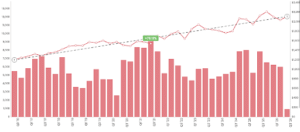
If you have been following Singapore’s property market over the past decade, one thing is immediately clear—prices have risen significantly.
Whether you are looking at new launches or resale condominiums, the cost of purchasing a private home today is considerably higher than it was ten years ago. Average condominium prices have climbed steadily despite economic slowdowns, rising interest rates, cooling measures and even the COVID-19 pandemic.
For many buyers, especially first-time private property purchasers, this creates an understandable concern: “Am I buying at the top of the market?”
Nobody can accurately predict where property prices will be five or ten years from now. Trying to perfectly time the market is often impossible. Fortunately, buyers have much greater control over something else: the quality of the property they choose.
Instead of asking, “Will Singapore property prices continue to rise?”, perhaps a better question is, “If I eventually need to sell this condominium 10 or 20 years from now, will buyers still want it?”
This shift in thinking moves the focus away from speculation and towards long-term fundamentals. At SG Luxury Condo, we refer to these developments as Defensive Properties.
What Is a Defensive Property?
A Defensive Property is a condominium that possesses enduring qualities which help support demand across different market cycles. It may not always deliver the highest capital gains during boom years, but it is more likely to retain demand and value over the long term.
A defensive condominium generally:
• Remains attractive even as it becomes older.
• Continues to attract buyers and tenants.
• Is easier to rent out.
• Experiences less downside during weaker markets.
• Enjoys more stable long-term appreciation.
Many buyers mistakenly believe that the newest condominium, the biggest facilities or the highest launch price automatically means the best investment. That is not always true. Practical layouts, connectivity, schools, neighbourhood quality and maintenance often matter much more over the long term.
Why Defensive Properties Matter More Than Ever Today
Today’s buyers face record property prices, higher financing costs and stricter cooling measures. Every purchasing decision carries greater financial consequences.
Rather than chasing short-term market momentum, experienced buyers increasingly ask whether a condominium will still be desirable when it is twenty years old. The answer often depends on its underlying fundamentals rather than its age.
These fundamentals form the basis of the SG Luxury Condo Defensive Framework™.
Introducing the SG Luxury Condo Defensive Framework™
The SG Luxury Condo Defensive Framework™ evaluates developments across five key pillars:
1. Liveability – Practical layouts and family-friendly spaces.
2. Accessibility – MRT connectivity, roads and transport convenience.
3. Demand Drivers – Schools, employment hubs, amenities and mature estates.
4. Asset Quality – Maintenance standards, land size, landscaping and MCST quality.
5. Future Resilience – Future supply, resale liquidity and sustained buyer demand.
Together, these pillars form the SG Luxury Condo Defensive Score™, which will be used throughout this guide to evaluate and compare developments objectively.
Chapter 2 – Factor 1: Large, Practical Layouts Never Go Out of Style
Why Layout Still Matters
Many buyers focus on a condominium’s age, facilities or marketing brochure, but one of the strongest drivers of long-term resale demand is the floor plan. A practical layout influences how comfortably a family can live every day. While finishes can be renovated and facilities upgraded, the layout is permanent. Choosing an efficient layout today increases the likelihood that the property will remain attractive to future buyers.
The Trend Towards Smaller Homes
As land prices and construction costs have increased, many newer condominiums have become more compact. Bedrooms are smaller, balconies occupy more floor area and living spaces are often designed around affordability. This has made older developments with generous layouts increasingly attractive to owner-occupiers.
Case Study: The Tropica
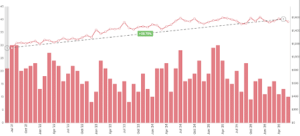
The Tropica is an excellent example of a defensive property from a liveability perspective. Although it is an older development and is not located beside an MRT station, it continues to enjoy healthy demand because it offers features that many newer projects no longer provide. Many units have no unnecessary balcony, allowing more of the floor area to be used indoors. The squarish layout makes furniture placement easier, while generous living and dining areas create a comfortable environment for family life. Several unit types even include an additional family living room, providing flexible space for children, work-from-home needs or entertainment. Spacious bedrooms and minimal corridor space further enhance the practicality of the design.
Why Families Value Space
Families often prioritise everyday comfort over having the newest condominium. A practical home adapts better as children grow, parents work from home or elderly family members move in. This is one reason why spacious resale developments can continue attracting buyers many years after completion.
What Buyers Should Look For
Look beyond total square footage. Assess whether the layout is efficient, whether bedrooms fit standard furniture, whether the dining space is practical and whether excessive balcony or corridor areas reduce usable space. These details have a significant influence on resale appeal.
Chapter 3 – Factors 2 & 3: MRT Connectivity and Good Schools Create Enduring Demand
Why Accessibility Matters
One of the strongest characteristics of a defensive property is excellent accessibility. While buyers often focus on the unit itself, the surrounding location plays an equally important role in determining future resale demand. Developments within a comfortable five to eight minute walk of an MRT station generally appeal to a wider pool of buyers because they reduce travelling time and dependence on private transport.
Good MRT connectivity benefits owner-occupiers and tenants alike. Working adults enjoy shorter commutes, students have easier access to schools and universities, and older residents appreciate the convenience of travelling without relying on a car. As Singapore’s population ages and the rail network continues to expand, homes near MRT stations are likely to remain highly sought after.
Case Study: Bartley Ridge
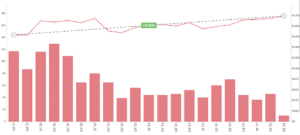
Bartley Ridge is an excellent example of how transport connectivity supports long-term value. Located beside Bartley MRT Station on the Circle Line, residents enjoy direct connections to Serangoon, Paya Lebar, one-north, HarbourFront and Marina Bay with minimal transfers. This strategic location appeals to professionals working across different parts of Singapore.
Beyond the MRT, Bartley Ridge also enjoys convenient access to major expressways, making it attractive to families who drive. Its balanced accessibility broadens its appeal to different buyer groups, supporting healthy resale demand.
Homes Near Good Schools Enjoy More Consistent Demand
Another important pillar of a defensive property is proximity to reputable schools. School demand is relatively independent of property cycles because every year new families enter the Primary One registration process. Parents often prioritise living near their preferred school, creating a consistent source of owner-occupier demand.
Unlike lifestyle trends that may change over time, the desire to provide children with convenient access to quality education remains remarkably stable. This makes homes near established schools more resilient during slower market conditions.
Bartley Ridge – Combining MRT and School Demand
Bartley Ridge benefits from being close to Maris Stella High School, one of Singapore’s well-known schools. Buyers are attracted not only by the convenience of the Circle Line but also by the opportunity to live within easy reach of an established educational institution. The combination of transport connectivity and school demand strengthens the development’s long-term attractiveness.
Case Study: The Panorama
The Panorama in Ang Mo Kio provides another excellent illustration of a defensive property. It is located near Mayflower MRT Station on the Thomson-East Coast Line and is close to CHIJ St Nicholas Girls’ School. In addition, Ang Mo Kio is a mature estate with shopping centres, eateries, parks and healthcare facilities already in place.
These characteristics create multiple demand drivers rather than relying on a single feature. Families appreciate the nearby schools, professionals benefit from MRT connectivity and residents enjoy the convenience of a well-established neighbourhood. Such diversity of demand supports stronger resale resilience.
Why These Factors Matter Together
Properties located near both an MRT station and reputable schools enjoy two independent sources of demand. Even if one buyer group becomes less active, another may continue supporting resale interest. This diversification is similar to reducing investment risk by relying on multiple strengths rather than a single selling point.
Chapter 4 – Factors 4 & 5: Strong Management and Limited Future Supply Protect Long-Term Value
Introduction
Location and layout often receive the most attention when buyers compare resale condominiums. However, two of the most overlooked factors influencing long-term property value are the quality of the Management Corporation Strata Title (MCST) and the amount of future competing supply nearby. Even an excellent location can lose its appeal if the development is poorly maintained or faces intense competition from multiple new launches. These factors form two important pillars of the SG Luxury Condo Defensive Framework™: Asset Quality and Future Resilience.
Why Strong Management Matters
A condominium is a long-term asset that requires continuous maintenance. The responsibility for preserving the estate rests largely with the MCST. A proactive management team ensures that common areas remain clean, facilities are safe and attractive, and maintenance issues are resolved before they become expensive problems. Buyers often underestimate how much first impressions influence resale demand. A clean entrance, healthy landscaping and well-maintained facilities create confidence that the development has been well cared for.
Signs of a Well-Managed Development
Before purchasing a resale condominium, buyers should look beyond the individual unit. Observe whether the estate has been repainted when necessary, whether lifts appear modern and reliable, whether the façade remains in good condition and whether gardens and recreational facilities are properly maintained. A healthy sinking fund is equally important because it allows major repairs and upgrades to be carried out without placing excessive financial pressure on owners. Preventive maintenance generally costs less than reacting to major deterioration after it occurs.
How Poor Maintenance Affects Value
Poor maintenance can gradually reduce buyer confidence. Faded paintwork, leaking roofs, ageing lifts, damaged facilities and neglected landscaping create the impression that the estate has not been managed responsibly. Even if individual units are renovated beautifully, buyers may hesitate when the common property appears neglected. Over time this can reduce demand and place downward pressure on resale values.
Limited Future Supply Protects Resale Prices
Another important but often overlooked consideration is future housing supply. A condominium may perform well today, but its resale competitiveness could change if several new developments are launched nearby. Government Land Sales (GLS) sites, en bloc redevelopment opportunities and large-scale competing projects all increase future housing supply. More supply provides buyers with additional choices, which may affect resale pricing, particularly if competing projects offer newer facilities or attractive launch incentives.
Evaluating Future Supply
Before committing to a purchase, buyers should understand what may be built around the development over the next five to ten years. Research nearby GLS sites, upcoming transport infrastructure and redevelopment plans. A condominium surrounded by limited future residential supply often benefits from greater scarcity, making it easier to maintain buyer interest over the long term. Scarcity alone does not guarantee capital appreciation, but it can strengthen resale resilience when combined with good fundamentals.
Applying the SG Luxury Condo Defensive Framework™
Within the SG Luxury Condo Defensive Framework™, Asset Quality and Future Resilience work together. A well-maintained condominium in an area with limited future competition enjoys two important advantages. First, buyers remain attracted by the quality of the estate itself. Second, there are fewer competing alternatives when owners eventually decide to sell. These characteristics reduce downside risk and contribute to a stronger SG Luxury Condo Defensive Score™.
Buyer Checklist
Before purchasing a resale condominium, ask the following questions:
• Is the estate clean and well maintained?
• Does the MCST appear proactive?
• Has the development been regularly repainted and upgraded?
• Are the lifts, façade and facilities in good condition?
• Is there a healthy sinking fund?
• Are there nearby GLS sites or major competing launches planned?
• Will this development still stand out when newer projects are completed?
Chapter 5 – The SG Luxury Condo Defensive Score™
Why Create a Defensive Score?
After understanding the key characteristics of a defensive property, the next question is how buyers can compare different developments objectively. Many purchasing decisions are influenced by marketing materials, personal opinions or isolated features. The SG Luxury Condo Defensive Score™ was created to provide a structured framework for evaluating resale condominiums based on long-term fundamentals rather than short-term market sentiment. It is not designed to predict future prices with certainty. Instead, it helps buyers identify developments that possess characteristics associated with stronger long-term demand and resilience.
How the Score Works
Each development is assessed across five pillars from the SG Luxury Condo Defensive Framework™. Every pillar carries a maximum of 20 points, giving a total score out of 100.
• Liveability – Layout efficiency, room sizes, practical design and flexibility.
• Accessibility – MRT connectivity, expressways and public transport.
• Demand Drivers – Schools, amenities, employment hubs and mature estates.
• Asset Quality – MCST performance, maintenance, landscaping and facilities.
• Future Resilience – Future housing supply, resale liquidity and rental demand.
The higher the score, the stronger the overall defensive characteristics of the development.
Score | Interpretation |
90–100 | Exceptional Defensive Property |
80–89 | Strong Defensive Property |
70–79 | Average Defensive Property |
Below 70 | Higher-Risk Purchase |
Illustrative Examples
The following examples illustrate how the framework can be applied. These scores are qualitative assessments based on the principles discussed throughout this guide and should not be interpreted as guarantees of future performance.
Development | Liveability | Accessibility | Demand | Asset | Future | Total |
Bartley Ridge | 17 | 19 | 19 | 18 | 18 | 91 |
The Panorama | 17 | 18 | 19 | 17 | 18 | 89 |
Stirling Residences | 16 | 20 | 18 | 17 | 18 | 89 |
The Tropica | 20 | 13 | 16 | 18 | 19 | 86 |
Why The Tropica Scores Highly for Liveability
The Tropica achieves an excellent Liveability score because of its generous floor plans, efficient squarish layouts, spacious bedrooms and the absence of large, unusable balconies. Many units also include an additional family room, a feature rarely found in newer developments. Although it scores lower for accessibility due to its distance from the MRT, its strong layout helps maintain long-term owner-occupier appeal.
Why Bartley Ridge Performs Well
Bartley Ridge benefits from a balanced profile. It combines excellent Circle Line connectivity with proximity to Maris Stella High School, creating two independent demand drivers. Together with its modern facilities and attractive location, these characteristics support a high overall defensive score.
How Buyers Can Use the Score
The SG Luxury Condo Defensive Score™ should be used as a decision-support tool rather than a substitute for personal priorities. A buyer who values space may willingly choose a development with a slightly lower accessibility score but an outstanding Liveability score. Likewise, an investor targeting rental demand may prioritise accessibility over unit size. The framework helps buyers understand the trade-offs and make informed decisions.
Important Disclaimer
The Defensive Score™ is a proprietary assessment developed by SG Luxury Condo. It is based on publicly observable characteristics and professional judgement. It should not be interpreted as financial advice or a guarantee of future capital appreciation. Market conditions, government policies and buyer preferences may change over time.
Final Chapter – Bringing It All Together: Choosing a Property That Stands the Test of Time
A Different Way of Thinking About Property
Throughout this guide, we have explored a simple but important idea: buying a successful property is not about predicting the next market peak or chasing the newest condominium. Instead, it is about choosing a home with characteristics that remain desirable regardless of market conditions.
Singapore’s property market will continue to experience cycles. Interest rates may rise or fall, government policies may change and new developments will continue to enter the market. While these external factors are beyond any buyer’s control, selecting the right property is a decision that can significantly influence long-term financial outcomes.
The Five Pillars of a Defensive Property
The SG Luxury Condo Defensive Framework™ was developed to help buyers evaluate developments using five enduring pillars:
• Liveability – Practical layouts that support everyday family living.
• Accessibility – Convenient MRT connectivity and transport links.
• Demand Drivers – Good schools, mature estates and essential amenities.
• Asset Quality – Strong MCST management and consistent maintenance.
• Future Resilience – Limited competing supply and sustained buyer demand.
Together, these pillars encourage buyers to look beyond marketing materials and focus on qualities that continue to matter years after a development has been completed.
Lessons from the Case Studies
The developments highlighted throughout this guide demonstrate that there is no single formula for a defensive property.
The Tropica shows that spacious layouts, efficient designs and additional family living areas can continue attracting buyers despite being an older development located further from an MRT station.
Bartley Ridge illustrates the value of combining Circle Line connectivity with proximity to Maris Stella High School, creating multiple independent demand drivers.
The Panorama demonstrates how an established neighbourhood, Mayflower MRT and CHIJ St Nicholas Girls’ School work together to support long-term owner-occupier demand.
Each development possesses different strengths, yet all perform well because they satisfy genuine lifestyle needs rather than temporary market trends.
Using the SG Luxury Condo Defensive Score™
The SG Luxury Condo Defensive Score™ is intended as a practical decision-support tool rather than a prediction of future prices. It provides a structured method for comparing developments objectively across five equally weighted categories. Buyers can adapt the framework to suit their own priorities while avoiding decisions based solely on emotion or marketing.
Final Advice for Buyers
No property is perfect, and every buyer has different priorities. Some may value proximity to work, while others prioritise schools or spacious living environments. The key is to understand the trade-offs and choose a development with strong long-term fundamentals that match your lifestyle and financial goals.
Whenever possible, visit the development more than once, walk around the neighbourhood, observe the condition of the common areas and research future plans for the surrounding estate. Taking time to evaluate these factors today may prevent costly mistakes in the future.
Final Thoughts
Nobody knows where Singapore’s property prices will be in the next five or ten years. However, history has consistently shown that developments with enduring qualities—such as practical layouts, excellent connectivity, established neighbourhoods, strong management and sustained buyer demand—remain attractive long after they are no longer new.
Rather than chasing the latest launch or attempting to perfectly time the market, focus on owning a property that people will still want years from now. That is the essence of a defensive property, and it is the philosophy behind the SG Luxury Condo Defensive Framework™.
As SG Luxury Condo continues to publish detailed condominium reviews, market insights and investment guides, we hope this framework will help buyers make more confident, informed and future-ready property decisions.
Disclaimer
The SG Luxury Condo Defensive Framework™ and SG Luxury Condo Defensive Score™ represent an independent evaluation methodology developed for educational purposes. They should complement, rather than replace, professional financial, legal and property advice. Buyers should always conduct their own due diligence before making any property purchase.