TL;DR: The three biggest property owner mistakes in Singapore are staying passive as an HDB owner instead of considering an upgrade path, overpaying for an older resale HDB flat after selling your current one, and overcommitting financially to a new home without a proper affordability buffer. Each mistake compounds over years, doing nothing costs you decades of missed appreciation, buying an ageing flat at a premium exposes you to lease decay and uncertain SERS or VERS outcomes, and overcommitting leaves you dangerously exposed if your income situation ever changes.
Are you currently a property owner in Singapore? If so, this is worth ten minutes of your time, because a surprising number of otherwise careful homeowners fall into the exact same three traps, whether they own an HDB flat, an Executive Condominium, or a private property.
Homeownership here runs high, roughly 87.9% of the resident population owns their home, one of the highest rates of any developed country. But owning a home and managing it well aren’t the same thing. These three property owner mistakes in Singapore show up again and again, and each one is genuinely avoidable once you know what to look for. SG Luxury Condo has walked enough clients through the aftermath of these exact mistakes to know how much they cost, in money and in stress, when they go unnoticed for too long.
Mistake 1: Doing Nothing as an HDB Owner
Private property has historically delivered stronger price growth than HDB resale flats, largely because cooling measures are specifically designed to keep public housing affordable for the masses.
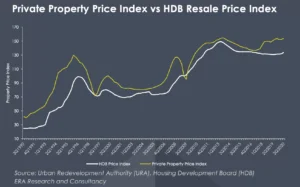
Private Property Price Index vs HDB Resale Price Index
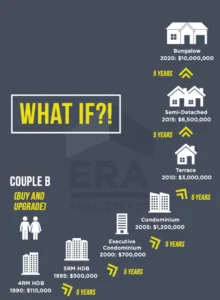
Say you bought a 4-room HDB flat in the 1990s for $110,000 and held onto it for 30 years. Depending on location, that unit could be worth $300,000 to $400,000 today, a genuinely solid profit of up to $290,000 if you sold now.
Now compare that to an alternative path. Suppose over those same 30 years, steady career progression let you upgrade from that 4-room flat to a condominium, and eventually to a landed home. That asset progression could realistically put your property’s value well above $10 million, an enormous jump from the original $110,000.
There are practical reasons to consider upgrading too, beyond pure capital growth. Many BTO flats sit in newer estates like Canberra or Tengah, which can mean a longer commute to work. Your family may have grown, or elderly parents may have moved in, both genuine reasons to want more space. And if you have young children, living within 1km of your preferred primary school can meaningfully improve your registration odds while cutting daily travel time. Upgrading from your first HDB flat isn’t just a long-term investment decision, it’s often a genuine quality-of-life one too.
Mistake 2: Overpaying for an Older Resale HDB Flat
Is selling your current flat to buy another always the right move? Not necessarily, and this is where a lot of buyers get it wrong. Purchasing an older resale HDB flat at a premium price, after selling a perfectly good existing unit, is generally a mistake, even though plenty of buyers do exactly this for understandable reasons.
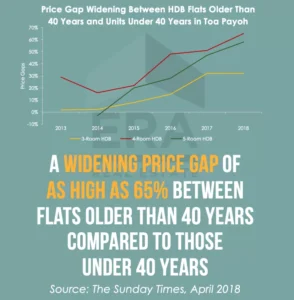
The Widening Price Gap Between HDB Flats Under and Over 40 Years Old
Here’s why people still do it, and why each reason carries more risk than it first appears.
1. Chasing SERS Compensation
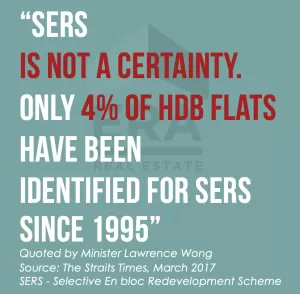
Some owners buy older flats specifically hoping their estate gets selected for the Selective En Bloc Redevelopment Scheme (SERS), which offers compensation and rehousing benefits, including a fresh 99-year lease nearby, if chosen.
Selective En Bloc Redevelopment Scheme (SERS) Overview
The catch is that SERS is far from guaranteed. Only a small fraction of HDB flats in Singapore have ever been selected for SERS since the scheme began in 1995. Meanwhile, the price gap between HDB flats older than 40 years and those under 40 years has been reported as high as 65%, a significant premium to pay for a chance that may never materialise.
2. Waiting for VERS
The Voluntary Early Redevelopment Scheme (VERS) offers a similar hope for precincts older than 70 years, potentially allowing residents to redevelop before their 99-year lease actually expires.
Voluntary Early Redevelopment Scheme (VERS) Overview
But VERS compensation is generally less generous than SERS, and just like SERS, selection is never guaranteed. Betting on either scheme as your primary reason for buying an older, pricier flat is a genuinely risky strategy.
3. Wanting to Stay Near Parents
Some buyers accept the premium on an older flat purely to stay close to ageing parents, hoping HDB grants will help offset the cost. That’s a reasonable emotional priority, but it’s worth knowing the trade-offs clearly. A shorter remaining lease means the flat’s value naturally erodes faster over time, and since you’re no longer a first-time buyer, you won’t qualify for the same housing loan terms, meaning more cash out of pocket upfront.
There’s also a CPF wrinkle worth knowing. If you’re the youngest buyer on the application and the flat’s remaining lease is under 95 years, you can’t use 100% of your CPF toward the purchase, which means you’ll need considerably more cash to close the deal than you might expect.
Mistake 3: Overcommitting to a New Home After Selling
The third common property owner mistake in Singapore is the opposite problem: overcommitting financially to a new property after selling your existing HDB flat. This might sound contradictory to the upgrading advice above, but the real lesson is about pacing, upgrade when your finances genuinely support it, not just because you technically can.
Before committing to a new home, run through this quick affordability checklist:
- Do you have at least 6 months of living expenses saved, on top of your new mortgage, before you even purchase the new home? This buffer needs to exist beforehand, not be something you plan to build up afterward.
- Is your new property’s price roughly 5 years of your household’s annual income? Ideally, keep this under 7 years to avoid genuinely overcommitting.
- Are your monthly mortgage repayments under 40% of household income? You need enough left over to comfortably cover everyday expenses after the mortgage is paid.
It’s tempting to assume retrenchment or a major health issue “won’t happen to us.” But life is genuinely unpredictable, a global disruption, a sudden illness, or a job loss can all hit without warning, and if that happens while you’re stretched thin on a lavish new mortgage, the consequences compound quickly. On top of that, Seller’s Stamp Duty can meaningfully eat into your proceeds if you’re forced to sell within the current holding period, so a rushed, distressed sale rarely nets what you’d hope.
How to Avoid the 3 Biggest Property Owner Mistakes
Putting It Together
These three property owner mistakes in Singapore aren’t really separate problems, they’re two ends of the same balancing act. Staying passive costs you decades of missed growth. Overcommitting on the other end exposes you to real financial risk the moment life throws something unexpected your way. The sweet spot is upgrading deliberately, at the right time, with your numbers properly checked, not out of fear of missing out or blind optimism that nothing will go wrong.
A Word From SG Luxury Condo
Being a property owner in Singapore is genuinely something to be proud of, and it’s also a long-term commitment worth managing carefully. Avoiding these three property owner mistakes, staying passive, overpaying for an ageing flat, and overcommitting financially, puts you in a far stronger position to build real, lasting property wealth.
If you’d like help thinking through your own upgrade timeline or affordability numbers, SG Luxury Condo is happy to walk through it with you. Our HDB to condo upgrade guide walks through the process step by step if you’re ready to consider it. You’re also welcome to browse our full range of luxury condos for sale in Singapore once your numbers are clear.