Quick Answer: 15-Year vs 30-Year Mortgage at a Glance
Factor | 15-Year Mortgage | 30-Year Mortgage |
Monthly payment | Higher | Lower |
Interest rate | Typically higher | Typically lower |
Total interest paid | Less | More |
Equity build-up | Faster | Slower |
Cash flow flexibility | Tighter | More breathing room |
Best for | Disciplined savers, higher income | Buyers who want flexibility, investors |
Difference #1: Loan Term and Monthly Payment
Start with the obvious bit. One loan gets paid off in half the time of the other, so with a 15-year mortgage you’re making roughly half as many payments as you would with a 30-year one, just each payment is a lot bigger.
Take a $1,000,000 property with a $250,000 down payment, so $750,000 financed:
- 15-year mortgage: around $6,207 a month
- 30-year mortgage: around $3,451 a month, about $2,756 less
That gap right there is basically the whole decision. Thirty years buys you breathing room today. Fifteen years forces the debt down faster, whether you feel like paying that much or not.
Difference #2: Interest Rate and Total Interest Paid
Here’s something a lot of people get backwards: a 15-year loan usually carries a higher interest rate than a 30-year one, not lower. Banks are taking on a bigger monthly obligation from you relative to your income, and pricing reflects that.
But don’t let the rate fool you. Because you’re paying the loan off in half the time, you still end up paying a lot less in total interest over the life of the loan, even with the higher rate attached to it.
Same $750,000 loan:
- 15-year mortgage: roughly $117,338 in total interest
- 30-year mortgage: roughly $242,433 in total interest, about $125,000 more
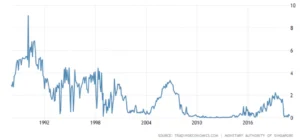
So if minimising total interest is your priority, the 15-year loan still wins, just not for the reason most people assume. If you want to see where Singapore housing interest rates actually stand right now, it’s worth checking before you run your own numbers.
What Actually Moves Your Mortgage Rate
It’s tempting to assume the loan term is the only thing setting your rate. It’s not. A few things stack together to decide what you’re actually offered:
- Loan term — shorter terms often price higher because of the larger monthly commitment
- Loan-to-value ratio — a bigger down payment can pull the rate down
- Prevailing benchmark rates — SORA here in Singapore moves with the broader economy
Two people applying for the same 30-year mortgage can walk away with different offers. The loan term is just one piece of that pricing puzzle. If you want to see how this plays out at the market level, our breakdown on how interest rates affect Singapore property prices is worth a read.
How Interest Rates Ripple Through Singapore’s Property Market
It’s not just your personal payment that moves when rates shift. Interest rates set the tone for buyer demand across the whole market. When rates climb, monthly payments climb with them, and that cools how much buyers are willing to stretch for a unit. When rates fall, borrowing gets cheaper, buyers get bolder, and prices tend to firm up.
That’s part of why timing matters almost as much as term length. If you’re weighing this against a purchase decision right now, it’s worth checking how much property you can realistically afford before locking in a term either way.
Difference #3: How Fast You Build Equity
Here’s the thing about a 15-year loan: more of every payment goes toward the actual amount you owe, not the interest sitting on top of it. So you own a bigger chunk of the home sooner. If you want to be mortgage-free before you retire, or you like the idea of having equity ready to tap into later, that’s the appeal.
A 30-year loan works the other way around. In the early years, most of what you’re paying is interest, so your ownership stake grows slowly at first. That’s not a design flaw. It’s just the price of a smaller monthly bill.
Difference #4: Cash Flow, Investing, and the Power of Leverage
This is the part almost nobody actually runs the numbers on, and it might be the most important one on this whole page.
A 15-year mortgage saves you on interest, sure. But it also locks up more of your income every single month. If you’re still building an emergency fund, paying off other debt, or you’d rather have money working for you elsewhere, that bigger payment can quietly hold you back for years.
With a 30-year loan, you keep that $2,756 monthly difference. Say you put it into a broad index fund, something tracking the S&P 500, earning a conservative 7% a year based on long-run averages. Stay consistent for 15 years and that habit could grow to somewhere around $231,490.
Compare that against the $125,000 you’d save in interest with the 15-year loan. Even netting that out, choosing the shorter term in this scenario could mean leaving over $100,000 of investment growth on the table. That’s the opportunity cost nobody mentions at the bank.
The catch, obviously, is that this only works if you actually invest the difference and leave it alone. That’s the whole game, and it’s harder than it sounds.
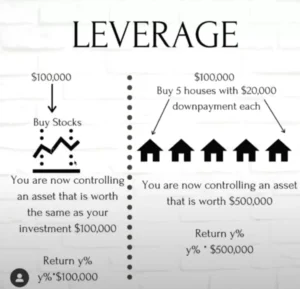
This is also why plenty of property investors and upgraders stick with a 30-year mortgage even when they could comfortably afford the shorter term. Extra cash on hand each month means capital ready for a renovation, a second property’s down payment, or just getting through a slow income year without missing a payment.
Where Your Mortgage Term Fits Into a Bigger Property Investment Strategy
If this is your only property, the calculus mostly stops at “what fits my household budget.” But if you’re thinking about this purchase as one piece of a longer property investment plan, the mortgage term changes what other moves are available to you.
A 30-year loan keeps more cash free for a second acquisition, a renovation that lifts rental yield, or cushioning you through a market dip without a forced sale. A 15-year loan builds equity you can eventually leverage through refinancing or selling, but it ties up capital you might have deployed elsewhere in the meantime. Neither is automatically the smarter investment move. It depends on what you’re trying to build over the next decade, not just the next mortgage statement. Our guide to property investment strategy in Singapore goes deeper into how financing choices tie into long-term returns.
Pros and Cons of a 15-Year Mortgage
Advantages:
- Pay off your home in half the time
- Save a meaningful chunk of money in total interest over the life of the loan
- Build home equity much faster
- Debt-free sooner, which matters heading into retirement
Disadvantages:
- Higher interest rate than a 30-year loan, generally
- Much higher monthly payment
- Less room left over to save or invest elsewhere
- Tighter cash flow if your income takes an unexpected hit
Pros and Cons of a 30-Year Mortgage
Advantages:
- Lower, more manageable monthly payment
- Lower interest rate than a 15-year loan, generally
- Frees up cash for investing, savings, or other goals
- More flexibility through unpredictable years, a career change, kids, a new venture
Disadvantages:
- Pays noticeably more in total interest across the life of the loan
- Builds equity more slowly in the early years
- Only “wins” financially if you’re disciplined enough to actually invest the difference
So, Should You Take a 15-Year or a 30-Year Mortgage?
After all the maths, here’s the honest answer: it comes down to discipline, not arithmetic.
Take a 30-year mortgage if:
- You’re confident you’ll actually invest the monthly savings instead of spending them
- You want room for other goals, a business, a second property, your kids’ education
- Your income is likely to grow and you’d rather keep payments manageable now
- Liquidity matters more to you than shaving off interest
Take a 15-year mortgage if:
- You find it hard to stick to an investment plan or investing feels intimidating
- You want the forced-savings effect of a bigger, non-negotiable payment
- Your income comfortably covers the higher amount with room left over
- Being mortgage-free well before retirement matters to you
A Middle Ground: Hybrid Strategies
You don’t have to pick a lane forever. A couple of approaches blend the benefits of both:
- Take the 30-year loan, but pay it down faster. Make voluntary extra payments toward the principal whenever your cash flow allows, without being locked into a bigger required payment during leaner months. You get the lower minimum payment as a safety net, and the option to chip away faster when you can afford to.
- Refinance later. Start with a 30-year term for flexibility, then refinance into a 15-year term once your income grows or your other financial goals are already funded.
If you want to see how any of these play out against your own numbers before deciding, our mortgage calculator is a quick way to test scenarios without committing to anything.