Ask around and you will notice property comes up again and again as the investment people trust most in Singapore more than stocks, more than crypto, or simply leaving cash in a savings account. There is a clear reason for that: property offers a steady blend of income, growth, and safety that is hard to find anywhere else.
We have fully rewritten our earlier piece to follow a clearer layout. SG Luxury Condo walks through this exact list with clients before discussing any specific home or condo project. Here is the full picture.
TL;DR: The primary reasons to invest in property in Singapore come down to eight key factors: steady rental income, funding your next home, leverage through bank loans, risk diversification, capital growth, inflation protection, forced savings, and tax savings.
5 Foundation Reasons Every Investor Starts With Property
1. Rental Income: Real Monthly Cash Flow
Rental income is usually the first reason people think of, and for good reason. Renting out a unit or a spare room gives you a regular stream of income without needing daily work once your tenants move in. Before you rent out a home, you must plan for your monthly loan payment, property taxes, and basic renovation costs.
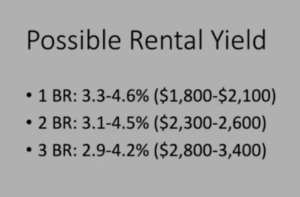
Gross rental yields for private condos in Singapore currently range from 3% to 4.8% depending on the location and unit size, with smaller units and suburban homes often giving higher yields. If you are looking to maximize your returns, understandingwhich condo is good for investment in Singapore will help you narrow down units with strong rental demand.
2. Future Property Funding: Building Capital for Your Next Home
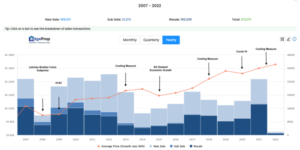
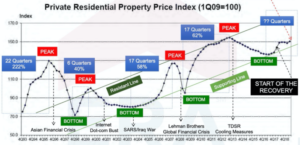
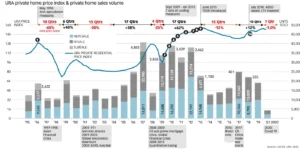
Singapore’s property market has shown a clear long-term trend: prices generally move higher over each 7 to 10 year cycle. This steady growth turns today’s property gains into the downpayment for your next purchase.
Using profits from your current unit to help buy a bigger or better-located home creates a compounding effect. Many successful buyers use this step-by-step approach to build their property portfolio over time rather than buying everything all at once.
3. The Power of Leverage
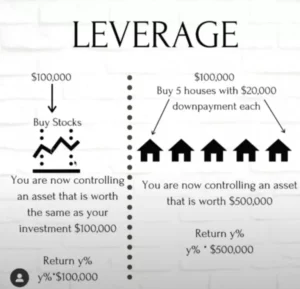
Property lets you control a valuable asset with a smaller amount of upfront cash. With a 25% down payment, the current standard minimum for a first home loan you control 100% of the property’s value. Banks are comfortable lending against real estate because it is a physical, low-risk asset.
Your Cash Outlay
Property Value You Control
Effective Leverage
$250,000 (25%)
$1,000,000
4x
$360,000 (40%, 2nd property)
$900,000
2.5x
Before committing to a purchase, running the numbers on a dedicatedmortgage calculator helps ensure your loan commitments remain well within safe servicing limits.
4. Risk Diversification: Spreading Money Across Different Property Types
Property investment is not limited to standard homes. You can lower your overall risk by looking at different types of real estate, as each type behaves differently during economic changes:
Residential: High demand, easy to rent out, and the most common starting point for buyers.
Commercial: Uses long-term corporate leases, providing steady income on different cycles than residential units.
Industrial: Lower entry prices with different regulatory rules that appeal to business-focused buyers.
Mixed-Use: Combines the safety of residential spaces with the income potential of commercial shops in one building.
5. Capital Appreciation: Long-Term Value Growth
Capital appreciation is simply the gain you make when your property sells for more than you paid. Say you bought an executive condo for $1 million and sold it seven years later for $1.5 million, that’s $500,000 in capital appreciation, on top of any rental income collected along the way.
Staying informed about broader trends in thereal estate market in Singapore allows investors to time their entries and exits for maximum appreciation. While short-term market dips can happen, reasonable holding periods and careful research have made capital growth a reliable path for wealth creation.
Bonus: 3 Other Key Reasons
A True Shield Against Inflation
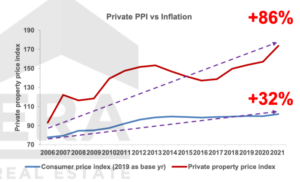
Cash sitting in a bank account loses buying power over time as prices rise. Property moves in the opposite direction. Rents and property values historically rise along with inflation, keeping your purchasing power safe over the long run.
Forced Savings Through Monthly Loan Payments
Every monthly mortgage payment builds equity in a real asset. Instead of your money disappearing into rent or daily expenses, your loan payment acts like an automatic savings account that grows your personal net worth every month.
High Tax Efficiency
Singapore does not charge capital gains tax on property sales. While you still need to pay Buyer’s Stamp Duty (BSD) and follow Seller’s Stamp Duty (SSD) rules if selling early, keeping 100% of your actual property profits is a major tax advantage over many other forms of investment. For multi-property owners, exploring legitimate strategies onhow to avoid ABSD can significantly reduce upfront acquisition costs.
Putting It All Together
None of these eight factors work well on their own. High leverage without good research carries risk, and rental income without factoring in maintenance costs can lead to surprises.
The most successful property owners look at all eight factors together before making a move.
A Word From SG Luxury Condo
Property remains one of the safest ways to build long-term wealth in Singapore, but success requires clear planning, the right purchase price, and a comfortable timeline. If you are starting from scratch, working with atop property agent in Singapore can simplify the market analysis and financing process.
If you want to explore what property investment looks like for your budget, SG Luxury Condo is here to help you work through the numbers step by step. Feel free to reach out for a consultation or browse our latest property listings to start your search.
Frequently Asked Questions
What are the main reasons to invest in Singapore property?
The main reasons are rental income, funding future home upgrades, bank leverage, risk diversification, capital growth, inflation protection, forced savings, and no capital gains tax.
What rental yields can I expect right now?
Gross rental yields for private condos generally range from 3% to 4.8%, with smaller suburban units offering yields on the higher end of that scale.
How does leverage work in real estate?
A 25% downpayment allows you to buy a property worth four times your initial cash outlay, amplifying your potential returns as the total asset grows in value.
Is property a good defense against inflation?
Yes. Historically, both property values and rental rates rise alongside general inflation, preserving your purchasing power better than cash.
Does Singapore tax profits from selling property?
No, Singapore has no capital gains tax on property sales. You only need to account for standard stamp duties during the transaction.
What does property diversification mean?
It means spreading your money across different sectors such as residential, commercial, industrial, or mixed-use properties to lower investment risk.
How does a mortgage act as forced savings?
Part of every monthly mortgage payment reduces your principal loan balance, directly increasing your ownership equity in the property over time.
Can I use profits from my first property to buy a second one?
Yes. Capital growth from an existing property can be cashed out upon sale to cover the downpayment for a larger or better property.
Is investing in Singapore property risk-free?
No investment is completely risk-free. Property prices follow market cycles, so buying at the right time with a long holding period is important.
Should I buy residential or commercial property first?
Most first-time buyers start with residential property because it is simpler to manage and easier to finance, while commercial properties suit experienced buyers seeking corporate leases.
Search “best property agent Singapore” and you’ll get pages of agencies claiming the title, glossy headshots, big transaction numbers, five-star review widgets. None of it tells you much about whether that specific person is the right fit for your specific sale or purchase. So instead of another list of vague adjectives, here’s a practical way to actually evaluate and choose the best property agent Singapore has for your situation.
SG Luxury Condo sees buyers and sellers get burned by this exact confusion often enough that a clearer framework felt overdue. This version gives you an actual framework, what to compare, what to ask, and what should make you walk away.
Step 1: Confirm They’re Actually Licensed
Before anything else, this takes two minutes and rules out a real risk. Every property agent in Singapore must be registered with the Council for Estate Agencies (CEA). Search their name or registration number on the public CEA register to confirm they’re currently licensed and check for any disciplinary history on file. Skipping this step is more common than people realise, and it’s the single easiest filter available to you.
Step 2: Match the Agent to What You’re Actually Buying or Selling
Not every agent specialises in the same corner of the market, and the best property agent Singapore has for a luxury condo purchase isn’t necessarily the right fit for an HDB resale flat, or vice versa.
Segment
What a Specialist Agent Should Bring
HDB resale
Deep familiarity with MOP rules, HDB grants, and resale procedure timelines
Private resale condo
Strong grasp of SSD, CPF refund mechanics, and comparable psf data by district
New launch
Direct developer relationships, early access to VIP previews, balloting guidance
Luxury / high-value
Discretion, a network of high-net-worth buyers, and fluency in freehold vs leasehold trade-offs at the prime end of the market
Investment property
Comfort discussing ABSD, rental yield, and holding period strategy, not just closing a sale
If an agent’s background doesn’t actually match your segment, that’s worth asking about directly rather than assuming general experience transfers cleanly.
Step 3: Check Their Actual Track Record, Not Just Their Pitch
“Years of experience” tells you very little on its own. Ask for a genuine transaction history, closed deals, districts covered, deal sizes, and cross-check it where you can against public URA caveat data. A confident agent will hand this over without hesitation.
How many transactions have you closed in this specific district or segment in the last 12 months?
Can I speak to a past client directly, not just read a curated quote?
What’s your average time from listing to sale, or search to purchase, for clients like me?
Step 4: Assess Their Actual Market Knowledge
A good agent can recite a sales pitch. A great one can explain why a specific unit is priced the way it is, relative to recent URA transactions, and how ABSD or TDSR actually applies to your specific profile.
Weak Agent Signal
Strong Agent Signal
Quotes price without recent comparables
Pulls actual URA transaction data to justify pricing
Can’t explain your ABSD or TDSR exposure clearly
Walks you through your specific stamp duty and loan numbers
Vague about the district’s future
References specific URA Master Plan changes or upcoming MRT lines
Pushes a decision quickly
Encourages you to compare options and take the time you need
Step 5: Watch How They Communicate From the First Meeting
Poor communication is consistently one of the top complaints buyers and sellers report. You want an agent who updates you regularly, even when there’s nothing exciting to share, rather than one who goes quiet for weeks. Just as importantly, notice who does most of the talking. As the client, you should be doing the bulk of it early on, describing exactly what you need, while the agent asks good follow-up questions rather than pitching non-stop.
Step 6: Evaluate Their Negotiation Approach
Negotiation matters enormously in Singapore, where a single percentage point on a multi-million dollar property can mean tens of thousands of dollars. A skilled agent backs their position with actual comparable transactions, not just persistence, and they’re upfront when a request genuinely isn’t realistic instead of promising something they can’t deliver.
Step 7: Ask About Their Network Beyond the Deal Itself
Property transactions in Singapore rarely begin and end with matching a buyer to a unit. Ask whether they have working relationships with:
Conveyancing lawyers they can confidently refer you to
Mortgage bankers who can move quickly on In-Principle Approval
Renovation contractors, if you’re buying a resale unit that needs work
Property valuers, if you need an independent opinion before negotiating
An agent with no answer to any of these is likely handling transactions in isolation rather than guiding you through the full journey.
Step 8: If You’re Selling, Scrutinise Their Marketing Plan
Ask directly how they’ll market your listing: professional photography, a video walkthrough, which portals they’ll use, and how they plan to qualify buyers before booking viewings. Weak listings with dim photos and a one-line description sit unsold far longer than they should, and that’s squarely down to the agent’s execution, not the property itself.
Step 9: Confirm They’re Upfront About Conflicts of Interest
Dual representation, where the same agent represents both buyer and seller, is allowed in Singapore, but it should always be disclosed clearly and handled with genuine neutrality. A trustworthy agent tells you plainly when this applies rather than letting you discover it after the fact.
Step 10: Verify Testimonials Independently
Ask for reviews you can actually check, Google Business reviews or direct references you can contact yourself, rather than relying solely on curated quotes on the agent’s own website. The best agents also stay genuinely current on cooling measures and MAS lending rules rather than coasting on years-old knowledge, since clients today can look most of this up themselves.
Red Flags vs Green Flags at a Glance
Red Flag
Green Flag
Won’t share CEA registration or track record
Shares both without hesitation
Heavy pressure to decide quickly
Encourages comparison and patience
Vague on commission or conflicts of interest
Explains both clearly upfront
Inconsistent or slow communication before you’ve even engaged them
Responsive and proactive from the first contact
No clear marketing or search strategy
Lays out a concrete plan specific to your situation
A Word From SG Luxury Condo
Finding the best property agent Singapore has to offer isn’t about picking whoever answers the phone fastest. It’s about working through this checklist, licensing, track record, specialisation, communication, and honesty, before you commit to anyone. Buying and selling homes should feel like a guided process, not something you’re just trying to survive.
If you’d like to see how SG Luxury Condo measures up against this exact framework, ourtrack record andtestimonials are available to review directly, and you can learn moreabout us or browse our full range ofluxury condos for sale in Singapore if you’re ready to start your search.
Advanced Heading
Frequently Asked Questions
How do I check if a property agent in Singapore is actually licensed?
Search their name or registration number on the CEA public register. This confirms whether they’re currently licensed and shows any disciplinary history on record.
What's the biggest red flag when choosing a property agent?
Reluctance to share a verifiable track record or CEA registration, combined with pressure to decide quickly, are two of the clearest warning signs worth taking seriously.
Does more years of experience automatically mean a better agent?
Not necessarily. A genuine, checkable transaction track record in your specific segment matters far more than years alone.
Should I choose a different agent for HDB versus a luxury condo purchase?
Ideally, yes. Each segment involves different rules and buyer profiles, HDB resale procedure and MOP rules differ significantly from luxury freehold transactions, so specialisation genuinely matters.
Is dual representation, where one agent represents both buyer and seller, allowed in Singapore?
Yes, but it must be disclosed clearly and handled with genuine neutrality. An agent who doesn’t disclose this upfront is a warning sign, not a technicality to overlook.
How important is an agent's knowledge of URA data and cooling measures?
Very. The best property agent Singapore buyers trust can explain pricing using real URA transaction data and walk you through your specific ABSD or TDSR exposure clearly.
What should I ask an agent before engaging them to sell my property?
Ask specifically how they plan to market the listing, which portals they’ll use, whether professional photography or video is included, and how they’ll qualify potential buyers.
Why does an agent's network of lawyers and bankers matter?
A well-connected agent can refer you to trusted conveyancing lawyers and mortgage bankers, saving you the time and risk of finding these professionals blind on your own.
How can I verify an agent's testimonials are genuine?
Look for reviews on independent platforms like Google Business, or ask for direct references you can actually contact, rather than relying solely on curated quotes on the agent’s own website.
What's a reasonable expectation for how often my agent should communicate with me?
Regular updates on your buying or selling position, even when there’s no major development to report, using your preferred communication method, whether that’s text, call, or email.
TL;DR: Selling a home fast in Singapore comes down to eight things: timing your sale against the market cycle, pricing it competitively from day one, presenting the unit well, choosing a properly CEA-registered agent, knowing your real numbers before you list (SSD, CPF refund, outstanding loan), marketing it with strong photos and honest listings, managing viewings so buyers feel comfortable, and being mentally prepared for negotiation. Miss the numbers step and you can end up “selling fast” for less than you actually needed to walk away with.
Selling a home should feel like a milestone, but for a lot of owners it turns into weeks of stress, low-ball offers, and second-guessing the asking price. The difference between a smooth sale and a stressful one usually comes down to preparation, not luck. If you want to sell your home fast in Singapore without leaving money on the table, there’s a fairly predictable set of things that actually move the needle, and most of them have nothing to do with luck or timing the market perfectly.
Time Your Sale Against the Market Cycle
Selling into a rising market genuinely nets you more than selling into a flat or declining one, and it’s worth checking theproperty price index for your specific segment before committing to a listing date. If your current home still suits your needs and the market’s soft, sometimes the better move is simply waiting it out rather than rushing to sell your home fast in Singapore at a discount you didn’t need to accept.
Get the Price Right From Day One
Overpricing is the single most common reason listings sit unsold for months, and it’s the opposite of what you want if the goal is to sell your home fast in Singapore without losing money in the process. Buyers today check recent transacted prices on portals before they even book a viewing, so an inflated asking price gets noticed immediately, and every extra week on the market quietly signals to buyers that something might be wrong with the unit. Pull recent comparable transactions in your building or neighbourhood, price competitively against them, and resist the urge to test the market with a number nobody else is asking.
Know Your Real Numbers Before You List
This is the step that gets skipped most often, and it’s the one that actually determines whether you can afford to sell fast or need more room to negotiate. Before listing, work out:
What to Check
Why It Matters
Seller’s Stamp Duty (SSD)
Applies if you sell within 4 years of purchase (for properties bought on or after 4 July 2025); rates step down each year you hold
CPF refund with accrued interest
Any CPF used to buy the property, principal plus 2.5% interest, must be refunded to your CPF Ordinary Account on sale
Outstanding home loan
Settled first from your sale proceeds before anything else is disbursed
MOP (HDB only)
Must be fulfilled, generally 5 years, before you can sell on the open market
Agent commission
Typically 1% to 2% of sale price, always confirm the rate in writing before engaging
Legal and administrative fees
Roughly $2,000 to $3,500 for conveyancing
If your sale proceeds, after settling the loan, aren’t enough to cover your full CPF refund, you generally don’t need to top up the shortfall in cash, provided you sold at market value. It’s a common misconception that trips people up mid-sale, so it’s worth confirming with your lawyer early rather than assuming the worst.
Present the Home the Way a Showflat Would
Buyers respond to feeling, not just square footage. Declutter, deep clean, and fix small cosmetic issues, chipped paint, a squeaky door, that pile of shoes by the entrance, before your first viewing. A fresh coat of paint on the front door and a tidy walkway genuinely change a buyer’s first impression before they’ve even stepped inside. If your furniture is dated or the space feels cramped, professional home staging can be worth the cost for higher-value units, since buyers are ultimately deciding both emotionally and logically.
Choose a Properly Registered Agent, and Verify It
Your agent’s marketing reach and negotiation skill directly affect how fast your home sells and for how much. Before engaging anyone, check their CEA registration number on the CEA public register, this takes two minutes and confirms they’re actually licensed to transact in Singapore. Ask directly how they plan to market your listing, which portals they’ll use, whether professional photography or a video walkthrough is included, and how they’ll qualify buyers before scheduling viewings. A good agent should be able to answer all of this clearly, not vaguely.
Market It Properly, Photos Included
Your listing’s first photo determines whether a buyer clicks through at all. Bright, wide-angle, well-lit photos consistently outperform dim, cluttered ones, and a short video walkthrough has become close to standard expectation on major portals like PropertyGuru and 99.co. Include floor plans if you have them, buyers increasingly want to see the actual layout before booking a viewing rather than relying on photos alone.
Manage Viewings So Buyers Feel Comfortable
Buyers tend to open up more, ask honest questions, voice real objections, when the seller isn’t standing right there. Let your agent run the viewing rather than hovering yourself. It sounds counterintuitive, but a buyer who feels free to linger and picture themselves living there is more likely to make an offer than one who felt watched the whole time.
Negotiate With a Clear Head and a Real Walk-Away Number
Go into negotiations knowing your floor price and your ideal price, and don’t let a single lowball offer rattle you into either accepting too little or losing your composure. Buyers pick up on desperation quickly, so avoid vacating the home early or dropping your price dramatically after just one quiet week. Once you’ve agreed on terms, the actual completion process for a resale property typically runs 8 to 12 weeks from the buyer exercising the Option to Purchase to keys changing hands, with your CPF refund and net proceeds landing on completion day itself.
A Word From SG Luxury Condo
Selling your home fast in Singapore isn’t about tricks, it’s about doing the unglamorous prep work properly: knowing your real numbers, pricing honestly, presenting well, and choosing the right person to represent you. Sellers who skip the numbers step in particular tend to get unpleasant surprises exactly when they can least afford them, right before completion.
If you’re getting ready to list and want a clear read on your actual numbers, SSD, CPF refund, and net proceeds, before you commit to a price, SG Luxury Condo is happy to walk through it with you. Ourproperty consultation sessions cover exactly this kind of pre-sale planning, and you’re welcome to check ourtrack record andtestimonials if you’d like to see how we’ve helped past clients sell their home fast in Singapore, or browse our full range ofluxury condos for sale in Singapore if you’re upgrading right after your sale.
Advanced Heading
Frequently Asked Questions
What's the fastest way to sell a home in Singapore without losing money?
Pricing competitively from day one based on recent comparable transactions, rather than testing an inflated asking price and dropping it later, is consistently the biggest factor in selling both fast and profitably.
Do I need to pay Seller's Stamp Duty if I sell my home fast?
Only if you’re selling within 4 years of purchase for properties bought on or after 4 July 2025. Outside that holding period, no SSD applies regardless of how quickly you sell.
How does the CPF refund work when I sell my property?
Any CPF used toward your original purchase, principal plus accrued interest at 2.5% per annum, must be refunded to your CPF Ordinary Account from your sale proceeds, typically within about two weeks of completion.
What if my sale proceeds aren't enough to cover my full CPF refund?
You generally don’t need to top up the shortfall in cash, provided the property was sold at fair market value. This is a common point of confusion worth clarifying with your lawyer before you list.
How do I check if my property agent is actually licensed?
Search their name or registration number on the CEA public register, which confirms whether they’re currently licensed to transact property in Singapore.
How long does it take to sell a condo in Singapore from listing to completion?
Typically 4 to 6 months total, with marketing and viewings taking 1 to 3 months and legal completion taking another 8 to 12 weeks after the buyer exercises the Option to Purchase.
Should I be present during viewings of my own home?
Generally, no. Buyers tend to feel more comfortable asking honest questions and picturing themselves in the space when the seller isn’t present, letting your agent manage the viewing instead.
What's the Minimum Occupation Period and how does it affect selling?
For HDB flats, MOP is generally 5 years before you can sell on the open market. Executive Condominiums also carry a 5-year MOP starting from TOP, before you can sell to Singaporeans and PRs.
Is home staging worth the cost when selling?
For higher-value units especially, yes. A well-presented, decluttered space creates a stronger first impression, and buyers are making both an emotional and logical decision when viewing a home.
What costs should I budget for when selling my property?
Beyond any applicable SSD, budget for agent commission (typically 1% to 2%), legal and conveyancing fees (roughly $2,000 to $3,500), and your CPF refund, which reduces your net cash proceeds even though it’s technically your own money returning to your account.
The ABSD rate Singapore charges depends on your residency status and how many properties you already own.
Singapore Citizens pay 0% on a first property, 20% on a second, and 30% on a third or beyond.
Permanent Residents pay 5%, 30%, and 35% respectively.
Foreigners pay a flat 60% regardless of property count — except nationals of the US, Switzerland, Norway, Iceland, and Liechtenstein, who pay Singapore Citizen rates under free trade agreements.
Trust purchases carry a flat 65% ABSD.
ABSD is payable in cash or CPF within 14 days of exercising your Option to Purchase.
Legal remission is available in specific situations, most notably for married couples selling their first home within 6 months of buying a second.
Additional Buyer’s Stamp Duty (ABSD) Rates
Correct as of 15/02/2023 (Latest)
Additional Buyer’s Stamp Duty
1st Property Purchase
2nd Property Purchase
3rd Property Purchase
Singapore Citizens
Nil
20% (Former 17%)
30% (Former 25%)
Permanent Residents
5%
30% (Former 25%)
35% (Former 30%)
Foreigners
60% (Former 30%)
60% (30%)
60% (30%)
Misc: Trustees 65% (can claim back)
Buyer Stamp Duty
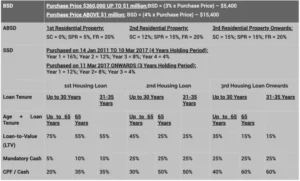
Purchase Price $360,000 to $ 1 million: (3% X Purchase Price – $5,4002
Purchase Price $1 million to $1.5 million: (4% X Purchase Price – $15,400)
Purchase Price $1.5 million to $3 million: (5% X Purchase Price – $30,400)4
Additional Buyer’s Stamp Duty sits on top of the standard Buyer’s Stamp Duty every property buyer pays. It was introduced in December 2011, initially just 10% for foreigners and corporate entities, as one of Singapore’s cooling measures aimed at moderating demand and keeping the market from overheating. The ABSD rate Singapore charges has been raised repeatedly since then, most recently in April 2023, and shows no sign of being a temporary measure at this point.
Working Out Your Total Stamp Duty: A Real Example
Numbers land better with an actual scenario. Say a Singapore Citizen is buying a $1.8 million condo as their second property.
BSD: roughly $50,600 based on the tiered calculation above
ABSD at 20%: $360,000
Total stamp duty: approximately $410,600, payable within 14 days of exercising the OTP
That’s before legal fees, agent commission, or the downpayment itself. This is exactly why running the full ABSD rate Singapore applies to your specific profile matters before you fall in love with a specific unit, not after. Rather than doing this by hand every time, our calculator tools let you plug in your purchase price and buyer profile and get the same breakdown instantly.
ABSD Remission for Married Couples
There’s one commonly used exception worth knowing well. If a foreigner or PR is married to a Singapore Citizen and doesn’t currently own any residential property, ABSD isn’t payable on their matrimonial home.
And if a married couple — Singapore Citizen and PR, or Singapore Citizen and foreigner — buys a second property while still owning their first, they can apply for ABSD remission provided they sell the first property within 6 months of completing the second purchase.
This remission has genuinely saved clients tens of thousands of dollars when timed correctly, but it does require careful planning around the sale of the first property. Missing that 6-month window forfeits the remission entirely.
Free Trade Agreement Exemptions
Nationals and Permanent Residents of Iceland, Liechtenstein, Norway, and Switzerland, along with nationals of the United States, are treated the same as Singapore Citizens under their respective free trade agreements with Singapore. That means 0% ABSD on a first property, rather than the standard 60% foreigner rate.
Worth checking your specific nationality against this list before assuming the full foreigner rate applies to you — it’s a detail that’s easy to miss and expensive to get wrong.
ABSD on Trusts: The 65% Rate
Since May 2022, transferring residential property into a living trust triggers a flat, non-remittable 65% ABSD, payable upfront at the point of transfer. This was introduced specifically to close a planning loophole where property was being placed in trust for minor children to effectively reset a family’s property count.
A refund is possible only if all beneficial owners are identifiable individuals with beneficial ownership vested at the time of transfer, and that ownership can’t later be varied or revoked. Our detailed guide onbuying property under trust in Singapore covers the full mechanics if you’re considering this route.
Can You Pay ABSD Using CPF?
Yes, CPF savings can go toward ABSD and related survey fees. The catch is timing. For resale property purchases, ABSD must be paid within 14 days of exercising the OTP, well before CPF reimbursement typically processes, so most buyers pay cash upfront and apply for CPF reimbursement afterward rather than relying on CPF to cover it directly at the point of payment.
Legal Ways to Reduce Your ABSD Exposure
Tax evasion is illegal, but Singapore does offer a handful of legitimate, well-established strategies to legally reduce ABSD exposure:
Decoupling — restructuring ownership between spouses so one becomes a first-time buyer again for a subsequent purchase
Buying under a child’s name via trust — though this now carries the 65% trust ABSD unless specific remission conditions are met
Choosing a dual-key unit — some buyers use this to functionally separate living and rental space within a single purchase
Timing a sale within the 6-month remission window — relevant if you’re a married couple upgrading
The Full History of ABSD and Property Cooling Measures
ABSD hasn’t stood still since 2011, and it doesn’t exist in isolation either — it’s one piece of a much longer chain of cooling measures Singapore has layered on since the mid-90s. Worth understanding the full trajectory, since it tells you the direction rates have consistently moved, and how ABSD fits into the bigger picture of loan limits, seller’s stamp duty, and TDSR rules.
May 1996
Gains from selling properties within three years of purchase taxed as income — 100% of gains if sold within one year, two-thirds in the second year, one-third in the third year.
Payment of stamp duty by the buyer brought forward to the time of signing the sale and purchase agreement, closing a loophole that let speculators buy and sell uncompleted properties without paying stamp duty.
Seller’s Stamp Duty (SSD) introduced on residential properties sold within three years of purchase.
Loan-to-Value (LTV) limit set at 80% for housing loans.
Foreigners who are not PRs, and non-Singapore companies, no longer allowed Singapore-dollar housing loans. (These measures were rolled back between November 1997 and July 2005.)
September 2009
Removal of the Interest Absorption Scheme (IAS) and Interest-Only Housing Loans (IOL), effective 14 September 2009.
Property-related Budget 2009 assistance measures for developers allowed to expire as scheduled.
February 2010
SSD reintroduced at up to 3% on residential properties bought on or after 20 February 2010 and sold within one year.
LTV limit lowered from 90% to 80% for all housing loans.
August 2010
SSD holding period extended from one year to three years for properties bought on or after 30 August 2010.
For buyers with an existing outstanding housing loan, minimum cash downpayment raised from 5% to 10%, and LTV limit lowered from 80% to 70%.
January 2011
SSD holding period extended further to four years, with rates set at 16%, 12%, 8%, and 4% for properties sold in the first through fourth year of purchase.
LTV limit lowered to 60% for individuals with one or more outstanding housing loans, and to 50% for non-individual buyers.
December 2011
Additional Buyer’s Stamp Duty (ABSD) introduced for the first time, on top of BSD, for certain categories of residential purchases.
Highest ABSD rate of 10% imposed on foreigners and corporate entities buying any residential property.
Singapore Citizens owning two properties and buying a third pay 3% ABSD. PRs owning one property and buying a second pay 3% ABSD. (Reliefs provided for qualifying developers and purchases under Singapore’s free trade agreements.)
October 2012
Maximum loan tenure of 35 years introduced for all new residential property loans.
LTV limit lowered to 40% (or 60% with no outstanding loan) where loan tenure exceeds 30 years or extends past age 65.
LTV limit for non-individual borrowers cut from 50% to 40%.
January 2013
ABSD raised by 5 to 7 percentage points across the board.
ABSD extended to PRs buying their first property and Singapore Citizens buying their second.
Foreigners and corporate entities charged 15% ABSD on any residential purchase.
LTV limits tightened further for buyers with existing loans; minimum cash downpayment for a second housing loan raised from 10% to 25%.
June 2013
MAS introduced the Total Debt Servicing Ratio (TDSR) framework, capping total monthly debt obligations at 60% of gross monthly income.
Existing LTV rules refined to prevent buyers circumventing tighter limits on second and subsequent loans.
July 2018
ABSD for Singaporeans and PRs buying a second or subsequent property raised by 5 percentage points.
ABSD for foreigners raised to 20% (from 15%); for corporate entities, raised to 25% (from 15%).
Developers buying residential property for development now pay an additional non-remittable 5% ABSD upfront.
LTV limits tightened by 5 percentage points across the board.
16 December 2021
ABSD for Singaporeans buying a second property raised by 5 percentage points; third or more, by 10 percentage points.
ABSD for PRs buying a second property raised by 10 percentage points; third or more, by 15 percentage points.
ABSD for foreigners raised by 10 percentage points; for corporate entities, raised to 35% (from 25%), with the additional 5% developer ABSD retained.
TDSR threshold lowered from 60% to 55% of monthly income.
LTV limit for HDB housing loans cut from 90% to 85%.
8 May 2022
ABSD (Trust) of 35% introduced on any transfer of residential property into a living trust from 9 May 2022 onward, payable upfront at transfer.
A refund is possible only if all beneficial owners are identifiable individuals, ownership has fully vested in them at the point of transfer, and that ownership can’t later be varied or revoked.
MSR/TDSR computations now use the higher of a 4% p.a. floor or the prevailing interest rate.
HDB loan applications from this date use a 3% interest rate floor for loan eligibility; LTV limit for HDB loans cut from 85% to 80%. HDB’s concessionary rate remains unchanged at 2.6% p.a.
A 15-month wait-out period imposed on private property owners and ex-owners before they can buy a non-subsidised HDB resale flat (waived for seniors aged 55+ downgrading from private property).
26 April 2023
ABSD raised from 17% to 20% for Singapore Citizens buying a second property.
ABSD raised from 25% to 30% for Singapore Citizens buying a third-plus property, and for PRs buying a second property.
ABSD raised from 30% to 35% for PRs buying a third-plus property.
ABSD raised from 30% to 60% for foreigners buying any residential property.
ABSD raised from 35% to 65% for entities and trusts, except housing developers.
3 July 2025
SSD holding period extended from 3 years back to 4 years.
Every adjustment across this timeline has moved in essentially one direction — tighter — which is worth keeping in mind if you’re weighing whether to buy now or wait for measures to ease. (Sources: MAS, MOF, URA, and Ministry of National Development press releases.)
How ABSD Actually Shapes Buyer Behaviour
The 60% foreigner rate in particular has visibly cooled foreign demand for Core Central Region property since 2023, part of why CCR price growth has moderated relative to OCR and RCR in recent years.
For local buyers, the jump from 0% to 20% ABSD on a second property is often the single biggest factor determining whether someone upgrades by selling first, or holds two properties simultaneously and absorbs the ABSD cost. It’s rarely a decision people make lightly once they see the actual dollar figure involved.
What to Do Before You Commit to a Second Purchase
Before signing anything, run the actual ABSD rate Singapore applies to your specific citizenship and property count, factor in BSD on top, and confirm whether any remission or FTA exemption genuinely applies to you. OurABSD calculator andmortgage affordability calculator work together to give you both the tax exposure and your realistic loan ceiling before you commit to a second property.
A Word From SG Luxury Condo
ABSD is genuinely the single biggest line item most buyers underestimate, and it’s not going anywhere given how consistently rates have climbed since 2011. Understanding exactly where you fall on the current table, and whether any remission or exemption applies to you, is worth doing properly before you start viewing units, not after you’ve already found one you love.
If you want a clear read on your own ABSD exposure before committing to a purchase, SG Luxury Condo is happy to run the numbers with you. Ourproperty consultation sessions cover exactly this kind of planning, and you’re welcome to browse our full range ofluxury condos for sale in Singapore once your numbers are clear.
Advanced Heading
Frequently Asked Questions
What is the current ABSD rate in Singapore for a second property?
For Singapore Citizens, 20%. For Permanent Residents, 30%. For foreigners, a flat 60% regardless of whether it’s their first, second, or subsequent property.
Do foreigners always pay 60% ABSD in Singapore?
Almost always, except for nationals and PRs of Iceland, Liechtenstein, Norway, and Switzerland, and nationals of the United States, who are treated the same as Singapore Citizens under free trade agreements.
Can I get an ABSD refund if I sell my first property after buying a second?
Yes — if you’re a married couple (Singapore Citizen with PR or foreigner spouse) and you sell your first property within 6 months of completing the second purchase, you can apply for ABSD remission.
Is ABSD payable using CPF?
Yes, but for resale purchases, ABSD must be paid within 14 days of exercising the OTP, which is typically faster than CPF reimbursement processes, so most buyers pay cash first and reclaim via CPF afterward.
How much is ABSD on a property placed into a trust?
A flat, non-remittable 65%, payable upfront when the property transfers into the trust, unless specific remission conditions around identifiable, vested beneficial ownership are met.
Has the ABSD rate for foreigners always been 60%?
No. It started at 10% in 2011, before being raised in stages to 15%, 20%, 30%, and finally 60% as of April 2023.
What's the difference between ABSD and Buyer's Stamp Duty?
BSD is a tiered tax every buyer pays regardless of citizenship or property count. ABSD is an additional tax layered on top, depending specifically on your residency status and how many properties you already own.
Are there legal ways to reduce ABSD exposure?
Yes — decoupling between spouses, timing a sale within the married couple remission window, and certain trust structures are all legitimate strategies, though each comes with its own costs and trade-offs worth weighing carefully.
Does ABSD apply to HDB flat purchases?
Yes, ABSD applies to both HDB and private residential property purchases, based on the same buyer profile and property count rules.
Why does ABSD keep increasing over time?
Each increase has been introduced as a cooling measure to moderate demand during periods of rapid price growth. Since 2011, every adjustment has moved rates upward, part of a broader pattern of tightening rather than easing.
Property AI
Here's a few ways we can help you
🤖
Would you like our AI Bot to help you find the perfect property? Our AI Bot can scrape through hundreds of property listings and provide you with a list of properties that matches your criteria.
Just now
⚡
🎯 Got it! AI is tailoring your feed...
What's happening now:
Scanning: Matching your criteria against 22,000+ active listings.
Analyzing: Filtering for your specific lifestyle preferences.
Curating: Picking the top 5 properties that hit every requirement.
⏳ We will analyze your search string. Real-time listings matching your exact lifestyle profile are loading and we will get back to you soon!