

5 Reasons to Invest in Property in Singapore (2026 Update)
Ask around and you will notice property comes up again and again as the investment people trust most in Singapore more than stocks, more than crypto, or simply leaving cash in a savings account. There is a clear reason for that: property offers a steady blend of income, growth, and safety that is hard to find anywhere else.
We have fully rewritten our earlier piece to follow a clearer layout. SG Luxury Condo walks through this exact list with clients before discussing any specific home or condo project. Here is the full picture.
TL;DR: The primary reasons to invest in property in Singapore come down to eight key factors: steady rental income, funding your next home, leverage through bank loans, risk diversification, capital growth, inflation protection, forced savings, and tax savings.
5 Foundation Reasons Every Investor Starts With Property
1. Rental Income: Real Monthly Cash Flow
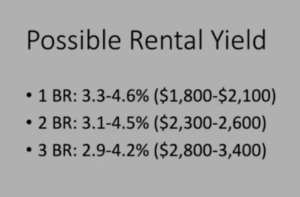
Rental income is usually the first reason people think of, and for good reason. Renting out a unit or a spare room gives you a regular stream of income without needing daily work once your tenants move in. Before you rent out a home, you must plan for your monthly loan payment, property taxes, and basic renovation costs.
Gross rental yields for private condos in Singapore currently range from 3% to 4.8% depending on the location and unit size, with smaller units and suburban homes often giving higher yields. If you are looking to maximize your returns, understanding which condo is good for investment in Singapore will help you narrow down units with strong rental demand.
2. Future Property Funding: Building Capital for Your Next Home
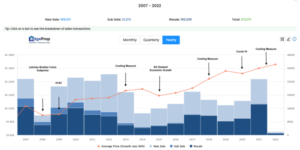
Singapore’s property market has shown a clear long-term trend: prices generally move higher over each 7 to 10 year cycle. This steady growth turns today’s property gains into the downpayment for your next purchase.
Using profits from your current unit to help buy a bigger or better-located home creates a compounding effect. Many successful buyers use this step-by-step approach to build their property portfolio over time rather than buying everything all at once.
3. The Power of Leverage
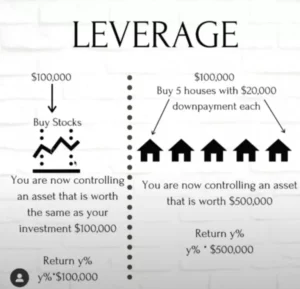
Property lets you control a valuable asset with a smaller amount of upfront cash. With a 25% down payment, the current standard minimum for a first home loan you control 100% of the property’s value. Banks are comfortable lending against real estate because it is a physical, low-risk asset.
Your Cash Outlay | Property Value You Control | Effective Leverage |
$250,000 (25%) | $1,000,000 | 4x |
$360,000 (40%, 2nd property) | $900,000 | 2.5x |
Before committing to a purchase, running the numbers on a dedicated mortgage calculator helps ensure your loan commitments remain well within safe servicing limits.
4. Risk Diversification: Spreading Money Across Different Property Types
Property investment is not limited to standard homes. You can lower your overall risk by looking at different types of real estate, as each type behaves differently during economic changes:
- Residential: High demand, easy to rent out, and the most common starting point for buyers.
- Commercial: Uses long-term corporate leases, providing steady income on different cycles than residential units.
- Industrial: Lower entry prices with different regulatory rules that appeal to business-focused buyers.
- Mixed-Use: Combines the safety of residential spaces with the income potential of commercial shops in one building.
5. Capital Appreciation: Long-Term Value Growth
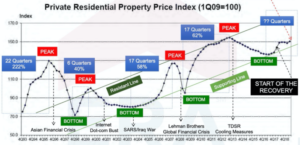
Capital appreciation is simply the gain you make when your property sells for more than you paid. Say you bought an executive condo for $1 million and sold it seven years later for $1.5 million, that’s $500,000 in capital appreciation, on top of any rental income collected along the way.
Staying informed about broader trends in the real estate market in Singapore allows investors to time their entries and exits for maximum appreciation. While short-term market dips can happen, reasonable holding periods and careful research have made capital growth a reliable path for wealth creation.
Bonus: 3 Other Key Reasons
A True Shield Against Inflation
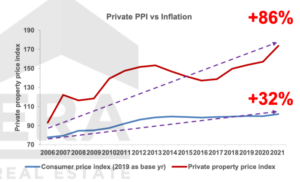
Cash sitting in a bank account loses buying power over time as prices rise. Property moves in the opposite direction. Rents and property values historically rise along with inflation, keeping your purchasing power safe over the long run.
Forced Savings Through Monthly Loan Payments
Every monthly mortgage payment builds equity in a real asset. Instead of your money disappearing into rent or daily expenses, your loan payment acts like an automatic savings account that grows your personal net worth every month.
High Tax Efficiency
Singapore does not charge capital gains tax on property sales. While you still need to pay Buyer’s Stamp Duty (BSD) and follow Seller’s Stamp Duty (SSD) rules if selling early, keeping 100% of your actual property profits is a major tax advantage over many other forms of investment. For multi-property owners, exploring legitimate strategies on how to avoid ABSD can significantly reduce upfront acquisition costs.
Putting It All Together
None of these eight factors work well on their own. High leverage without good research carries risk, and rental income without factoring in maintenance costs can lead to surprises.
The most successful property owners look at all eight factors together before making a move.
A Word From SG Luxury Condo
Property remains one of the safest ways to build long-term wealth in Singapore, but success requires clear planning, the right purchase price, and a comfortable timeline. If you are starting from scratch, working with a top property agent in Singapore can simplify the market analysis and financing process.
If you want to explore what property investment looks like for your budget, SG Luxury Condo is here to help you work through the numbers step by step. Feel free to reach out for a consultation or browse our latest property listings to start your search.