8 Reasons to Invest in Property in Singapore (2026 Update)

Discover why real estate investment remains one of the most reliable and profitable ways to build long-term wealth in today's market.

Table of Contents

Ask around and you’ll notice property comes up again and again as the investment people trust most in Singapore, more than stocks, more than crypto, more than just leaving cash in a savings account. There’s a reason for that, and it’s not just tradition. Property genuinely offers a specific combination of income, growth, and stability that’s hard to replicate elsewhere.

This is a full rewrite of our earlier piece, expanded with a few reasons to invest in property that got left out the first time, and updated numbers throughout since some of the old figures were a few years stale. SG Luxury Condo works through this exact list with new clients before any specific project gets discussed. Here’s the fuller picture.

TL;DR: The core reasons to invest in property in Singapore come down to eight things working together: steady rental income, long-term capital appreciation, the power of leverage through mortgage financing, risk diversification across asset classes, inflation hedging, forced savings through loan repayment, tax efficiency compared to other assets, and the ability to recycle profits into future purchases. None of these work in isolation, it’s the combination that makes property such a consistently recommended investment here.

1. Rental Income: Genuine Passive Cash Flow

Rental-Yield

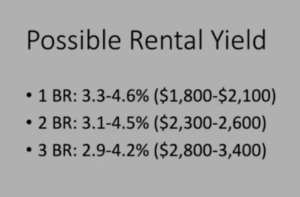
Examples of Possible Rental Yields in Singapore

This is usually the first thing people think of, and for good reason. Renting out a unit, or even just a spare room, gives you a genuinely steady stream of income without demanding daily involvement once things are set up. Before you rent out a full unit, factor in your mortgage payments, stamp duty, and any renovation work needed to make it rentable, there’s real upfront cost before the income starts flowing.

Gross rental yields for private condos in Singapore currently sit roughly in the 3% to 4.8% range depending on district and unit size, with smaller units and OCR properties generally landing at the higher end. Our detailed breakdown of rental yield and other property investment facts goes deeper into how this varies by segment.

2. Capital Appreciation Over Time

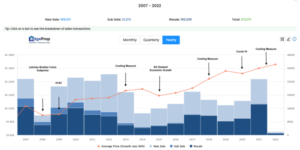
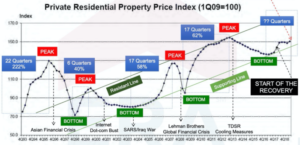
Singapore-Property-Price-Index-Trendline

Singapore Property Price Index Trendline

Capital appreciation is simply the gain you make when your property sells for more than you paid. Say you bought an executive condo for $1 million and sold it seven years later for $1.5 million, that’s $500,000 in capital appreciation, on top of any rental income collected along the way.

Singapore’s Property Price Index has climbed steadily over the decades, with the strongest jumps typically clustering around each 7 to 10 year property cycle. It’s not guaranteed every single year, and buyers on the wrong side of a cycle can genuinely see losses, but with proper research and reasonable holding periods, this remains one of the more consistent reasons to invest in property here.

3. The Power of Leverage

The-Importance-of-Leverage-

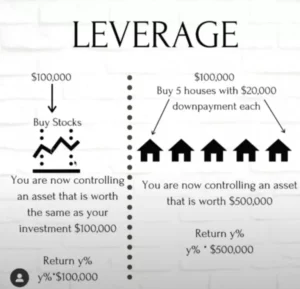
The Importance of Leverage

Property investment lets you control a much bigger asset than your actual cash outlay. A 25% downpayment, the current minimum for a first home loan, means you’re commanding 100% of the property’s value with only a quarter of it as your own money. That’s leverage, and it works because real estate is a tangible asset banks are comfortable lending against.

Your Cash Outlay

Property Value You Control

Effective Leverage

$250,000 (25%)

$1,000,000

4x

$360,000 (40%, 2nd property)

$900,000

2.5x

This leverage cuts both ways of course, it amplifies gains but also losses, which is exactly why the next few reasons on this list, diversification and inflation hedging, matter just as much as the leverage itself.

4. Risk Diversification Across Asset Types

Risk Diversification Across Asset Types

Property investment isn’t limited to one flavour of asset. Beyond residential units, you can diversify into industrial properties, commercial spaces like retail units or office space, or mixed-use developments, each responding differently to economic cycles than pure residential does. Spreading your exposure this way, rather than concentrating everything into a single unit or a single asset class, genuinely lowers overall portfolio volatility.

  • Residential: steady demand, most liquid segment, easiest entry point for most investors
  • Commercial: often longer leases with corporate tenants, different rent cycles than residential
  • Industrial: typically lower entry cost, different regulatory rules, appeals to a more specialised investor
  • Mixed-use developments: blend of residential stability with commercial upside in one package

5. A Genuine Hedge Against Inflation

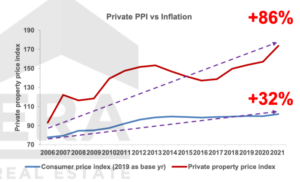
Property Performs Well in Inflationary Environments

Cash sitting in a bank account quietly loses purchasing power every year inflation runs above your interest rate. Property, historically, has moved in the opposite direction, both rents and property values have tended to rise alongside or ahead of inflation over the long run, which is a big part of why property remains one of the more trusted reasons to invest in property during periods of rising prices elsewhere in the economy.

6. Forced Savings Through Loan Repayment

This one gets overlooked constantly. Every monthly mortgage instalment you pay is, in effect, a forced savings deposit, since a portion of it builds equity in an appreciating asset rather than disappearing the way rent or a car loan payment does. Many investors who’d otherwise struggle to save disciplined amounts each month find that a mortgage does that saving for them automatically.

7. Tax Efficiency Compared to Other Investments

Singapore doesn’t impose capital gains tax, which means the profit you make selling a property, unlike some other jurisdictions, isn’t taxed the way it might be elsewhere. You’ll still pay Buyer’s Stamp Duty going in, and potentially Seller’s Stamp Duty if you sell within four years, but the absence of a capital gains tax on the actual profit is a meaningful structural advantage property enjoys over some alternative investments.

8. Funding Your Next Property Purchase

Historical-Trend-

Singapore’s Property Price Index has never moved in a straight line, but zoom out far enough and the pattern is clear: each cycle of roughly 7 to 10 years tends to end higher than where it started. That steady climb is exactly what turns today’s property gain into tomorrow’s downpayment, profit from one purchase quietly funding the next, sometimes a bigger or better-located unit than you could’ve afforded the first time around.

A well-timed property sale doesn’t just bank a profit, it often provides the capital to fund your next purchase, sometimes a bigger or better-located one than your first. This compounding effect, using proceeds from one property to help finance the next, is exactly why many successful property investors describe their portfolio as a ladder rather than a single static asset. Our guide on undervalued versus profitable properties is worth a read if you’re weighing which type of property gives you the best shot at this kind of reinvestment cycle.

Putting It All Together

None of these eight reasons to invest in property work particularly well in isolation. Leverage without proper research can backfire. Rental income without accounting for real costs can look better on paper than it performs in practice. SG Luxury Condo has seen this play out enough times to know it firsthand. The investors who do well tend to weigh all eight factors together, income, growth, leverage, diversification, inflation protection, forced savings, tax efficiency, and reinvestment potential, rather than chasing just one.

A Word From SG Luxury Condo

With this many genuine reasons to invest in property, it’s easy to see why Singaporeans keep coming back to real estate as a core part of their wealth-building strategy. But none of these benefits show up automatically, they require proper research, the right entry price, and a realistic understanding of your own holding period and risk tolerance.

If you’re ready to explore what property investment could look like for you, SG Luxury Condo is happy to walk through the numbers and the paperwork together, so the process feels guided rather than overwhelming. Our property consultation sessions cover exactly this, and you’re welcome to browse our full range of luxury condos for sale in Singapore once you’re ready to start your search.

Advanced Heading

Frequently Asked Questions

What are the main reasons to invest in property in Singapore?

Steady rental income, long-term capital appreciation, the power of leverage through mortgage financing, risk diversification, inflation protection, forced savings through loan repayment, tax efficiency, and the ability to reinvest profits into future purchases.

Gross rental yields for private condos generally range from 3% to 4.8%, depending on district and unit size, with smaller units and OCR properties typically landing at the higher end.

A 25% downpayment lets you control 100% of a property’s value, meaning your potential returns are calculated against the full asset value, not just your initial cash outlay, though this also amplifies potential losses.

Historically, yes. Both rental income and property values have tended to rise alongside or ahead of inflation over the long term, unlike cash sitting idle in a low-interest account.

No, Singapore doesn’t impose capital gains tax, meaning the profit from a property sale generally isn’t taxed the way it might be in some other countries, though Buyer’s and potentially Seller’s Stamp Duty still apply.

It means spreading exposure across different property types, residential, commercial, industrial, or mixed-use, rather than concentrating your entire investment in a single asset type or unit.

Ask specifically how they plan to market the listing, which portals they’ll use, whether professional photography or video is included, and how they’ll qualify potential buyers.

Yes, this is a common strategy among experienced investors, using capital appreciation from an existing property to help finance the downpayment or full purchase of a subsequent one.

No investment is risk-free. Property cycles typically run 7 to 10 years, and buyers who purchase near a cycle peak can see genuine losses, which is why research and timing still matter significantly.

Most first-time investors start with residential property due to its liquidity and lower entry barriers, while commercial and industrial properties tend to suit more experienced investors comfortable with different lease structures and regulations.

James Sim
Published By
Team SGLuxuryCondo
View all articles →
Continue Reading
Related Articles
Explore more insights on property investment and wealth building strategies
Property Investment Singapore: Why Serious Investors Work With James Lim

Property Investment Singapore: Why Serious Investors Work With James Lim

September 3, 2026 articles

Discover why real estate investment remains one of the most reliable and profitable ways to build long-term wealth in today’s market.

Read More
Maximising Your Home Value with Affordable Upgrading Hacks

Maximising Your Home Value with Affordable Upgrading Hacks

September 3, 2026 articles

Discover why real estate investment remains one of the most reliable and profitable ways to build long-term wealth in today’s market.

Read More
Property Capital Appreciation Singapore: The 5 Factors That Actually Move Prices

Property Capital Appreciation Singapore: The 5 Factors That Actually Move Prices

September 3, 2026 articles

Discover why real estate investment remains one of the most reliable and profitable ways to build long-term wealth in today’s market.

Read More
Ready to Start Your Property Investment Journey?

Get expert guidance and exclusive access to premium properties in Singapore’s most sought-after locations.

Property AI

Here's a few ways we can help you
🤖
Would you like our AI Bot to help you find the perfect property? Our AI Bot can scrape through hundreds of property listings and provide you with a list of properties that matches your criteria.
Just now