TL;DR: Yes, foreigners can buying property in Singapore; no special approval needed. Landed houses and HDB flats are mostly off limits. The catch is the 60% Additional Buyer’s Stamp Duty on top of the purchase price, plus regular Buyer’s Stamp Duty. Banks will still give you a mortgage, just expect a lower loan amount and a bit more paperwork. Talk to a local agent before you fall in love with a unit, it’ll save you money and stress.
If you’ve been eyeing a home in Singapore and typing “can foreigners buying property in Singapore” into Google at midnight, you’re not alone. It’s one of the first questions almost every overseas buyer asks us at SG Luxury Condo, usually right after “which neighbourhood should I even be looking at?”
The good news is that the answer isn’t complicated once someone walks you through it properly. The confusing part is that most of what’s online mixes up rules for citizens, Permanent Residents, and foreigners, and doesn’t tell you what it actually costs to buy as a non-resident. So let’s clear that up here, in plain English, without the legal jargon.
The Short Answer: Yes, Foreigners Buying Property in Singapore
Foreigners are allowed to buy private condominiums and apartments in Singapore without needing any special government approval. This has been the case for years and hasn’t changed. What you can’t do freely is buy landed houses (think terrace houses, bungalows, semi-detached homes) or HDB flats, which are Singapore’s public housing. Those come with restrictions that make them impractical for most overseas buyers anyway.
So if your plan is a condo, and for most foreign buyers it is, you’re in good shape. This is actually one reason why luxury condos for sale in Singapore have become such a popular entry point for foreign investors and expats. It’s the one property category where ownership is genuinely straightforward.
What Foreigners Can and Can’t Buy: The Breakdown
Here’s how it actually splits, based on Singapore’s Residential Property Act.
You can buy without approval:
Private condominiums and apartments (any size, any launch)
Executive condominiums, but only once they’re more than 10 years old
Strata landed homes within approved condo developments, like some units in Sentosa Cove
Leasehold landed property with a lease of 7 years or less
You’ll need approval from the Singapore Land Authority (SLA):
Landed houses such as bungalows, terrace houses, and semi-detached homes on the mainland
Vacant residential land
You generally can’t buy at all:
HDB flats, unless you’re married to a Singapore citizen and meet other conditions
Good Class Bungalows (GCBs), except under very rare circumstances tied to significant economic contribution
Sentosa is the one exception worth knowing. It’s the only part of Singapore where foreigners can buy landed homes without prior SLA approval, which is part of why Sentosa Cove bungalows attract so much overseas interest.
The Real Cost: ABSD and Stamp Duty for Foreign Buying property in Singapore
This is the part most people underestimate, and honestly, it’s the number that changes the whole conversation. On top of the price of the property, every buyer in Singapore pays Buyer’s Stamp Duty (BSD), and foreigners also pay Additional Buyer’s Stamp Duty (ABSD) on top of that.
Buyer Profile
ABSD Rate (2026)
Singapore Citizen, 1st property
0%
Singapore Citizen, 2nd property
20%
Permanent Resident, 1st property
5%
Permanent Resident, 2nd property
30%
Foreigner (non-PR)
60%
Nationals of the US, Switzerland, Liechtenstein, Norway, Iceland
0% (under free trade agreement terms)
Yes, 60% is a big number, and it applies regardless of how many properties you already own here. It’s the biggest single factor in your budget planning, and it’s exactly why we always recommend foreign buyers speak to a proper Singapore property investment advisor before they start browsing listings, not after they’ve already fallen in love with a unit. Getting the tax math right at the start saves a lot of headaches later.
A few nationalities get a break here. Buyers from the US, Switzerland, Liechtenstein, Norway, and Iceland pay the same rate as a Singapore citizen would, thanks to free trade agreements. Worth checking if you qualify before you assume the worst.
Buyer’s Stamp Duty is a smaller, tiered cost that everyone pays regardless of nationality, ranging from 1% to 6% depending on the purchase price. It’s not the deal-breaker ABSD can be, but it still needs to be in your budget.
Financing: Can Foreigners Get a Mortgage in Singapore?
Yes, and Singapore banks are generally quite comfortable lending to foreign buyers, though the terms are a bit tighter than what locals get. Here’s roughly what to expect:
Loan-to-value (LTV) ratio typically sits between 60% and 75%, meaning you’ll need 25% to 40% in cash or CPF (if applicable) upfront
Interest rates for foreigners can run slightly higher than for citizens or PRs
Banks will look closely at your income, employment stability, and existing debt obligations
ABSD and BSD must be paid fully in cash upfront, they can’t be financed through your home loan
If you’re not planning to finance and intend to pay in cash, this whole process moves a lot faster. Either way, it’s worth getting a mortgage in-principle approval before you start viewing units seriously, so you’re not negotiating on a property you can’t actually finance.
How the Buying Process Actually Works, Step by Step
Set your budget including ABSD, BSD, legal fees, and agent commission, not just the sticker price of the unit
Get pre-approved for financing if you’re taking a loan, so you know your real spending power
Shortlist properties with a property agent in Singapore who understands what foreign buyers can and can’t purchase, this avoids wasted time on ineligible listings
View units and negotiate the price and terms with the seller or developer
Pay the Option Fee (usually 1% to 5% of the price) to secure an Option to Purchase (OTP)
Exercise the option within the agreed period, typically 2 weeks, paying the balance deposit
Engage a conveyancing lawyer to handle the Sale and Purchase Agreement and title transfer
Complete the transaction, pay remaining stamp duties, and collect your keys
New launch purchases follow a slightly different, more regulated process through the developer, but the core idea is the same.
Where Foreigners Buying Property in Singapore
There’s no single “right” district, but certain areas come up again and again with our foreign clients. Orchard and River Valley remain popular for their central location and prestige. The Core Central Region attracts investors chasing capital appreciation and rental demand from expats. Sentosa Cove is the obvious pick for anyone specifically wanting a landed home by the water. And districts near good international schools, like Bukit Timah and Holland Village, tend to draw families relocating for work.
If you’re still weighing up whether Singapore property is the right investment for you at all, our piece onwhy foreigners are buying property in Singapore digs into the actual motivations we’re seeing on the ground, beyond just the tax numbers.
Is the 60% ABSD Worth It?
This is the honest question everyone eventually asks, and it deserves an honest answer. For some buyers, yes. Singapore’s political stability, strong currency, transparent legal system, and consistent long-term capital growth make it a market where the upfront cost can pay off over a 5 to 10 year horizon, especially with prime freehold condos that hold value well.
For others, particularly short-term speculators, the 60% ABSD makes the math much harder to justify. There are also legitimate ways to reduce your exposure depending on your structure and nationality, which is a conversation worth having with a specialist rather than guessing. If you want the mechanics spelled out, our guide onhow to avoid overpaying on ABSD walks through the legal options available to foreign buyers.
Final Thoughts
Buying property in Singapore as a foreigner isn’t complicated once you understand the rules, but it’s also not a market where guessing your way through it is a good idea. Between ABSD calculations, financing limits, and picking the right district and unit type, a lot of foreign buyers end up overpaying or missing better options simply because nobody walked them through it properly.
Advanced Heading
Frequently Asked Questions
Can Permanent Residents buy property in Singapore the same way as citizens?
Not quite. PRs are still classified as foreigners under the Residential Property Act, though they get a lower ABSD rate (5% on their first property) and more access to resale HDB flats after meeting a minimum residency period.
Do I need to be physically in Singapore to buy a condo?
No, but it makes the process smoother if you can visit at least once, or work with a trusted agent who can represent your interests locally.
Is there capital gains tax on property sales in Singapore?
No, Singapore doesn’t impose capital gains tax, which is one of the reasons the market remains attractive despite the ABSD.
Can I rent out my condo after buying it as a foreigner?
Yes, and many foreign owners do exactly this. Just note that short-term rentals under 3 months are not allowed for private residential property.
How much money do I actually need upfront to buy a condo as a foreigner?
More than most people expect, honestly. Between the cash downpayment (usually 25% to 40% if you’re financing), the 60% ABSD, and BSD, you’re looking at a big chunk of the purchase price in cash before the bank loan even kicks in. On a $2 million condo, that can easily mean over $1 million upfront. This is exactly why budgeting properly before you start viewing units matters so much.
Can I buy a Singapore property under a company or trust instead of my own name?
You can, and some foreign buyers do this for estate planning or tax reasons, but it doesn’t get you out of paying ABSD, it just changes how the transaction is structured. Get proper legal advice before going this route, since the paperwork and long-term implications are different from a straightforward personal purchase.
Do foreigners pay higher property tax every year compared to citizens?
Not really, the annual property tax rate is based on whether you live in the unit or rent it out, not your nationality. Owner-occupied homes get a lower rate, rented-out units get taxed a bit higher. Your passport doesn’t change that part.
Is buying new launch different from buying a resale condo as a foreigner?
The eligibility rules are the same either way. What changes is the process. New launches go through the developer directly with a fairly fixed timeline and payment schedule, while resale is a private negotiation between you and the seller, so there’s more room to haggle on price and terms.
What happens if I want to sell my Singapore condo later, are there extra fees for foreigners?
Selling itself works the same for everyone. You might owe Seller’s Stamp Duty if you sell within a few years of buying, but that applies to all owners, not just foreigners. And since Singapore has no capital gains tax, whatever profit you make on the sale isn’t taxed, which is a nice bonus.
Can my spouse and I both be on the title if only one of us is a foreigner?
Yes, joint ownership between a citizen or PR and a foreigner is allowed. Just know that the ABSD is usually calculated based on the higher applicable rate between the buyers, so it’s worth running the numbers with your agent before deciding how to structure the purchase.
Developers don’t price based on cost. They price based on what the market will accept right now.
Phased releases are deliberate. Early phases are cheaper to build momentum. Later phases are priced higher as demand is proven.
VVIP or soft launch = best entry point — but only if the project sells well after. Sometimes later phases are cheaper if the launch flops.
Floor level, facing, and stack all affect price. A higher floor or unblocked view can cost $30,000–$80,000 more for the same unit type.
Bank loans work differently for new launches vs resale. A developer can push valuations upward as prices rise through phases. Resale is capped at past transaction prices.
Developers rarely cut prices publicly. If sales slow, they hold back units rather than drop the headline PSF — because a public cut damages the whole project’s valuation.
Early buyers get the best choice. Better stacks, lower floors are released first. Premium stacks sometimes get held back for later at higher prices.
Timing matters. If phase 1 sells 50%+ on launch weekend, prices in phase 2 are almost certainly going up.
Most buyers assume developers price new condos by working out their costs — land, construction, fees — and adding a profit margin on top.
That is not how it works.
Developer pricing strategy in Singapore is driven by one question: what will buyers accept right now? Land cost matters, but it only sets the floor. How far above that floor the developer goes depends on surrounding transactions, competing projects, and how confident they are in the market.
Two developers who paid the same price for neighbouring plots can launch at completely different PSF levels — and both can be right. Pricing is not a maths problem. It is a market read.
This matters to you as a buyer because it changes how you should interpret prices at a showflat. A high PSF does not necessarily mean overpriced. A low PSF does not necessarily mean a deal. You need to understand the strategy behind the number.
What Actually Goes Into the Launch Price
When a developer sets the initial launch price, they look at several things:
Land cost — The biggest single input. The developer paid a specific price for the site (usually through a government land tender), and the launch price needs to make that viable. But viable does not mean launch price equals land cost plus margin. It means land cost sets a minimum.
Nearby transactions — Recent sales in surrounding developments, both new launches and resale, tell the developer what buyers in that area are already paying. Pricing too far above recent comparables risks a weak launch.
Competing supply — How many other new launches are happening in the same district or region at the same time? More competition gives buyers more options and pushes developers to be sharper on price.
Target buyer profile — A project aimed at HDB upgraders needs different pricing from one targeting investors or high-net-worth buyers. The quantum (total price of the unit) matters more to upgraders than the PSF.
Market sentiment — Are buyers confident right now? Interest rates, cooling measures, global economic noise — all of it feeds into how aggressively a developer can price.
Once all that is considered, the developer sets a price band that sits within what buyers will accept — not necessarily what is fair, and not necessarily what their costs dictate.
The Three Phases of a New Launch — and How Prices Move
Most new launch condos in Singapore do not release all units at once. They come out in phases. Understanding these phases is the foundation of understanding developer pricing strategy in Singapore.
Phase 1 — The Preview / Soft Launch
This is where prices are at their lowest. A limited number of units are released — often 20% to 30% of the total — at a price that creates momentum. Developers price these attractively on purpose. The goal is strong opening weekend sales, which create social proof and confidence for buyers in later phases.
Units sold here are sometimes called “loss leaders” — the margin is thinner, but the sales volume validates the project and justifies higher prices later.
Phase 2 — The Main Launch
If phase 1 sold well, prices in phase 2 go up. How much depends on take-up speed. A project that sold 50%+ on opening weekend can raise prices by 2% to 5% for the next release. Buyers at this stage are paying more, but the project is now proven.
If phase 1 sold slowly, the developer may hold prices flat or release a different unit mix rather than cut publicly.
Phase 3 and Beyond
By the time a project is 70% to 80% sold, remaining units often carry a premium — both because they are the last available and because the developer has full confidence the project is validated. Prices here can be meaningfully higher than the original launch.
The longest example in recent years was Luxus Hills — a landed development in Singapore where sales ran across 25 phases and 10 years. Prices moved significantly over that period.
Phase
Typical Pricing
Developer Goal
Preview / Soft Launch
Lowest — attract early buyers
Build momentum and prove demand
Main Launch
Moderate increase if Phase 1 sold well
Maximise take-up from broader buyer pool
Late Phases
Highest — scarcity premium
Extract full value from remaining units
VVIP and Soft Launches: Are They Really Worth It?
Almost every new launch in Singapore has a VVIP or soft launch before the official opening. This is supposed to be invite-only — reserved for major investors, past customers, and high-net-worth buyers.
In practice, it is not hard to get access. A registered property agent who has worked with the developer before can often get buyers into VVIP previews. Some developers will let you attend if you have simply registered on their website.
The pitch at a VVIP launch is always the same: buy now, get the best price, units will only go up from here.
Sometimes that is true. If the project launches strongly and phases sell out at higher prices, early buyers do come out ahead. But it is not guaranteed.
Sky Habitat in Bishan is a good example. When it launched in 2012, buyers at the preview paid premium prices. The project stalled. In 2014 it was relaunched at prices 10% to 15% lower. Early VVIP buyers did not get the best deal — later buyers did.
The lesson: a VVIP launch is a good entry point if the fundamentals are right. It is not automatically the right entry point just because the agent says so.
How Developers Price by Floor, Stack, and Facing
Developer pricing strategy in Singapore goes well beyond just the overall PSF. Within the same project, prices vary based on:
Floor level — Higher floors almost always cost more. The premium per floor varies, but a typical condo might add $3,000 to $10,000 per floor. A unit on the 25th floor can be $80,000 to $150,000 more expensive than the same layout on the 5th floor.
Facing and view — Units facing a park, reservoir, or open sky command a premium. Units facing an expressway or another building’s facade are priced lower.
Stack position — Corner stacks, which get more natural light and cross ventilation, often carry a small premium. Pool-facing stacks are priced higher if the pool is a feature.
Unit type and size — Within the same floor, larger units obviously cost more in absolute terms. But the PSF can sometimes be lower for larger units — a developer’s way of making the total quantum feel more accessible.
Sometimes developers use a “single price” tactic — applying the same price to all floors within a stack for a limited period. This is usually done to clear a batch of units faster. Buyers rush for the highest floor in the single-price range because they feel they are getting more for the same money. That logic is not always wrong, but it is worth checking whether the “single price” unit is actually cheaper than what was already available.
The Single-Price Tactic — What It Means for Buyers
You will sometimes see this at a showflat: “All units in this stack are the same price regardless of floor.”
It feels like a deal. You pay the same whether you are on floor 8 or floor 18 — so clearly floor 18 is the better buy, right?
Usually yes, but with caveats.
First, single-price promotions are typically temporary. Once a certain number of units sell, the developer removes the promotion and returns to floor-based pricing. Second, the single price might be set at mid-range — not a discount from the highest floors, but not much cheaper than what the project was already offering.
The promotion works because buyers feel urgency. A clock is ticking on the same-price offer. That urgency is manufactured, but it is effective.
If you see a single-price promotion, ask your agent to pull the transaction history and compare the single price to what similar units in the same project have actually sold for. That comparison tells you whether it is a real opportunity or just clever marketing.
Why Developers Rarely Cut Prices (Even When Sales Slow)
This is one of the things that most confuses buyers. You would think that if a project is selling slowly, the developer would drop the price to clear units.
They almost never do.
The reason is simple: a public price cut damages the entire project. Here is why:
Bank valuations for new launches follow actual transaction prices. If a developer cuts the price on remaining units, the bank may adjust valuations downward across the whole project. That affects buyers who already committed — their loan-to-value ratio changes. Some may face calls from the bank.
It also destroys trust. Buyers in later phases stop waiting and start expecting further cuts. The developer loses control of the narrative.
So instead of cutting prices, developers:
Hold back units and release them later under different conditions
Offer “star buy” promotions on specific stacks without changing the listed PSF
Repackage slow-moving units as a different product (e.g., combining two units into a larger one)
Wait out the market if they have enough cash runway
The one exception is when a developer is under serious ABSD deadline pressure — which we cover next.
How Developer Pricing Affects Your Bank Loan
This is something most buyers do not realise, and it is one of the strongest arguments for buying new launch over resale in some situations.
For a new launch condo, banks can base the loan on the developer’s current selling price — which rises with each phase. So if a 1,000 sqft unit is priced at $1,600 psf ($1.6 million) at launch and rises to $2 million by the time you get your keys, the bank’s valuation can follow those rising transaction prices. The maximum loan at $2 million (based on a 75% LTV) would be $1.5 million.
For a resale unit, the bank is capped by past transaction data. If past transactions show $1.6 million but the seller wants $2 million, the bank still values it at $1.6 million. That means you need $800,000 in cash to cover the gap — not $500,000.
For buyers looking at prime district condos where quantum is high, this difference in bank valuation can mean hundreds of thousands of dollars in additional cash outlay for a resale unit. It is a real practical consideration, not just theory.
ABSD Deadlines and How They Shape Developer Behaviour
Singapore’s Additional Buyer’s Stamp Duty rules for developers create strong selling pressure at specific points in a project’s timeline.
When a developer buys a residential site, they get a remission on ABSD — but only if they sell all units within 5 years of acquiring the land. If they miss that deadline, the ABSD becomes payable on the full land price. On a large site, that can run into tens of millions of dollars.
As that deadline approaches, developer behaviour changes. Projects that are 20% to 30% unsold with 12 months left tend to see:
Fire sale discounts on remaining units
“Star buy” pricing on specific stacks
More aggressive agent incentives to push sales
The 2020 fire sale at 38 Jervois is a well-cited example. With units still unsold close to the deadline, discounts ran from 13% to 24% off the original asking price. Buyers who waited long enough on that project did significantly better than VVIP buyers.
Watching developer ABSD deadlines is one of the smarter ways to identify genuine discount opportunities in the Singapore new launch market.
How to Read a Developer’s Pricing Strategy Before You Buy
You are at a showflat. The agent is telling you to buy now because prices are going up. How do you cut through that and actually understand what you are looking at?
Check the price list against nearby comparables. Pull recent URA caveat data for the surrounding area. What are similar units selling for in nearby projects? Is this developer pricing within that range, above it, or below it?
Ask how many units were sold in phase 1. Strong phase 1 numbers mean phase 2 prices are likely going up. Weak phase 1 numbers may mean a correction is coming — or that the developer will hold back rather than cut.
Look at the unit mix. If a project has many small one-bedders priced at a low quantum, the developer is targeting a wide buyer pool to get momentum. If it is mostly large units, they are going after a specific buyer type and may be more patient on take-up.
Find out when the developer’s ABSD deadline is. If there is significant unsold inventory and the deadline is approaching, there is negotiating room. If the project just launched, not so much.
Talk to an experienced agent. Not one who only sells for that developer. An independentproperty agent in Singapore with experience across projects can give you an honest view of whether the pricing makes sense for the location.
New Launch vs Resale — The Pricing Difference Explained
Factor
New Launch
Resale
Pricing basis
Developer’s current selling price
Past transaction comparables
Bank valuation
Follows rising developer prices
Capped at past transaction data
Cash outlay
Lower (bank matches current launch price)
Potentially higher (gap between valuation and asking price)
Unit condition
Brand new, warranty period
Depends on age and upkeep
Choice of unit
Yes — you pick floor, facing, stack
Limited to what is available
Price certainty
Phase-based — may rise before completion
Fixed at time of purchase
Progressive payment
Yes — pay in stages as construction progresses
Full payment at completion
New launches come with progressive payment — you do not pay the full amount upfront. As construction hits milestones, you release portions of the purchase price. That eases cash flow compared to a resale purchase where the full payment is due at completion.
For buyers interested in how new launches compare to resale options in Singapore’s luxury segment, thenew launch vs resale guide breaks this down further.
If you want to see what is currently available in Singapore’s prime condo market, browsingluxury condos for sale in Singapore gives a useful picture of what is on offer and at what price levels.
What This Means for You as a Buyer
Understanding developer pricing strategy in Singapore does not guarantee you get the cheapest unit. But it does mean you stop being surprised.
You know that prices go up in phases — so you stop wondering if waiting will get you a better deal on a project that just had a strong launch.
You know that developers hold prices rather than cut — so you stop expecting a discount that will never come on a healthy project.
You know that ABSD deadlines create rare but real opportunities — so you keep an eye on projects that have been sitting for a few years.
And you know that the bank loan situation for new launches can be more favourable than resale — so you factor that into your cash planning before you compare options.
The Singapore property market rewards buyers who understand the rules of the game. Developer pricing strategy is one of the most important rules to know.
If you want to understand how this applies to the specific projects you are looking at, or how an inherited or existing property affects your ability to buy a new launch, aproperty consultation is the right starting point.
And if you want to see what is available right now in Singapore’s luxury condo segment, check out thenew launch condos for sale in Singapore page for current options.
Quick Reference Summary
Topic
What to Know
How developers set prices
Market-led, not cost-led
When prices are lowest
Phase 1 / soft launch
When prices are highest
Late phases, final units
Do developers cut prices?
Rarely — they hold back units instead
ABSD deadline effect
Can create genuine discounts near the 5-year mark
Bank loan difference
New launch valuations rise with phases; resale is capped at past data
Floor and facing
Both affect price significantly within the same project
VVIP launch
Usually best entry but not guaranteed if project sells poorly
Advanced Heading
Frequently Asked Questions
Is buying at a VVIP launch always the cheapest entry?
Usually yes — but not always. If phase 1 sales are weak and the developer cuts prices later, VVIP buyers can end up paying more. It depends on how the project performs after launch.
Why does the same project have different PSF for the same unit type?
Because floor level, facing, and stack position all affect the price. A unit on floor 20 with a reservoir view costs more than the same layout on floor 5 facing another building, even if both are 3-bedders of the same size.
Can I negotiate the price with a developer?
Rarely on new launches. Developers protect listed prices closely. What you might be able to negotiate is the payment timeline, furniture packages, or legal fees — not the unit price itself. Discounts are usually structured as “star buys” on specific stacks rather than open negotiation.
What happens if a developer's ABSD deadline is approaching and units are still unsold?
The developer feels real pressure to sell.That is when you see genuine discounts — not packaged promotions, but actual price reductions or significant star buy pricing. These moments are rare but they happen.
How do I know when a price revision is coming?
Strong first-weekend sales are the clearest signal. If more than half the released units sold on launch weekend, the next batch will almost certainly be priced higher. Your agent should be tracking this.
Does buying early always mean better capital gains later?
Typically yes in a rising market. But it depends on the project and location. A poorly located project that launched cheap can still underperform a well-located resale bought at a higher price.
Why do developers sometimes hold back premium stacks?
Because they know those units will fetch more as the project builds its track record. Releasing them early at the initial price leaves money on the table. Releasing them in a later phase when the project is 60%+ sold lets the developer price them at a premium that the market will accept.
What is PSF and why does it matter?
PSF stands for per square foot. It is the price divided by the unit’s size. It is how buyers and developers compare pricing across different unit sizes and projects. A $2,500 psf price on a 500 sqft unit means the unit costs $1.25 million. PSF lets you compare apples to apples across different unit sizes.
Is developer pricing different for luxury condos in prime districts?
Yes. In Singapore’s prime districts (9, 10, 11), developer pricing strategy is more about positioning than volume. Developers are targeting a smaller, wealthier buyer pool and are more comfortable holding unsold units than cutting prices. Discounts at the VVIP level in prime district projects are less common than in mass market launches.
How does developer pricing affect my decision to buy now vs wait?
If a project just launched and phase 1 sold strongly, waiting means paying more in the next phase. If phase 1 sales were slow and the developer’s ABSD deadline is approaching, waiting can mean a better deal. There is no universal answer — it depends on the specific project and your timeline. Getting independent advice from aproperty investment advisor in Singapore who can read the signals on a specific project is worth it before committing.
When someone dies in Singapore, their property goes to whoever is named in their will. No will? The law decides — and it may not match what the family expected. Singapore removed inheritance tax back in 2008, so you won’t pay tax just for inheriting. But you might face Seller’s Stamp Duty when you sell, and the inherited property will count toward your total when you buy another one later. If CPF was used to pay for the home, that money gets refunded separately and does not pass through the will. Joint tenancy properties skip all of this — they transfer automatically to the surviving owner. The single best thing any property owner in Singapore can do right now is write a valid will. Everything else flows from that.
Losing someone is hard enough. Then comes the question nobody prepared for — what happens to their property?
If you are the one dealing with this right now, or if you own property and want to avoid leaving your family in this situation, this guide is for you. No complicated legal terms. Just how property inheritance in Singapore actually works.
How Ownership Type Decides Everything
The very first thing to check is how the property was held. This single detail determines everything that follows.
Three ownership types exist in Singapore:
Ownership Type
What It Means
What Happens When Owner Dies
Sole Ownership
One person owns 100%
Goes through the will, or intestacy law if no will
Joint Tenancy
Two or more people own equal shares together
Goes straight to the surviving owner — no will, no court
Tenancy-in-Common
Two or more people own separate defined shares
Each share goes through the will or intestacy law independently
Joint tenancy is the clean one. Husband and wife hold a condo together as joint tenants. Husband passes away. The wife automatically owns everything — the property does not go through any court process at all.
Tenancy-in-common is messier. Each person controls their own slice. If the deceased held a 60% share and left no will, that 60% now goes through the intestacy process. The family might end up with co-owners they never expected.
Dying With a Will vs Without One
With a will
A will is a written document saying exactly who gets what. In Singapore, it needs to be signed by the person making it in front of at least two witnesses. Those witnesses cannot be getting anything from the will themselves.
The executor named in the will applies to the court for something called a Grant of Probate. Once that is approved, the executor can legally transfer the property to whoever is named.
Without a will
No will means the Intestate Succession Act takes over. The law then distributes the estate according to a fixed formula — not according to what the deceased wanted.
This catches families off guard more than anything else in property inheritance in Singapore. The assumption is always that the spouse or kids will just get everything. That is not always true. Unmarried partners get nothing under this law. Close friends get nothing. Even the distribution among children and spouse is fixed in percentages the deceased may never have intended.
Writing a will is not morbid. It is just practical.
Who Gets What Under Singapore’s Intestacy Law
The Intestate Succession Act distributes the estate based on who is still alive and their relationship to the deceased.
Who Survives
How the Estate Is Divided
Spouse only
Spouse gets 100%
Spouse and children
Spouse 50%, children split the other 50% equally
Children only
Children split everything equally
Spouse and parents (no children)
Spouse 50%, parents split 50%
Parents only
Parents split equally
Siblings only
Siblings split equally
No one
Goes to the government
If a child has already passed away but had children of their own, those grandchildren step in and take their parent’s share.
The law cannot factor in promises made, personal wishes, or complicated family dynamics. It just runs through the formula.
Muslim Property Inheritance Rules (Faraid)
Muslim residents follow different rules. The Intestate Succession Act does not apply to them. Instead, the Syariah Court handles distribution under Faraid, which is the Islamic law of inheritance.
Faraid sets fixed shares for each beneficiary based on their relationship and gender. A standard will cannot override those shares.
What Muslims can do is write a wasiyyah — an Islamic will — covering up to one-third of the estate. That portion can go to people outside the fixed Faraid shares, like friends or charities.
If you are Muslim and own property in Singapore, speak with someone who specialises in Islamic estate planning. General property advisors may not know the Faraid rules well enough.
Is There a Property Inheritance Tax in Singapore?
No. Singapore scrapped inheritance tax in February 2008. It applies to everything — property, cash, investments. You do not pay any tax at the moment you inherit something.
But free to inherit does not mean free to own. Once you take on the property, property tax kicks in every year. And if you eventually sell it or buy something else, there are other costs to think about.
Stamp Duty — What You Pay and When
This is the part that confuses almost everyone dealing with property inheritance in Singapore.
At the point of inheritance — nothing
No Buyer’s Stamp Duty. No Additional Buyer’s Stamp Duty (ABSD). Even if you already own two properties and are inheriting a third, you pay zero stamp duty at the point of transfer — as long as the inheritance comes through a valid will, the Intestate Succession Act, or the Administration of Muslim Law Act.
Transfer the property through an informal family arrangement outside those legal channels and it may be treated as a gift. That triggers stamp duty.
When you sell
If the deceased bought the property after 20 February 2010, Seller’s Stamp Duty (SSD) could apply when you sell. The holding period is measured from when the deceased originally bought the property — not from when you inherited it.
SSD ranges from 4% to 12% depending on how long the property was held before sale.
When you buy another property
Once you inherit, that property counts toward your total. Buy another one after inheriting and you are treated as owning one more than you think.
ABSD rates for Singapore Citizens in 2024:
Which Property
ABSD Rate
First
0%
Second
20%
Third and beyond
30%
PRs and foreigners pay more. A lot of buyers get caught out by this. They inherit a flat, forget to account for it, and then face a 20% or 30% ABSD bill on their next purchase.
Annual property tax
Once it is yours, you pay property tax every year. Singapore uses a progressive system based on the Annual Value of the property. Non-owner-occupied properties are taxed at 12% to 36% from 2024 onwards.
CPF and the Property
CPF does not go through the will. It is handled separately through the CPF Board based on the deceased’s CPF nomination.
If CPF was used to fund the property purchase, the estate has to refund that money — the original amount plus accrued interest — when the property is sold or transferred. That refund goes back into the CPF account of the deceased and then gets paid out to whoever they nominated.
This can shrink the actual cash the family receives from the sale significantly. A property worth $1.2 million with $300,000 in CPF outstanding refunds means the net proceeds are closer to $900,000 before anything else.
Foreigners Inheriting Landed Property
Condos and apartments — no problem. Foreigners and Permanent Residents can inherit and hold them freely.
Landed property is different. Bungalows, semi-detached houses, terrace houses — foreigners and PRs generally need approval from the Singapore Land Authority to own these. That applies even when the property came through inheritance.
No approval means the beneficiary may be required to sell the property within a fixed period.
What to Do Right After Inheriting
Once you know you are inheriting a property, work through these steps:
Step 1 — Get legal authority first
If there is a will, apply for a Grant of Probate. No will means applying for Letters of Administration. Either way, you need this court order before you can legally do anything with the property.
Step 2 — Get a lawyer
A conveyancing lawyer handles the title transfer, checks for any outstanding loans or charges sitting on the property, and makes sure the stamp duty situation is clear.
Step 3 — Check what the property owes
Outstanding mortgage? Unpaid maintenance fees? These are the estate’s liabilities and need to be cleared. You cannot simply inherit the asset and ignore what comes with it.
Step 4 — Transfer the title
The Singapore Land Authority updates the property title to reflect the new owner. Your lawyer files this.
Step 5 — Decide what you are doing with it
Live in it. Rent it out. Sell it. Each option has different tax and financial implications — especially if you already own other property.
Selling an Inherited Property
Selling is allowed. A few things to sort out before you do:
SSD may apply if the deceased bought the property recently and the holding period has not passed.
Singapore has no capital gains tax. Any profit from the sale is yours to keep.
CPF refunds come out of the sale proceeds before the rest is split.
Multiple beneficiaries all need to agree to sell. If three siblings inherited together and one refuses, the others can go to court and apply for a Partition Action to force a sale. It works, but it takes time and usually damages the relationship.
If you want to understand what similar properties are trading for before deciding, looking throughluxury condos for sale in Singapore gives a useful picture of current market prices.
11. How It Affects Your Next Property Purchase
This is the one that catches people off guard more than anything else.
The inherited property counts in your total. Full stop.
Own one condo. Inherit a flat. Now you own two. Try to buy a third — you are paying 30% ABSD. On a $1.5 million property that is $450,000 in stamp duty alone.
Some people sell the inherited property first before buying again. Others look at decoupling or other legal structures. There is no one-size answer. It depends on your income, your plans, and what the properties are worth.
If you are thinking about selling the inherited unit and upgrading to a new launch, it also helps to understand how developers price across different phases of a project. TheUnderstanding Developer Pricing Strategy article explains how that works so you can time a purchase better.
For a proper look at your numbers and options, aproperty consultation with someone who knows Singapore well is worth the time.
Estate Planning Tools That Matter
If you own property here and want the handover to go smoothly:
Will — The most basic and most important. Tells everyone who gets what. Without it, the law decides.
Trust — Useful if the property is going to a minor, or if you want conditions on how it is used after you are gone.
Lasting Power of Attorney (LPA) — Not about death. About what happens if you lose mental capacity while still alive. Lets someone you trust manage your property and finances on your behalf.
CPF Nomination — Separate from your will. If you have not done this, your CPF savings and any refund from a CPF-funded property will take longer to distribute, and may not go where you intended.
Advance Medical Directive (AMD) — Lets doctors know your wishes about life-sustaining treatment if you are terminally ill. Not strictly a property document, but part of responsible end-of-life planning overall.
What This All Comes Down To
Property inheritance in Singapore is not impossible to navigate. The process has rules and those rules are fairly clear once you know them. The hard part is almost never the rules — it is the fact that most families have not planned for any of this.
No will. No CPF nomination. No conversation with family about what should happen. Then someone passes away and everyone is scrambling.
If you own property in Singapore, write a will. Update your CPF nomination. Tell your family where the documents are. That is most of the work done right there.
If you have just inherited a property and need to figure out what to do with it, take your time. Rushed decisions on high-value property are expensive. Read up onwhich condo is good for investment in Singapore if you are weighing whether to hold or sell, or go through the full guide onhow to buy a condo in Singapore if buying another property is the next step.
Advanced Heading
Frequently Asked Questions
Do I pay ABSD when I inherit a property?
Property tax is your property’s Annual Value multiplied by the applicable tax rate. The AV is based on estimated annual market rent, not the purchase price or current market value of the property.
I own a private condo. Can I still inherit an HDB flat?
It’s the estimated gross annual rent your property could earn if rented out unfurnished, excluding furniture and maintenance fees. IRAS sets this based on comparable rental transactions in your area.
The property still has a home loan. Who pays it?
The full amount is due by 31 January each year. If you pay via GIRO, you can opt for monthly instalments from January through December instead of a lump sum.
Three of us inherited the same property and one sibling refuses to sell. What now?
Owner-occupied rates are lower — starting at 0% on the first S$8,000 of AV. Non-owner-occupied rates start at 10% on the first S$30,000. If you rent your property out, you pay significantly more.
Is it cheaper to gift the property now rather than let it be inherited?
No. Property tax rates are the same for everyone regardless of nationality. What differs is the Additional Buyer’s Stamp Duty (ABSD) paid at purchase, not the ongoing annual property tax.
What happens to the property if the deceased had debts?
Yes. You have 30 days from the date of the AV revision notice to file an objection through the IRAS portal. Bring evidence of actual comparable rental transactions to support your case.
Can a foreigner inherit a condo in Singapore?
Notify IRAS through their digital services portal after you move into the property. It doesn’t apply automatically — you have to tell them. Once approved, overpaid tax from the current year gets refunded.
How long does the inheritance process take in Singapore?
A 5% penalty applies to unpaid amounts after 31 January. After 30 more days, IRAS can add 2% per month on top. Don’t ignore the bill — the penalties compound quickly.
Does the inherited property count as my first property for ABSD if I have never owned before?
No. Stamp duty is a one-time cost paid when you buy a property. Property tax is an annual recurring cost you pay every year as long as you own it. Both need to be planned for separately.
What if the deceased owned property overseas?
If you live in the property, apply for the owner-occupier rate. If you think your AV is overestimated, file an objection. Beyond that, the rate structure is fixed — there are no further deductions or reliefs available for residential property tax in Singapore.
Property tax is annual, no exceptions. Own it, live in it, rent it, or leave it empty — IRAS bills you every year regardless.
It’s based on Annual Value, not market price. A $3M condo might have an AV of $60,000. That AV — not the market value — is what your tax is calculated on.
Two rate schedules exist. Owner-occupied rates are much lower. Renting out your property? You pay the non-owner-occupied rate, which starts at 10% from the first dollar.
Same property, very different bills. A condo with AV $60,000 costs $2,180/year in tax if you live there — and $6,900/year if you rent it out. That’s a $4,720 annual gap.
Luxury properties hurt more. Rates are progressive. The higher the AV, the steeper the rate — especially for rented-out units, where the top rate hits 20%.
Owner-occupier rate is not automatic. You have to apply for it through IRAS after moving in. Miss this and you overpay.
AV can be disputed. If IRAS revises your AV upward and it doesn’t match actual rents nearby, you have 30 days to object. Win the objection and you save money every year going forward.
If you own property in Singapore, property tax is one of those costs you pay every year without fail. Doesn’t matter if you live there, rent it out, or leave it empty — IRAS sends the bill regardless.
A lot of buyers only think about property tax after they’ve already bought. That’s a mistake. At the luxury end of the market especially, your annual tax bill can run into tens of thousands of dollars. Knowing how it works before you buy helps you plan properly and avoids any nasty surprises come January.
This guide breaks it down simply — how it’s calculated, what the current rates look like in 2026, worked examples for different property types, and what to do if you think your bill is wrong.
What Is Property Tax in Singapore?
Property tax in Singapore is an annual tax collected by the Inland Revenue Authority of Singapore (IRAS). Every property owner pays it — HDB flat owners, condo owners, landed homeowners, commercial property owners. No exceptions.
The key thing most people miss: property tax is not based on what you paid for your property or what it’s worth on the market today. It’s based on something called the Annual Value, or AV.
That distinction matters a lot. A condo worth S$3 million on the open market might have an AV of S$60,000. And it’s that S$60,000 figure, not the S$3 million, that determines your tax bill each year.
What Is Annual Value and How Is It Calculated?
Annual Value is the estimated amount your property could fetch in rent over one year if it were rented out unfurnished. IRAS works this out by looking at actual rental transactions for similar properties in the same area.
Furniture, fittings, and maintenance fees are excluded from the calculation. It’s strictly the bare rental value of the unit itself.
A few things to keep in mind about AV:
IRAS reviews and updates AVs periodically based on market rental movements
Your AV is not fixed permanently — it can go up if rents in your area have risen
If your AV is revised upward significantly and you think it’s wrong, you have the right to object within 30 days of receiving the notice
How to check your property’s Annual Value:
If you’re the owner, log in to the IRAS website at iras.gov.sg using Singpass and go to the View Property Dashboard. It’s all there.
If you’re a buyer looking at a property before purchasing, you can use the IRAS portal for property professionals to check the AV. There’s a S$2.50 fee per enquiry but it gives you the actual figure, not an estimate.
You can also check estimated rental data on property portals like 99.co. This is free but less accurate — most units actually transact above the AV rental figure, so treat it as a rough guide only.
The Two Types of Property Tax Rates
Singapore uses two different rate schedules depending on how you use the property.
Owner-Occupied Rate
For properties where the owner lives there as their primary residence, or where the property is left vacant.
Non-Owner-Occupied Rate
For properties that are fully rented out to tenants. These rates are higher across all AV brackets.
This matters practically. If you buy a condo to rent out, you’ll pay the higher non-owner-occupied rates from the start. If you move in yourself, you apply for the owner-occupier rate and pay significantly less.
These are the current rates for properties where the owner lives in the unit:
Annual Value (AV)
Tax Rate
Max Tax for This Band
First S$8,000
0%
S$0
Next S$47,000
4%
S$1,880
Next S$15,000
6%
S$900
Next S$15,000
8%
S$1,200
Next S$15,000
10%
S$1,500
Next S$15,000
12%
S$1,800
Next S$15,000
14%
S$2,100
Above S$130,000
16%
No limit
For the majority of owner-occupiers in Singapore, the effective tax rate stays well below 10% because most residential AVs don’t climb into the upper bands. A typical condo with an AV of around S$60,000 would pay a relatively modest annual tax bill under this schedule.
If your property is rented out — or you own it but don’t live there — these are the rates that apply:
Annual Value (AV)
Tax Rate
Max Tax for This Band
First S$30,000
10%
S$3,000
Next S$15,000
12%
S$1,800
Next S$15,000
14%
S$2,100
Next S$15,000
16%
S$2,400
Next S$15,000
18%
S$2,700
Above S$90,000
20%
No limit
You’ll notice the starting rate here is already 10% on the first S$30,000. For investors with multiple properties, the non-owner-occupied schedule adds up quickly, especially when AVs are revised upward after a rental market uptick.
Real Examples: How Much Property Tax Will You Actually Pay?
Let’s make this concrete with a few real-world scenarios.
Example 1: HDB owner living in their flat, AV = S$12,000
Using owner-occupied rates:
First S$8,000 at 0% = S$0
Remaining S$4,000 at 4% = S$160
Total annual property tax = S$160
That’s S$13.30 a month. Not significant for most households.
Example 2: Condo owner living in unit, AV = S$60,000
First S$8,000 at 0% = S$0
Next S$47,000 at 4% = S$1,880
Remaining S$5,000 at 6% = S$300
Total annual property tax = S$2,180
Around S$182 a month. Still manageable.
Example 3: Condo fully rented out (investor), AV = S$60,000
Using non-owner-occupied rates:
First S$30,000 at 10% = S$3,000
Next S$15,000 at 12% = S$1,800
Remaining S$15,000 at 14% = S$2,100
Total annual property tax = S$6,900
See the difference? The same property with an AV of S$60,000 costs S$2,180 if you live in it and S$6,900 if you rent it out. That’s a gap of S$4,720 every year — which is a number worth knowing before you commit to an investment strategy.
Example 4: Luxury condo rented out, AV = S$120,000
First S$30,000 at 10% = S$3,000
Next S$15,000 at 12% = S$1,800
Next S$15,000 at 14% = S$2,100
Next S$15,000 at 16% = S$2,400
Next S$15,000 at 18% = S$2,700
Remaining S$30,000 at 20% = S$6,000
Total annual property tax = S$18,000
For luxury condo for sale investors renting out high-AV properties, property tax is a meaningful cost that needs to sit inside your return calculations from day one. If you’re working through investment numbers, ourproperty investment advisory can help you model the full cost picture including property tax before you commit.
How to Pay Property Tax in Singapore
IRAS issues property tax bills once a year. The full amount is due by 31 January each year. You’ll receive a notice from IRAS in November or December for the following year.
Payment methods accepted:
GIRO (most common — set it up once and it’s automatic)
Internet banking
AXS stations
SAM (Self-service Automated Machines)
cheque (sent to IRAS)
GIRO is genuinely the easiest option. You can set up GIRO through the IRAS website, and IRAS will deduct in a single payment on 15 January or up to 12 monthly instalments from January to December. For most property owners, the monthly instalment option through GIRO makes the most sense for cash flow.
What happens if you pay late?
A 5% penalty is added to any unpaid amount after the due date. If it’s still unpaid after 30 days, IRAS can add another 2% per month. Don’t ignore property tax notices. The penalties add up quickly and IRAS takes this seriously.
Owner-Occupier Relief: How to Claim It
If you’ve just moved into your property and haven’t claimed the owner-occupier rate yet, you need to notify IRAS. It doesn’t apply automatically.
You can submit your owner-occupier claim through the IRAS website using Singpass. Once approved, IRAS will reassess your tax at the lower owner-occupied rates and refund any overpayment from the current tax year.
A few situations where this matters:
You bought a new property and moved in — apply for owner-occupier rate immediately
You had a tenant and they’ve moved out, and you’re moving in yourself — notify IRAS
You moved out and rented your place — notify IRAS and your rate will switch to non-owner-occupied
Don’t assume IRAS knows about changes in your occupancy status. You need to tell them. And if you’ve been paying non-owner-occupied rates when you should have been getting owner-occupier rates, you can claim a refund — but only for the current year and one year back.
Can You Dispute Your Annual Value?
Yes. If IRAS revises your AV upward and you believe it doesn’t reflect actual market rents in your area, you can object.
The process:
You have 30 days from the date of the AV revision notice to file an objection
Submit the objection through the IRAS digital services portal
Gather evidence — actual rental transactions for comparable units in the same development or nearby buildings are the strongest support
IRAS will review your objection and either maintain the AV, revise it downward, or ask for more information. If you’re not satisfied with their decision, you can appeal to the Valuation Review Board.
This process is worth going through if the revision is significant, especially for investors where a higher AV directly means a higher annual tax bill. Winning an AV objection on a luxury rental property could save you thousands every year going forward.
Property Tax for Foreign Property Owners in Singapore
Foreigners who own private residential property in Singapore pay property tax at the same rates as citizens and PRs. The tax rates themselves don’t discriminate by nationality — your AV and occupancy status determine your rate, not your passport.
What does differ for foreigners is the buying cost upfront. The 60% Additional Buyer’s Stamp Duty for foreign buyers is a separate one-time charge at purchase. Property tax is the ongoing annual obligation after that. If you’re still working through whether buying in Singapore makes sense for your situation, our guide forforeigners buying property in Singapore covers the full picture including stamp duty, financing, and ownership rules.
Property Tax vs ABSD vs BSD — What’s the Difference?
A lot of buyers mix these up. They’re three completely separate taxes:
Tax
When You Pay
Who Pays
Buyer’s Stamp Duty (BSD)
Once, at purchase
All buyers
Additional Buyer’s Stamp Duty (ABSD)
Once, at purchase
Depends on buyer profile
Property Tax
Every year
All property owners
BSD and ABSD are one-off transaction costs. Property tax is your ongoing annual obligation as long as you own the property. All three need to be factored into your total cost of ownership calculation — especially when you’re buying at the S$5 million and above range. If you want a detailed breakdown of ABSD rates by buyer type, check ourABSD rate guide.
How Property Tax Affects Your Investment Returns
If you’re buying a condo as an investment to rent out, property tax is a real cost that eats into your net yield. Here’s a rough illustration of why it matters:
Say your condo generates S$72,000 in annual rental income. On paper, your gross yield looks decent. But if your property tax bill at non-owner-occupied rates is S$10,000 a year, that’s nearly 14% of your rental income going straight to IRAS before maintenance fees, mortgage servicing, or agent commissions even come into the picture.
Higher-AV properties — which are common in the luxury segment — pay proportionally more tax under the progressive rate structure. This is exactly why serious investors need to model net yield, not just gross yield, before committing to a purchase.
Ourmortgage calculator can help you work through the monthly numbers, and our investment advisory team can help you stress-test the full return profile of any property you’re considering.
Key Dates and Admin Checklist for Property Owners
Here’s a quick reference for staying on top of property tax in Singapore:
November/December — IRAS sends your annual property tax notice
31 January — Full payment due date (or GIRO deduction begins)
Within 30 days of AV revision notice — Deadline to file an AV objection
Anytime — Notify IRAS if your occupancy status changes (moving in, renting out, or vacating)
Immediately after purchase — Apply for owner-occupier rate if you’re moving in
If you’ve recently bought or are in the process of buying, it helps to go through all of this alongside your other financial planning. Ourproperty consultation service covers the full cost-of-ownership picture including property tax — it’s a free 30-minute session and worth doing before you finalise anything.
Summary Table: Owner-Occupied vs Non-Owner-Occupied at a Glance
AV Level
Annual Tax (Owner-Occupied)
Annual Tax (Non-Owner-Occupied)
Difference
S$30,000
S$880
S$3,000
S$2,120
S$60,000
S$2,180
S$6,900
S$4,720
S$90,000
S$5,180
S$12,900
S$7,720
S$120,000
S$9,980
S$18,000
S$8,020
The gap between the two rate schedules only grows as AV increases. For investors buying high-value properties, this is a substantial annual cost difference worth factoring in from day one.
Advanced Heading
Frequently Asked Questions
How is property tax calculated in Singapore?
Property tax is your property’s Annual Value multiplied by the applicable tax rate. The AV is based on estimated annual market rent, not the purchase price or current market value of the property.
What is the Annual Value of a property?
It’s the estimated gross annual rent your property could earn if rented out unfurnished, excluding furniture and maintenance fees. IRAS sets this based on comparable rental transactions in your area.
When is property tax due in Singapore?
The full amount is due by 31 January each year. If you pay via GIRO, you can opt for monthly instalments from January through December instead of a lump sum.
What's the difference between owner-occupied and non-owner-occupied tax rates?
Owner-occupied rates are lower — starting at 0% on the first S$8,000 of AV. Non-owner-occupied rates start at 10% on the first S$30,000. If you rent your property out, you pay significantly more.
Do foreigners pay different property tax rates in Singapore?
No. Property tax rates are the same for everyone regardless of nationality. What differs is the Additional Buyer’s Stamp Duty (ABSD) paid at purchase, not the ongoing annual property tax.
Can I dispute my Annual Value if I think it's too high?
Yes. You have 30 days from the date of the AV revision notice to file an objection through the IRAS portal. Bring evidence of actual comparable rental transactions to support your case.
How do I apply for the owner-occupier tax rate?
Notify IRAS through their digital services portal after you move into the property. It doesn’t apply automatically — you have to tell them. Once approved, overpaid tax from the current year gets refunded.
What happens if I don't pay property tax on time?
A 5% penalty applies to unpaid amounts after 31 January. After 30 more days, IRAS can add 2% per month on top. Don’t ignore the bill — the penalties compound quickly.
Is property tax the same as stamp duty?
No. Stamp duty is a one-time cost paid when you buy a property. Property tax is an annual recurring cost you pay every year as long as you own it. Both need to be planned for separately.
How can I reduce my property tax bill legally?
If you live in the property, apply for the owner-occupier rate. If you think your AV is overestimated, file an objection. Beyond that, the rate structure is fixed — there are no further deductions or reliefs available for residential property tax in Singapore.
ABSD can add a significant cost when buying additional residential properties in Singapore, but there are several legal ways to reduce or avoid it. Popular strategies include buying an Executive Condominium (EC), decoupling a jointly owned private property, selling your current property before purchasing new ones, buying under one spouse’s name, using a trust structure for children, purchasing a dual-key unit, or investing in commercial property.
Each option has different eligibility requirements, costs, and risks, so the best approach depends on your property ownership status, finances, and long-term goals. Before making a decision, it’s important to calculate the actual savings and seek professional advice to ensure the strategy is suitable for your situation.
Let’s be real. The moment you start thinking about buying a second property in Singapore, ABSD becomes the elephant in the room. It’s not a small number. A Singapore Citizen pays 20% on a second property. A Permanent Resident pays 30% on their first investment purchase. And if you’re a foreigner — it’s 60%. On a S$2 million condo, that’s S$1.2 million just in stamp duty alone.
So yeah, people want to avoid ABSD in Singapore. That’s completely understandable.
The good news? There are legal ways to do it. Not loopholes, not shady arrangements — proper, government-recognized strategies that thousands of Singapore property buyers have used successfully. This guide walks you through all of them, clearly, so you can figure out which one actually fits your situation.
First, What Exactly Is ABSD?
ABSD stands for Additional Buyer’s Stamp Duty. The Singapore government introduced it in December 2011 as a cooling measure — basically a tax on top of the regular Buyer’s Stamp Duty (BSD) that applies when you buy any residential property.
The idea was to slow down property speculation. Before ABSD existed, investors in the 1990s would buy multiple properties using rental income from one to fund the next. It was a neat cycle that worked well — until it started pushing prices out of reach for ordinary buyers.
ABSD changed the math significantly. And in April 2023, the government raised the rates again — especially for foreigners, who jumped from 30% to 60% overnight.
Here are the current ABSD rates in Singapore for 2026:
Buyer Profile
1st Property
2nd Property
3rd & Beyond
Singapore Citizen
0%
20%
30%
Permanent Resident
5%
30%
35%
Foreigner
60%
60%
60%
Entity / Trust
65%
65%
65%
One thing most buyers don’t know — if a property is jointly purchased by two people with different profiles, the higher ABSD rate applies to the whole purchase. So if a Singapore Citizen and a foreigner buy together, the foreigner’s 60% rate kicks in on the full price. Plan joint purchases carefully.
7 Legal Ways to Avoid ABSD in Singapore
1. Buy an Executive Condominium (EC) Instead of a Private Condo
This one is specifically for HDB upgraders who want to move into a condo-style property without triggering a huge ABSD bill upfront.
Here’s the situation. If you own an HDB flat and want to buy a private condo, you’re technically a second-property buyer. That means 20% ABSD as a Singapore Citizen, payable upfront before you even move in.
Executive Condominiums are classified differently from private luxury condos for sale in Singapore. When you buy a new EC, the ABSD remission is granted upfront — meaning you don’t have to cough up the 20% first and claim it back later. You just need to sell your HDB within 6 months of collecting your EC keys.
EC household income ceiling in 2026 is S$16,000 per month. Prices typically run from S$1.1 million to S$1.5 million for a new launch. Not cheap, but the ABSD saving alone makes this a serious option for upgraders in the right income bracket.
One more thing — you can pay ABSD with CPF if needed, which helps with cash flow even when ABSD is payable.
Best for: HDB flat owners who want to upgrade without holding cash for ABSD upfront.
2. Decoupling — Transfer Your Share, Free Up a Name
Decoupling is one of the most talked-about strategies for avoiding ABSD in Singapore, and for good reason. But it doesn’t work for everyone, so understand it properly before assuming it’s your answer.
The basic idea: if you and your spouse jointly own a property, one of you transfers your share to the other. The person who transferred their share now legally owns zero properties. They can then buy a new property as a “first-time buyer” with no ABSD.
Sounds clean. But there are costs involved that you need to calculate first.
When you transfer your share, Buyer’s Stamp Duty (BSD) is payable on that portion — typically 3% to 4% depending on the value. If the property was bought within 3 years, Seller’s Stamp Duty (SSD) may also apply on the transferred portion. Legal fees for decoupling itself usually run around S$3,000 to S$5,000.
So the real question is: is the total cost of decoupling less than the ABSD you’d pay on the next purchase?
Let’s use a simple example. Your shared property is worth S$1.5 million. Your spouse transfers their 50% share (worth S$750,000) to you. BSD on S$750,000 works out to approximately S$18,600. Legal fees add roughly S$5,000. Total decoupling cost: around S$23,600.
Compare that to 20% ABSD on a S$1.2 million second property, which is S$240,000. The math clearly favours decoupling here.
But if the new property is smaller and the decoupling costs are proportionally higher, the numbers might not work. Always run the actual figures before committing.
One important note: you cannot decouple an HDB flat. This rule has been in place since 2016. If you’re in an HDB, you’d need to sell it first before using decoupling as part of your strategy.
Best for: Married couples who jointly own a private property and want to expand their portfolio affordably.
3. Sell One, Buy Two Simultaneously
This strategy has been around for a while and it’s regaining popularity in 2026 as mortgage rates come down from their 2022-2024 peak.
The concept is simple. You sell your current property, then use the proceeds for two separate purchases — one under your name, one under your spouse’s name. Since neither of you owns any property at the point of buying, there’s no ABSD for either purchase.
Here’s a real-world example to make it concrete.
You and your spouse sell your 4-room HDB flat for S$700,000. You use S$400,000 as a downpayment on a S$1.3 million condo in your name. Your spouse uses S$250,000 toward a S$900,000 property in their name. Since neither of you owns property at time of purchase, zero ABSD applies.
For this to work, a few things need to be in place. Both of you need to qualify for your respective mortgages based on your individual incomes. You also need somewhere to live in between — either a temporary rental or staying with family during the gap period.
With rates now trending around 1.5% in 2025 compared to the 3.85% peak, the monthly servicing costs on two properties are far more manageable than they were two years ago. That’s why this strategy is back on the table for more buyers now.
Best for: Couples with dual incomes who can qualify for two separate mortgages and are comfortable with a transition period between selling and moving in.
4. Buy Under One Owner — Keep One Name Free
This is actually the simplest strategy of all, and a lot of couples overlook it because they assume joint ownership is always better.
If you and your spouse are planning to buy your first home, consider putting it entirely under one person’s name. The other person’s name stays clean — meaning when you’re ready to invest in a second property down the road, that person buys it as a first-time buyer with zero ABSD.
The tradeoff is that the person with the property carries the full financial and legal responsibility. The bank will assess the mortgage based solely on that individual’s income, which may limit how much you can borrow.
But if your incomes allow it and you’re planning for the long term, this is one of the cleanest and lowest-cost ways to build a two-property portfolio without ever paying ABSD. No lawyers, no transfers, no extra stamp duties. Just smart planning from day one.
Best for: Couples who haven’t bought their first property yet and have strong individual incomes.
5. Buy Under a Trust for Your Children
This one is more complex and comes with real trade-offs. But it’s a legitimate strategy used by high-net-worth families in Singapore.
You purchase a property and place it under a trust in your child’s name. Since it’s legally your child’s property, not yours, you don’t count as owning it for ABSD purposes. The property appreciates over time and eventually belongs to your child.
Before you get excited, here’s what you need to know.
You cannot get a bank loan for a trust property. It must be paid fully in cash — though you can take an equity loan against another property you own to partially finance it. So this strategy is really only available to buyers with significant liquid capital.
Once the property is in your child’s name, they’re considered a private property owner. That means if they want to buy an HDB flat or EC later, they’ll need to dispose of the trust property first — and face waiting periods and restrictions that could complicate their own housing plans.
The government is also watchful about trust structures created purely to avoid ABSD. If the motive is clearly tax evasion rather than genuine estate planning, IRAS can still impose the duty. A good property lawyer who has handled trust purchases before is non-negotiable here.
Best for: High-net-worth individuals with significant cash who want to transfer wealth to children while building a property portfolio.
6. Get a Dual-Key Unit
A dual-key unit is one property with two separate living spaces — a shared foyer that splits into two distinct units. Some people use it for multi-generational living. Others rent out one unit while living in the other.
Because it’s legally classified as a single property, you don’t pay ABSD on a second purchase. You’re buying one unit, not two.
It’s worth being honest here though — dual-key units are not the most profitable investment option in Singapore. Compared to actually owning two separate properties (which you can achieve through decoupling or sell-one-buy-two), dual-key units tend to appreciate less and are harder to sell because the buyer pool is smaller.
But for people who want to generate rental income and avoid ABSD without the complexity of other strategies, dual-key works.
Best for: Buyers who want rental income from a single property purchase and don’t want to manage two separate properties.
7. Invest in Commercial Property Instead
No ABSD on commercial property. Full stop.
If your goal is investment income rather than a second home, commercial property — shophouses, office units, industrial spaces — is completely outside the ABSD framework. There’s GST of 9% applicable in most commercial transactions, which is a cost to factor in, but it’s a very different number from 20% or 30% ABSD.
Commercial property is a different game from residential. Tenant profiles, lease structures, and valuations work differently. You need to do proper homework before jumping in. But for buyers who’ve been wanting to expand beyond residential and were put off by ABSD, this is a genuine alternative worth exploring.
Best for: Investors who are comfortable with commercial real estate and want to bypass ABSD entirely on their next purchase.
ABSD Remission — Cases Where You Can Get It Back
There are specific situations where ABSD is paid upfront but can be refunded later. These aren’t strategies to avoid ABSD exactly — but they’re important to know.
Upgrader remission: Singapore Citizens who buy a second property while still owning their first can get the ABSD refunded if they sell the first property within 6 months of the new purchase. ABSD is still paid upfront — you get it back after IRAS verifies the sale. This is the standard “upgrade while selling” path for most Singaporean families.
Senior rightsizing remission: From March 2025, Singapore Citizen seniors aged 55 and above who sell a higher-value home and buy a lower-value replacement can apply for partial ABSD remission under specific conditions. This targets genuine downsizers rather than investors.
FTA exemption — for certain nationalities: Nationals or Permanent Residents of the USA, Iceland, Liechtenstein, Norway, and Switzerland are treated the same as Singapore Citizens for ABSD purposes. This comes from Singapore’s Free Trade Agreement obligations. If you hold one of these passports, your ABSD rate on a first purchase is zero — a significant advantage that most foreign buyers from other countries don’t have.
Which Strategy Is Right for You?
There’s no universal answer. It depends on your citizenship status, income, how many properties you already own, your family situation, and how much liquid cash you have available.
Your Situation
Strategy to Consider
HDB owner wanting to upgrade
EC purchase with remission
Couple with joint private property
Decoupling
Couple who hasn’t bought yet
Buy under one name only
Ready to sell current property
Sell one, buy two
High net worth, long-term planning
Trust purchase
Want income without two properties
Dual-key unit
Open to non-residential investment
Commercial property
US / Swiss / Norwegian national
FTA exemption — check with agent
Figuring out which one saves you the most money in your specific situation takes some actual number-crunching. Ourproperty consultation service is built specifically for this — we’ll work through your situation, run the numbers, and tell you exactly which path makes the most financial sense.
Common Mistakes People Make When Trying to Avoid ABSD
Assuming decoupling always works. Sometimes the BSD plus SSD plus legal fees add up to more than the ABSD itself. Always calculate both sides before deciding.
Forgetting about the 6-month window. For upgrader remission to work, you must sell your existing property within 6 months of purchasing the new one. Miss that window and you lose the refund.
Putting a property under a child’s name without thinking through the consequences. The child is now a property owner with all the restrictions that come with it — BTO restrictions, HDB eligibility issues, future ABSD on their own purchases.
Buying jointly with a foreigner. If you’re a Singapore Citizen and your purchasing partner is a foreigner, the 60% foreign ABSD rate applies to the whole purchase. This catches couples off guard regularly.
Not getting proper legal advice before a trust structure. IRAS has broad powers to look through arrangements that exist purely to avoid stamp duty. A poorly structured trust could result in the full ABSD being imposed anyway.
The Bigger Picture — Is Avoiding ABSD Always the Right Goal?
Sometimes it is. If you’re a Singapore Citizen planning carefully and the numbers work, using one of these strategies can save you S$200,000 to S$400,000 or more on a single transaction. That’s money that stays in your pocket and goes toward your next purchase.
But sometimes buyers get so fixated on avoiding ABSD that they end up making a worse property decision overall. A property bought through a complicated structure in the wrong location at the wrong price can lose more in value than you saved in stamp duty.
The goal should always be a good property at a good price, bought with a smart structure. ABSD planning is one part of that — not the whole picture.
If you’re thinking about buying a second or third property in Singapore and want help working through the right strategy, have a look at ourproperty investment advisory or get in touch directly for a free 30-minute session.
And if you haven’t already, use ourABSD calculator to check the current rates and what you’d be looking at for your specific buyer profile.
Advanced Heading
Frequently Asked Questions
What is ABSD and why does Singapore have it?
ABSD stands for Additional Buyer’s Stamp Duty. It’s a tax the Singapore government introduced in 2011 to cool down property speculation and keep housing affordable for first-time buyers.
Can Singapore Citizens avoid ABSD completely on a second property?
Yes, in some cases. Strategies like decoupling, the sell-one-buy-two approach, or buying under one spouse’s name can legally eliminate or significantly reduce ABSD payable on a second purchase.
What is the ABSD rate for foreigners in Singapore in 2026?
Foreigners pay 60% ABSD on all residential property purchases in Singapore regardless of how many properties they own, following the April 2023 increase.
Can I get ABSD refunded if I sell my existing property?
Yes. Singapore Citizens who buy a second property and sell their first within 6 months of the new purchase can apply for ABSD remission from IRAS. The duty is paid upfront and refunded after the sale is verified.
Is decoupling still allowed in Singapore in 2026?
Yes, decoupling is still legal for private properties. However, it’s under closer scrutiny, and you cannot decouple an HDB flat. Always get proper legal and financial advice before proceeding.
What is the sell-one-buy-two strategy?
It means selling your current property first so both you and your spouse are property-free, then each purchasing a new property simultaneously under your individual names with no ABSD applicable.
Can I buy property under my child's name to avoid ABSD?
This is legal but comes with significant strings attached — your child becomes a property owner with restrictions on future HDB and EC purchases. It also requires full cash payment with no bank loan available.
Are nationals from certain countries exempt from ABSD?
Yes. Under Singapore’s Free Trade Agreements, nationals and PRs of the USA, Iceland, Liechtenstein, Norway, and Switzerland enjoy the same ABSD treatment as Singapore Citizens on their first property purchase.
Is there ABSD on commercial property in Singapore?
No. Commercial properties like shophouses, office units, and industrial spaces are not subject to ABSD. GST of 9% applies instead, but this is significantly lower than residential ABSD rates.
How do I know which ABSD avoidance strategy is best for me?
It depends on your citizenship status, current property holdings, income, family situation, and available cash. Speaking with a specialist property consultant who can run the actual numbers for your situation is the most reliable way to decide.
Not every condo with a rooftop pool deserves the luxury label. In Singapore, the real ones sit in Districts 9, 10, or 11, cost above S$5 million, and are built by developers who actually care about what goes inside the walls.
The top buildings worth knowing right now: Nouvel 18 for space and design, Boulevard 88 for the Orchard address, Ritz-Carlton Residences if you want hotel living at home, Park Nova for exclusivity and greenery, Wallich Residences for views nothing else in Singapore can match, and 3 Orchard By The Park if boutique freehold is your thing.
Freehold beats leasehold at this price point almost always. Foreigners pay 60% ABSD, so plan that cost from day one. The broader market is slow but the ultra-luxury end is still moving, because serious buyers don’t wait for perfect conditions.
Buy in the right district, pick the right stack, hold for at least five years. That’s it.
Every second condo launch in Singapore gets called “luxury” these days. Developers know the word sells. But if you’ve actually walked through a few of these showflats, you already know most of them don’t deserve that label.
I’ve been around Singapore’s property market long enough to see the difference. A genuine luxury condominium hits different the moment you walk in. The ceiling height, the materials, the way the lobby smells — it’s not something you can fake with a fancy brochure. And when you’re spending S$5 million, S$10 million, or more, you need to know exactly what you’re getting.
This guide covers the real stuff. Which buildings are worth looking at, what each one actually offers, rough prices, facilities, and the things most agents won’t tell you upfront.
So What Actually Makes a Condo Luxury in Singapore?
There are six things that separate real luxury from marketing fluff:
Price above S$5 million
A prime location, usually in Districts 9, 10, or 11
A recognised architect behind the design
A developer with a proven history of delivering quality
Unit sizes that are actually generous, not just “above average”
Fittings and finishes that cost real money — Miele, Sub-Zero, Poggenpohl, Lutron
If a project ticks three of these, it’s a decent condo. If it ticks all six, it’s the real deal. The buildings I’m going to walk you through below tick all six.
Why People Still Buy Luxury Condominiums in Singapore in 2026
The ABSD alone should put off foreign buyers. Sixty percent on top of an already multi-million dollar purchase is not small. Yet people still buy. Why?
Because Singapore is genuinely one of the safest places in the world to park serious money in property. The government doesn’t collapse. The courts work. The currency is stable. The island isn’t going to flood or shake or burn down. For buyers coming from markets where political risk is real, Singapore feels like a relief.
Land supply is also capped by geography. The island is about 730 square kilometres and it’s not getting bigger. Prime districts are not expanding. So when you buy a freehold luxury unit in District 9 or 10, you’re buying something with a structurally limited supply. That scarcity protects you over time.
Ultra-luxury transactions more than doubled in Q1 2025 compared to the same period the year before. That’s not noise — that’s buyers with conviction making calculated moves even when the broader market was cautious.
The Best Luxury Condominium Singapore Right Now
Let me go through each one properly: what it is, what it costs, and what you actually get inside.
1. W Residences marina View – Singapore
Tenure: Freehold Units: 156 across 36 storeys Unit Types: 3-bedroom and 4-bedroom Size Range: 1,765 sq ft to 3,337 sq ft Price Guide: From approximately S$7 million to S$18 million depending on floor and unit size Developer: City Developments Limited (CDL) Architect: Jean Nouvel (Pritzker Prize winner)
When a Pritzker Prize-winning architect puts his name on a building, you’re not just buying a home — you’re acquiring a piece of world-class design. Jean Nouvel, the visionary behind iconic museums, cultural landmarks, and towers across the globe, has created something truly extraordinary right here in Singapore. W Residences Marina View is not your typical condominium. It was never meant to be.
Every unit here is a statement of space and luxury. A 3-bedroom at 1,765 square feet puts most 4-bedrooms to shame. Step into a 4-bedroom stretching up to 3,337 square feet and you’ll understand what genuine family living feels like — room to breathe, room to grow, room to entertain.
Facilities include:
50-metre lap pool
Aerobic pool and jacuzzi
Tennis courts
Fully equipped gymnasium
Clubhouse
BBQ pavilion
24-hour security and concierge
Covered carpark
Positioned within reach of Orchard MRT and Stevens MRT, with Raffles Girls’ School, Etonhouse International, Tanglin Mall, and Cold Storage all moments away — this is a location that delivers on every front.
Freehold tenure. A world-renowned architect. A trusted developer in CDL. Expansive units that rarely come to market. W Residences Marina View is the kind of asset that doesn’t just hold value — it commands it. Opportunities like this don’t wait.
2. Boulevard 88 — Cuscaden Road, District 9
Boulevard-88
Tenure: Freehold Units: 154 across two 28-storey towers Unit Types: 2-bedroom, 3-bedroom, 4-bedroom Size Range: 1,249 sq ft to 5,510 sq ft (penthouse) Price Guide: From approximately S$6 million for a 2-bedder to S$30 million+ for penthouse units Developer: City Developments Limited (CDL) Architect: Moshe Safdie
Moshe Safdie designed Marina Bay Sands. When CDL brought him in for Boulevard 88, the brief was clearly to create something equally memorable. The two towers are connected by sky bridges and the building sits right in the heart of the Orchard-Tanglin belt.
Views from upper floors look straight over the Orchard shopping corridor. If you want to be in the middle of Singapore’s best dining, retail, and entertainment — this is the address.
Facilities include:
Sky Boulevard rooftop terrace with infinity pool
Cabanas and sun deck
Children’s pool and spa pool
Sky garden and lawn
Event function room and lounge
Full concierge service
Gymnasium
24-hour security with private lift lobbies
Nearby: Tanglin Mall, Forum The Shopping Mall, Far East Shopping Centre, Orchard MRT, multiple Michelin-starred restaurants within walking distance.
This is one of the few addresses in Singapore where you genuinely don’t need a car to live well. Everything you might want is within five minutes on foot.
3. Ritz-Carlton Residences — Cairnhill Road, District 9
Ritz-Carlton-Residences-
Tenure: Freehold Units: 58 across 36 storeys Unit Types: 3-bedroom, 4-bedroom, penthouse Size Range: 2,217 sq ft to 12,916 sq ft (super penthouse) Price Guide: From approximately S$12 million for a 3-bedder, penthouse units well above S$30 million Developer: Hayden Properties Brand Partner: The Ritz-Carlton
Only 58 units in the entire building. That exclusivity is deliberate. When you’re living here you’re not sharing your building with hundreds of strangers.
Every single unit comes with:
Private lift lobby
3.1-metre-high ceilings throughout
Lutron Smart Home System for integrated lighting and sound
Sub-Zero refrigerator
Full suite of Miele appliances
Poggenpohl kitchen cabinets
B&B Italia wardrobe with built-in dehumidifier
Residents get in-house dining — breakfast and afternoon tea served Monday through Friday. The concierge operates around the clock, similar to the hotel next door.
Facilities include:
25-metre outdoor lap pool
4-metre indoor lap pool
Aqua gym
Heated hydro pool
Yoga deck
Steam rooms
Indoor and outdoor gymnasium
Tennis court
Wine cellar
Games area
Event space for 100 guests
Library and lounge
Orchard MRT, Newton MRT, and Somerset MRT are all accessible. Ten bus stops within walking distance. This is a building where residents genuinely live like they’re on a permanent five-star holiday.
4. Park Nova — Orchard Boulevard, District 9
Park Nova
Tenure: Freehold Units: 54 across 24 storeys Unit Types: 2-bedroom, 3-bedroom, 4-bedroom, penthouse Size Range: 1,130 sq ft to over 7,000 sq ft (penthouse) Price Guide: From approximately S$6.5 million, penthouse sold at S$38.888 million in 2025 Developer: Shun Tak Holdings Architect: SCDA Architects
The Park Nova penthouse sale in Q1 2025 was the second-highest PSF ever recorded in Singapore. That single transaction tells you more about where this building sits in the market than any brochure could.
The design philosophy here is biophilic — greenery is built into the architecture rather than added as an afterthought. Sunlit terraces, natural ventilation corridors, and sight lines oriented to capture the best of the city skyline and the nearby Nassim and Botanic Gardens area.
Facilities include:
Swimming pool and lap pool
Jacuzzi and spa pond
BBQ pits and clubhouse
Leisure garden and sky terrace
Guardhouse and 24-hour security
Private lift lobbies for each unit
Inside each unit: custom kitchen cabinets, bespoke wardrobes, fully designed bathrooms with high-specification fittings. Nothing here was chosen to hit a budget. Everything was chosen to be the best option available.
Orchard MRT, Napier MRT, and Orchard Boulevard MRT are all a few minutes away.
5. Wallich Residences — Tanjong Pagar, District 2
Wallich-Residences
Tenure: 99-year leasehold (from 2012) Units: 181 apartments plus 4 penthouses and 1 super-penthouse Unit Types: 1-bedroom to 4-bedroom, penthouses Size Range: 614 sq ft to over 21,000 sq ft (super penthouse) Price Guide: From approximately S$2.5 million for a 1-bedder, penthouses above S$20 million Developer: GuocoLand
Singapore’s tallest residential building. Full stop. The views from upper floors are something else entirely — the infinity pool sits 180 metres above ground and looks out over the sea. There’s nothing else in Singapore residential property that compares to this.
Facilities include:
Infinity pool at 180 metres elevation
Observation deck
Gymnasium
Sky garden
Club lounge
24-hour concierge
Direct basement access to Tanjong Pagar MRT
The location is a straight shot into the CBD. For anyone working in finance, law, or any other CBD industry, this is as convenient as it gets. AYE, MCE, and CTE are all within a short drive for those who prefer to drive.
Won Best Ultra luxury condominium Development (Completed) in Singapore in 2020.
Yes, it’s 99-year leasehold. But the location, the altitude, and the product quality make this an outlier — a leasehold development that competes seriously with freehold options twice its price.
6. 3 Orchard By The Park — Orchard Boulevard, District 10
Tenure: Freehold Units: 77 across three 25-storey towers Unit Types: 2-bedroom, 3-bedroom, 4-bedroom, penthouse (2 units) Size Range: 1,421 sq ft to 6,253 sq ft (penthouse) Price Guide: From approximately S$5.8 million, penthouses above S$20 million Developer: YTL Land Architect: Antonio Citterio (world-renowned Italian designer)
Three towers, three different design identities — Wood, Wilderness, and Water. Antonio Citterio was the architect, which explains why the detailing across this development feels more considered than most.
Only 77 units across three buildings. For buyers who want exclusivity, it doesn’t get much more boutique than this in a prime district.
Facilities include:
Swimming pool with built-in Jacuzzi
Gymnasium
Gourmet dining terrace and alfresco dining
Garden spaces
24-hour security
Singapore Botanic Gardens is a short walk. Orchard MRT is close. Tanglin and Holland Village are both accessible easily.
7. Le Nouvel Ardmore — Ardmore Park, District 10
Le-Nouvel-Ardmore
Tenure: Freehold Units: 43 across 36 storeys Unit Types: 4-bedroom Size Range: 4,306 sq ft — every unit Price Guide: From approximately S$16 million to S$30 million Developer: Wing Tai Holdings Architect: Ben Van Berkel (UNStudio)
Only 43 units. Only 4-bedroom layouts. Every unit is 4,306 square feet. This is one of the most exclusively configured buildings in Singapore — there’s no entry-level option. If you’re here, you’re already at the top.
Ben Van Berkel’s design maximises natural light and cityscape views. The building curves and angles in a way that’s meant to feel sculptural rather than just tall.
Facilities include:
Large swimming pool and wading pool
Pool spa
Clubhouse and cabanas
Dining terrace and sun decks
Gymnasium
24-hour guarded security with CCTV
Steam room and spa
Orchard MRT, Stevens MRT, and Newton MRT are all within reach. CTE and Stevens Road give good car connectivity.
8. Upperhouse at Orchard Boulevard
Tenure: 999-year leasehold Units: 173 across 23 levels Unit Types: 3-bedroom, 4-bedroom Size Range: 2,120 sq ft to 6,243 sq ft Price Guide: From approximately S$7 million to S$20 million Developer: City Developments Limited (CDL)
999-year leasehold. In every practical sense, this is as good as freehold — and the market knows it. But what truly sets Upperhouse apart is the St Regis standard of living it delivers. This isn’t just a residence. It’s a lifestyle backed by one of the world’s most prestigious hotel brands, offering a level of service and refinement that purely residential developments simply cannot match.
Thoughtfully positioned away from road noise yet seamlessly connected — Orchard MRT and seven bus stops are right at your doorstep. Top schools, supermarkets, and banks are all within the neighbourhood, making everyday life as effortless as it is elegant.
Facilities include:
Swimming pools and pool deck
Tennis court
Gymnasium and fitness corner
Clubhouse
BBQ area
Playground
24-hour security
Basement carpark
Upperhouse also goes beyond luxury; it’s built with sustainability at its core. Energy conservation features are integrated into the very structure of the building, a rare commitment at this price level that reflects long-term thinking for the discerning buyer.
This is your chance to own one of Orchard Boulevard’s most coveted addresses. Generous layouts, a legendary service brand, and a near-freehold tenure: Upperhouse is designed for those who refuse to compromise.
Freehold vs Leasehold — Read This Before You Decide
At S$5 million and above, your choice of tenure matters more than most buyers realise when they’re still in showflat mode.
Freehold means no expiry, ever. When you sell in 20 years, the next buyer doesn’t need to calculate how many years are left. Banks lend more freely on it. The pool of buyers when you exit is larger.
99-year leasehold is cheaper to buy in, but the last 30 years of a lease are where things get difficult. Banks start to restrict lending. Buyers get nervous. The discount to freehold widens significantly as the lease decays.
ABSD and Stamp Duty — The Numbers You Need to Know
Buyer Profile
ABSD Rate
Singapore Citizen — 1st property
0%
Singapore Citizen — 2nd property
20%
Singapore Citizen — 3rd and above
30%
Permanent Resident — 1st property
5%
Permanent Resident — 2nd property
30%
Foreigner
60%
On a S$10 million purchase, a foreign buyer pays S$6 million in ABSD on top of the purchase price. That’s not a typo.
There are legal structures that affect your stamp duty position. Before committing to anything, speak to someone who knows this properly. Ourproperty consultation service is specifically designed to help buyers understand their full cost picture before they start viewing.
Is Right Now a Good Time to Buy?
The broader market in Singapore has slowed. Buyers are taking longer, sellers aren’t panicking. But the top end of the market moves differently from everything below it.
Ultra-luxury transactions more than doubled in Q1 2025 year on year. The buyers doing these deals aren’t speculating — they’re people with significant wealth who’ve decided Singapore is where they want to own property. That conviction doesn’t follow the same cycles as the mid-market.
Supply in prime districts is also genuinely tight. New luxury launches in Districts 9 and 10 are limited. When good units do come to market at the right price, they don’t sit around. Waiting for a better time often just means paying more later.
If you’re ready financially and have a clear idea of what you want, browsing the current options forluxury condos for sale in Singapore is a sensible starting point.
For Investors: What Actually Drives Returns Here
Buying a luxury condominium in Singapore purely for rental yield isn’t the play. Yields at this price level are typically in the 2% to 3% range — not spectacular on paper.
The real return comes from capital appreciation over time and the stability of the asset itself. Singapore property at the prime end doesn’t crash the way speculative markets do. It holds. It appreciates slowly but steadily. And when global instability hits, it often attracts more buyers, not fewer.
If you want to understand how to identify which units in a development will outperform, ourproperty investment advisory goes into the specific factors that drive unit-level performance — floor, stack, orientation, and how to read developer pricing strategy.
Advanced Heading
Frequently Asked Questions
What price qualifies as a luxury condominium Singapore?
The luxury segment generally starts at S$5 million. Ultra-luxury properties — penthouses, branded residences, large-format units — often go well above S$15 million. The price alone doesn’t tell the whole story though; location, size, and developer quality matter just as much.
Which areas in Singapore have the best luxury condos?
Districts 9, 10, and 11 are the main prime residential areas. Marina Bay and Tanjong Pagar have top ultra-luxury options too, particularly for buyers who want CBD proximity and dramatic city views.
Can foreigners buy private condominiums in Singapore?
Yes, foreigners can buy most private condominiums freely. The main obstacle is the 60% Additional Buyer’s Stamp Duty, which adds significantly to the total cost of purchase.
Is freehold always better than leasehold for luxury condos?
Generally yes at this price point, because freehold tenure doesn’t decay and banks lend more freely against it. That said, specific leasehold developments like Wallich Residences are strong exceptions because of their unique location or product quality.
What amenities should a real luxury condominium have?
Beyond pool and gym, expect private lift lobbies, 24-hour concierge, branded kitchen appliances, smart home systems, sky terraces or gardens, spa facilities, and multiple pool types. If a building doesn’t have private lift access per unit, it’s not really luxury.
What's the best luxury condominium in Singapore right now?
Honest answer — it depends on what you’re looking for. Ritz-Carlton Residences for hotel-style living. Wallich Residences for altitude and views. Nouvel 18 for design and space. Park Nova for biophilic design and boutique exclusivity. There’s no single winner.
How much rental income can I expect from a luxury condominium in Singapore?
Gross rental yields at the luxury end typically sit between 2% and 3.5% annually. The real upside is capital appreciation over time, not rental income. Singapore’s prime market is better suited to long-term wealth preservation than short-term income strategies.
Are new launch luxury condominiums better than resale?
New launches let you pick your floor and unit early, sometimes at pre-launch pricing. Resale gives you a completed product you can inspect and a clearer picture of the neighbourhood. Both have merits — the right choice depends on your timeline and what’s currently available.
How long should I plan to hold a luxury condominium in Singapore?
At minimum, five years to weather any short-term market movements and recoup transaction costs. Most buyers at this level think in ten-year or longer horizons. The longer you hold quality freehold property in a prime district, the better the outcome has historically been.
Where do I start if I'm serious about buying a luxury condominium in Singapore?
Start with a proper consultation before you start viewing showflats. Understand your ABSD position, your financing options, and which developments match your actual lifestyle needs. At SG Luxury Condo specialises in exactly this — book a free 30-minute session and we’ll map out the right path for you.
TL;DR — The 2H 2026 GLS Confirmed List releases 4,010 condo units and 735 EC units across 9 sites. Sites are spread across all regions, with several new West Region plots added for the first time since the last list. Tanjong Rhu Close (505 units, RCR) and Berlayar Close (695 units, Greater Southern Waterfront) are the top upgrader watch sites. The only EC site is at Jurong East Avenue 1 (735 units), a budget-friendly option for eligible HDB upgraders. The mega Town Hall Link white site (1,200 units + 83,200 sqm commercial) will anchor the transformation of Jurong Lake District into Singapore’s secondary CBD.
What Is the Government Land Sales (GLS) Programme?
The Government Land Sales (GLS) Programme is how the Singapore government releases state land for private residential and commercial development. Every six months (1H and 2H), the government announces a Confirmed List of sites that will be tendered to developers. More GLS sites mean more new condos will be built, which directly shapes future supply, launch prices, and your options as a buyer.
Think of GLS as the pipeline behind every new condo launch you see. When developers win a site at tender, they build the project and launch units 2 to 4 years later. So the 2H 2026 GLS sites you are reading about today will likely become new launches in 2028 to 2030.
For HDB upgraders planning ahead, understanding the GLS pipeline helps you time your move, spot which areas are being transformed, and gauge where prices are heading.
How Many New Homes Are Coming in the 2H 2026 GLS?
4,010 Private Condo Units | 735 Executive Condo (EC) Units | 9 Confirmed List Sites
The 2H 2026 Confirmed List holds steady at 9 sites but delivers slightly more homes than the last round. The number of condo units rose from 3,940 to 4,010, and EC units increased from 635 to 735. That is a sign the government is fine-tuning supply to match demand from a growing upgrader pool.
ERA Research notes that demand for new private homes has stayed steady, driven by stable employment, resilient household savings, and a growing pool of HDB residents reaching their Minimum Occupation Period (MOP). Sites with good MRT access or tied to area transformations are expected to draw the strongest developer interest.
Historical GLS Supply: How Does 2H 2026 Compare?
Chart 1: Residential GLS Sites, No. of Units. Source: URA, ERA Research & Market Intelligence.
The 9 Sites: A Plain-English Breakdown for Buyers
Here is what you need to know about each site, written for someone deciding where to buy, not just where to invest.
Marina Gardens Lane: 390 Units (CCR, 99-year Leasehold)
Marina Gardens Lane site location. Source: URA.
This is the third private residential site to launch in the Marina South precinct. Unlike the earlier Marina South site (now One Marina Gardens), this plot is significantly smaller at around 0.60 hectares, which means a lower total price tag for developers and likely around four bidders for the tender.
The site is close to Gardens by the Bay MRT on the Thomson-East Coast Line, with a future Marina South MRT station nearby. It will be a 99-year leasehold mixed-use development with a commercial ground floor. Expect boutique-style living in a premium CCR location when this eventually launches.
WHO IT IS FOR — Marina Gardens Lane: Buyers seeking a CCR address without the full Orchard premium. Smaller unit count means an exclusive, low-density community feel near Gardens by the Bay.
Orchard Boulevard: 110 Units (CCR, District 10)
Orchard Boulevard site location. Source: URA.
Only 110 units on a 0.34-hectare plot with a plot ratio of 2.8. This will be a boutique condo targeting affluent owner-occupiers. It is roughly a 5-minute walk from Orchard Boulevard MRT and sits right outside the Orchard Road shopping belt.
The last comparable site here (now UPPERHOUSE at Orchard Boulevard) attracted four bids and was awarded at $1,617 per square foot per plot ratio (psf ppr). With UPPERHOUSE selling 80% of units already, developer confidence in this location is high. Expect strong competition at tender.
WHO IT IS FOR — Orchard Boulevard: High-net-worth owner-occupiers who want a prestigious address with lifestyle amenities at their doorstep. Not a mass-market upgrader play.
East Coast Road: 85 Units (RCR, Siglap)
East Coast Road site location. Source: URA.
Nestled inside the Siglap landed enclave, this 0.55-hectare site will produce a boutique condo of just 85 homes. It sits across from Siglap V and Siglap Shopping Centre, and may fall within the 1km priority enrolment zone for Ngee Ann Primary School. That alone makes it attractive to young families.
While it does not have direct MRT access, its proximity to international schools (Sekolah Indonesia Singapura, Global Indian International School) adds appeal for foreign families. ERA expects moderate developer interest given the smaller scale and premium landed-estate setting.
De Souza Avenue: 415 Units (OCR, Upper Bukit Timah)
De Souza Avenue site location. Source: URA.
Adjacent to the earlier site that became The Sen, De Souza Avenue sits in the Upper Bukit Timah and Beauty World area. With most surrounding condos being older, this new project would offer residents in the area a modern upgrade option.
The benchmark land rate is $841 psf ppr from the neighbouring site. ERA expects lukewarm developer interest because the area lacks a large HDB upgrader catchment and the Beauty World MRT station is about 15 minutes away on foot. That said, the Bukit Timah landed environment gives the eventual project its own charm and scarcity appeal.
UPGRADER INSIGHT — De Souza Avenue: If you are in the Bukit Timah landed belt and want a newer OCR condo nearby, this site could produce an attractive option. Lower quantum compared to RCR and CCR sites.
Tanjong Rhu Close: 505 Units (RCR, City Fringe) [Must-Watch]
Tanjong Rhu Close site location. Source: URA.
Tanjong Rhu Close is only the second residential GLS plot in this area in nearly 30 years. The previous Tanjong Rhu site set a record RCR land rate of $1,455 psf ppr and attracted five bidders. With Tanjong Rhu MRT on the Thomson-East Coast Line, the Singapore Sports Hub next door, and the Kallang Alive master plan transforming the precinct into a sports and lifestyle hub, this is city-fringe living at its best. Surrounding condos are over a decade old, meaning pent-up demand is building.
Schools in the vicinity include Dunman High School and Chung Cheng High School, which draws family buyers. Given the strong benchmark from the 2H 2025 GLS site and the large 505-unit yield, developers may form consortia to manage capital outlay. Bidding could be measured but the site will be closely contested.
UPGRADER INSIGHT — Tanjong Rhu Close: One of the best RCR propositions in years. City-fringe location, MRT access, transformation upside. HDB upgraders from the Marine Parade and Kallang areas should keep an eye on future launches here.
Berlayar Close: 695 Units (RCR, Greater Southern Waterfront)
Berlayar Close site location. Source: URA.
This is the third private housing plot announced in the Keppel precinct. Berlayar Close will contribute 695 units to a total planned estate of 10,000 new homes, including 7,000 HDB flats and 3,000 private homes. It is a 10-minute walk from Telok Blangah MRT, and Harbourfront Interchange is just one MRT stop away.
The neighbouring Telok Blangah Road GLS site was awarded at $1,326 psf ppr, reflecting healthy developer confidence in this precinct. The bigger story here is the Greater Southern Waterfront transformation. Spanning 30 kilometres from Pasir Panjang to Marina East, this 1,000-hectare district will be one of the largest urban redevelopment projects in Singapore’s history.
UPGRADER INSIGHT — Berlayar Close: For HDB upgraders living in Queenstown, Buona Vista or Telok Blangah, this is a rare chance to buy into a waterfront transformation precinct at an early stage. Prime waterfront addresses in Singapore are irreplaceable.
Holland Plain: 610 Units (CCR, District 10)
Holland Plain site location. Source: URA.
This is the third Holland Plain site in recent GLS rounds, showing the government’s commitment to building out this precinct. It sits close to GCB (Good Class Bungalow) enclaves like Brizay Park, Garlick Avenue, and Ewart Park, and is near prominent schools including Raffles Girls’ Primary School, Nanyang Girls’ High School, Henry Park Primary School, and Pei Hwa Presbyterian Primary School.
The previous Holland Plain site drew only one bidder (Sim Lian Group at $1,491 psf ppr), but ERA expects stronger interest this time due to a thinner pipeline of competing CCR sites. This site targets right-sizers and school-priority families in the premium Holland-Bukit Timah corridor.
Jurong East Avenue 1: 735 EC Units (OCR, Jurong Lake District)
Jurong East Avenue 1 EC site location. Source: URA.
Executive condominiums (ECs) are the most affordable way for HDB upgraders to step into private property. You get condo facilities at a subsidised price, and ECs fully privatise after 10 years. The Jurong East Avenue 1 site offers 735 units in the West Region, with no nearby EC competition. Yuhua Village Market, Yuhua Primary School and PIE access are close by. An MRT station on the Jurong Region Line (JRL) is expected in 2028, which will further boost connectivity. Profitable recent transactions at nearby Westmere EC (profits of $860,000 to $981,000) show this neighbourhood has strong long-term value.
UPGRADER INSIGHT — Jurong East EC: If your household income qualifies for an EC (currently up to $16,000/month), this is the most affordable path to a brand-new condo unit in the West. The JLD transformation adds long-term capital appreciation potential.
Town Hall Link (White Site): 1,200 Units + 83,200 sqm Commercial (JLD)
Town Hall Link white site location. Source: URA.
The showpiece of the 2H 2026 GLS is the Town Hall Link white site in Jurong Lake District. This massive mixed-use plot can yield 1,200 condo units and 83,200 square metres of commercial space. It is a short walk to Jurong East MRT, which will become an interchange station serving both the East-West Line and the new Jurong Region Line in 2028. JEM, Westgate, and IMM are all within walking distance.
The site was previously part of a larger master developer concept but has been broken into more manageable parcels to attract a wider pool of developers. Given its scale, expect developer consortia to bid jointly. The winning developer will have the rare opportunity to create an iconic landmark in what the government intends to become Singapore’s second CBD.
UPGRADER INSIGHT — Town Hall Link White Site: This is a long-play for buyers with a JLD thesis. Jurong Lake District is undergoing one of Singapore’s biggest urban transformations. Buying into the precinct early, whether at this site or nearby launches, could deliver strong appreciation as the precinct matures over the next decade.
What Does the 2H 2026 GLS Mean for HDB Upgraders?
More GLS sites mean more condo launches in 2 to 4 years. This slightly eases the supply pressure that has been driving prices up. For HDB flat owners approaching their MOP in 2026 or 2027, this is good timing: you will have more options to choose from, and developers at newer sites may price more competitively to move units. The best sites for upgraders are Tanjong Rhu Close (RCR, city-fringe upside), Berlayar Close (waterfront transformation), Jurong East EC (most affordable entry), and Town Hall Link (JLD long-term play).
Here is what you should be tracking right now as an HDB upgrader:
Your MOP date: You must complete your HDB MOP before using proceeds from your flat sale to buy a private condo. Once you know your MOP date, work backward to plan your purchase timeline.
ABSD implications: Singaporean citizens buying a second property pay 20% ABSD. Timing your HDB sale and condo purchase correctly can help you avoid or reduce this cost.
Budget bracket: OCR condos like De Souza Avenue start at lower psf, while RCR sites like Tanjong Rhu will command higher prices. ECs like Jurong East remain the most accessible entry point.
Location thesis: Several 2H 2026 sites are tied to major government transformation plans (JLD, Greater Southern Waterfront, Kallang Alive). Buying in transformation zones has historically delivered stronger capital gains.
New launch vs. resale: GLS launches typically price higher than resale, but newer units come with longer leases and modern layouts. Weigh this carefully against your budget.
Take the Next Step
The 2H 2026 GLS Programme opens up real choices for Singapore home buyers at every budget level. Whether you are an HDB upgrader exploring your first private condo, a family targeting a school-priority address, or an investor with a transformation precinct thesis, the right site depends entirely on your situation.
Ready to Make Your Move? Which GLS site is right for you depends on your budget, timeline, and upgrading goals. Get a free, no-pressure consultation tailored to your situation. WhatsApp James at 6591385008
Visit sgluxurycondo.com for more guides on HDB upgrading, ABSD planning, and Singapore property market analysis.
Data: ERA Research & Market Intelligence / URA
Frequently Asked Questions
How many new condo units will be released in the 2H 2026 GLS Confirmed List?
The 2H 2026 Confirmed List includes 9 sites expected to yield 4,010 private condominium units and 735 executive condominium (EC) units. This is a slight increase from the previous list, which had 3,940 condo units and 635 EC units. Total potential supply across both condo and EC is 4,745 units.
Which 2H 2026 GLS site is best for an HDB upgrader on a mid-range budget?
For mid-range budgets, the Jurong East Avenue 1 EC (735 units) is the most accessible if your household income qualifies. For private condo options, De Souza Avenue in Upper Bukit Timah is an OCR site with lower expected land rates. Berlayar Close and Tanjong Rhu Close offer RCR pricing with transformation upside but will command higher psf at launch.
What is the Town Hall Link white site and why does it matter?
The Town Hall Link white site is the flagship site in the 2H 2026 GLS. Located in Jurong Lake District (JLD), it can yield up to 1,200 condo units and 83,200 square metres of commercial space. It is a short walk to Jurong East MRT and surrounded by malls like JEM, Westgate and IMM. The site is designed to anchor JLD’s transformation into Singapore’s secondary CBD, making it a long-term capital appreciation play for buyers willing to wait for the area to mature.
When will condos from 2H 2026 GLS sites be ready for buyers to move in?
GLS sites are tendered to developers, who then build the project. From the date a site is awarded (typically 12 to 18 months after the GLS announcement), developers usually take another 4 to 5 years to complete construction. So condos from the 2H 2026 GLS sites are likely to be ready roughly between 2031 and 2033 for early-awarded sites.
What is the Greater Southern Waterfront and how does it affect property at Berlayar Close?
The Greater Southern Waterfront (GSW) is a long-term government masterplan to redevelop 30 kilometres of Singapore’s southern coastline, from Pasir Panjang to Marina East, into a 1,000-hectare mixed-use district. Berlayar Close sits within this precinct and will benefit from new residential neighbourhoods, commercial spaces, and waterfront recreational amenities being built over the next 10 to 20 years. Buying into a GSW precinct early is how investors have historically captured transformation premiums in Singapore.
2H 2026 GLS Programme: 4,745 New Homes Are Coming. Here Is What HDB Upgraders Need to Know. By James Lim Table of Contents TL;DR — The 2H 2026 GLS Confirmed List releases 4,010 condo units and 735 EC units across
TL;DR — Key Takeaways Singapore’s three condo regions — OCR, RCR, and CCR — serve very different buyers. In Q1 2026, the OCR led all regions with 2.2% price growth, making it the strongest performer for HDB upgraders. The RCR delivered the best 5-year cumulative returns at 47% since 2020 and offers rental yields of 3% to 4%. The CCR is for wealth preservation, not capital growth. This guide breaks down every region by price, yield, 5-year performance, and which buyer profile each region suits best — with James’s honest recommendation for each type of buyer.
WHAT YOU WILL LEARN What OCR, RCR, and CCR Actually Mean What the Q1 2026 Data Tells Us About Each Region OCR: The Region Built for HDB Upgraders RCR: The City-Fringe Zone That Has Outperformed Since 2020 CCR: Prestige, Stability, and Wealth Preservation Which Region Matches Your Buyer Profile? The Mistakes I See Buyers Make When Choosing a Region
One of the first questions I get from every new client is some version of this: “James, should I be looking at OCR, RCR, or CCR?” And my honest answer is always the same: it depends on who you are and what you’re trying to achieve. The wrong region for your profile can cost you years of underperformance, even if the individual condo looks good on paper.
Singapore’s Urban Redevelopment Authority (URA) divides the private residential market into three regions — Outside Central Region (OCR), Rest of Central Region (RCR), and Core Central Region (CCR). These aren’t just labels. They determine the price you pay, the tenant you attract, the growth you can expect, and the buyer pool you’ll have when you eventually sell.
The good news is that the final Q1 2026 URA statistics, released on 24 April, give us the clearest picture yet of how each region is performing. By the end of this guide, you’ll know exactly which region fits your budget, your goals, and your life stage.
What Are OCR, RCR, and CCR in Singapore Property?
The URA divides Singapore’s private residential market into three regions. The OCR (Outside Central Region) covers the suburban heartlands — Tampines, Jurong, Punggol, Sengkang, Woodlands. The RCR (Rest of Central Region) covers the city fringe — Queenstown, Toa Payoh, Katong, Paya Lebar, Bishan. The CCR (Core Central Region) covers the prime districts — Orchard, Marina Bay, River Valley, Bukit Timah, Holland Village. Each region has its own price band, buyer profile, and investment character.
These aren’t just administrative lines on a map. They matter because all of Singapore’s official property price data is reported by region. Understanding them is the foundation of reading any property market report in Singapore with confidence.
Region
Key Districts
Key Neighbourhoods
Avg New Launch PSF
OCR
D16–D28
Tampines, Jurong, Punggol, Sengkang, Woodlands, Tengah, Hougang
S$2,154 psf
RCR
D3, D5, D8, D12–D15, D20
Queenstown, Toa Payoh, Katong, Marine Parade, Paya Lebar, Bishan, Novena
S$2,695 psf
CCR
D1, D2, D4, D6, D7, D9, D10, D11, Sentosa
Orchard, Marina Bay, River Valley, Bukit Timah, Holland Village, Tanglin
S$3,208 psf
PSF data based on 2026 URA new launch transaction averages. The PSF premium between OCR and CCR is nearly 50%. That’s the price of a postcode.
What Does the Q1 2026 Data Actually Tell Us About Each Region?
The final Q1 2026 URA statistics confirm that the OCR is the strongest performer right now, with non-landed prices rising 2.2% quarter-on-quarter — outpacing both the RCR (+0.8%) and the CCR (+0.6%). The CCR returned to growth after a 3.5% quarterly decline in Q4 2025. For the full year 2026, CBRE forecasts overall price growth of 2% to 4%, with OCR and RCR expected to lead on both yield and capital appreciation.
These are the final statistics, not the flash estimates. The full Q1 2026 URA data released on 24 April gave us revised, confirmed figures that are higher than the March flash estimates suggested.
+0.6% CCR non-landed price growth Q1 2026 (recovery from -3.5% in Q4 2025)
The OCR’s 2.2% quarterly gain is the standout number. Stacked Homes’ Q1 2026 analysis shows this reflects buyer behaviour in a more uncertain market: buyers gravitate toward affordable, owner-occupier-driven segments with broad resale pools. That’s exactly what the OCR provides.
The CCR’s modest recovery is also worth noting. After a sharp 3.5% quarterly decline in Q4 2025, the CCR stabilised and returned to growth in Q1 2026. CBRE’s April 2026 research note points to lower-quantum and more efficient CCR unit layouts as a factor pulling more local buyers into the prime market.
OCR: The Region Built for HDB Upgraders and First-Time Buyers
If you’re an HDB owner who has just hit MOP, or a first-time private property buyer working with a budget of S$1.5 million to S$2.2 million, the OCR is almost certainly where your search should start. And in 2026, the numbers back that up more than ever.
OUTSIDE CENTRAL REGION OCR at a Glance (2026) Districts: D16 to D28 — Tampines, Jurong West, Punggol, Sengkang, Woodlands, Tengah, Hougang, Pasir Ris Average new launch PSF: S$2,154 (URA 2026) 5-year cumulative price growth (2020–2025): 46% Q1 2026 price growth: +2.2% quarter-on-quarter (strongest of all three regions) Rental yield range: 3.5% to 4.5% gross per annum Typical buyer: HDB upgraders, first-time private buyers, young families
The OCR is where the largest pool of genuine buyers operate. With 13,480 HDB flats hitting MOP in 2026 — nearly double 2025’s numbers — the upgrader pool feeding the OCR market is growing rapidly. For a S$1.8 million to S$2 million budget, you can secure a genuine three-bedroom unit in a well-located OCR development near an MRT station.
The Growth Corridors to Watch in OCR
Not all OCR locations are equal. The areas with the strongest long-term appreciation potential are those along confirmed URA Masterplan transformation corridors:
Jurong Lake District: Singapore’s largest business hub outside the CBD. Billions in committed government investment. Condos near Jurong East MRT benefit directly.
Tengah: Singapore’s newest residential town, positioned as a green, car-free district. Early buyers stand to benefit from the classic Masterplan appreciation cycle.
Punggol Digital District: A major tech and knowledge industry hub. Condos in Punggol and Sengkang are well-positioned to capture demand from professionals.
James’s OCR Verdict For HDB upgraders and first-time private buyers, OCR is the entry point that makes financial sense. It’s the best value for your dollar, the biggest buyer pool when you sell, and in Q1 2026 it delivered the strongest price growth of all three regions. WhatsApp James at +65 9138 5008 to get a shortlist matched to your budget and preferred town.
RCR: The City-Fringe Zone That Has Outperformed Every Other Region Since 2020
The RCR delivered 47% cumulative price growth from 2020 to 2025 — the strongest of any Singapore property region. It offers the lifestyle of central living at a meaningful discount to CCR prices, with rental yields of 3% to 4% that attract both upgraders and investors. In 2026, the RCR remains the most balanced region for buyers who want capital appreciation, rental income, and eventual resale liquidity in a single package.
The RCR is arguably my favourite segment to work in. It’s where value and lifestyle intersect most neatly — close enough to the CBD to feel central, priced below the CCR premium, and with a buyer and tenant pool deep enough to ensure you can always sell or rent.
REST OF CENTRAL REGION RCR at a Glance (2026) Districts: D3, D5, D8, D12, D13, D14, D15, D20 — Queenstown, Toa Payoh, Geylang, Katong, Marine Parade, Paya Lebar, Bishan, Novena Average new launch PSF: S$2,695 (URA 2026) 5-year cumulative price growth (2020–2025): 47% — highest of all three regions Q1 2026 price growth: +0.8% quarter-on-quarter Rental yield range: 3.0% to 4.0% gross per annum Typical buyer: Professionals, HDB upgraders seeking city-fringe lifestyle, dual-income couples, yield-focused investors
The 47% cumulative price growth from 2020 to 2025 consistently surprises people. Most assume the CCR must have done better. Knight Frank and Global Property Guide analysis confirms the CCR only managed 27% over the same period. The RCR outperformed it by 20 percentage points over five years.
Why the RCR Keeps Outperforming
Three forces drive RCR’s strength. First, it captures demand from HDB upgraders in adjacent mature estates (Toa Payoh, Queenstown, Bishan). Second, it attracts professionals who want a 20-minute MRT commute to the CBD. Third, URA transformation plans — Greater Southern Waterfront, Paya Lebar Central decentralisation — are concentrated in RCR districts.
Districts 15 (Katong, Marine Parade) and 20 (Bishan, Thomson) deserve special mention. D15 offers east coast beaches, hawker culture, and strong expat demand. D20 has one of the best school catchment zones in Singapore and consistently strong rental demand from families.
RCR: The 5-Year Story in Numbers Cumulative price growth 2020–2025: 47% (strongest of all three regions) Q1 2026 quarterly growth: +0.8% 2026 forecast full-year growth: 2.2–2.5% Rental yield range: 3.0% to 4.0% gross per annum Vacancy rate in high-demand RCR areas (e.g. Queenstown): 4–5% Sources: Knight Frank via Global Property Guide; URA Q1 2026 final statistics; PropertyNet.sg 2026 Rental Yield Guide.
CCR: Prestige, Stability, and Long-Term Wealth Preservation
Let me be upfront: the CCR is not the right region for most HDB upgraders or first-time private property buyers. At S$3,208 psf on average for a new launch, the entry quantum is simply out of reach for the majority of buyers. But for buyers who can access it, the CCR serves a purpose the other two regions can’t: it’s a store of value in one of the world’s most stable city-states.
CORE CENTRAL REGION CCR at a Glance (2026) Districts: D1, D2, D4, D6, D7, D9, D10, D11, Sentosa — Orchard, Marina Bay, River Valley, Bukit Timah, Holland Village, Tanglin Average new launch PSF: S$3,208 (URA 2026) 5-year cumulative price growth (2020–2025): 27% (lowest of three regions) Q1 2026 price growth: +0.6% quarter-on-quarter (recovery from -3.5% in Q4 2025) Rental yield range: 2.5% to 3.5% gross per annum Typical buyer: High-net-worth locals, returning Singaporeans, corporate buyers, ultra-long-term estate planners
The CCR’s 27% cumulative growth over five years looks modest compared to the RCR’s 47%. But that framing misses the point of CCR ownership. People who buy in Districts 9, 10, and 11 are buying for capital preservation in SGD, for the prestige of a Bukit Timah or Orchard address, and for the deep liquidity that comes with an internationally recognised prime market.
The 60% ABSD for foreigners has significantly reduced speculative demand in the CCR. This is actually a stabilising force. The buyers remaining are genuine long-term holders — Singaporeans and PRs who want a wealth asset, not a flip.
“The CCR is not where you go to grow wealth the fastest. It’s where you go to protect wealth the most reliably. Know the difference before you sign.”
The CCR’s Q1 2026 recovery is encouraging. CBRE’s research note points out that lower-quantum CCR launches are attracting more local buyers who previously felt priced out. This shift could be an early signal of CCR reinvention — worth watching closely over the next two to three quarters.
Which Region Is Right for You? A Buyer Profile Guide
Choose OCR if you’re an HDB upgrader or first-time buyer with a budget under S$2.2 million who wants maximum value, the largest buyer pool, and solid rental yield. Choose RCR if you want the best balance of capital growth, yield, and lifestyle, and can stretch to S$2.2 to S$3 million. Choose CCR if you have a budget above S$3 million and are buying primarily for long-term wealth preservation, prestige, or estate planning. Budget is the starting point, but your objective determines everything else.
Here is how I actually categorise buyers when they first sit down with me:
The HDB Upgrader Budget: S$1.5M to S$2.2M Goal: First private property, own stay Timeline: Move-in within 1 to 3 years Best region: OCR Target districts: D18, D19, D22, D25, D27
The Yield Investor Budget: S$1.8M to S$2.8M Goal: Rental income + capital growth Timeline: 5 to 10 year hold Best region: RCR or OCR Target districts: D15, D20, D19, D18
The City-Fringe Lifestyle Buyer Budget: S$2.2M to S$3.5M Goal: CBD proximity, vibrant neighbourhood Timeline: Own stay, 7 to 10+ years Best region: RCR Target districts: D3, D12, D14, D15, D20
The Wealth Preserver Budget: S$3M and above Goal: Capital preservation, prestige, SGD asset Timeline: 10 to 20 years, estate planning Best region: CCR Target districts: D9, D10, D11
The Mistakes I See Buyers Make When Choosing a Region
In my years as a property consultant, I’ve seen the region decision go wrong in the same ways repeatedly. These mistakes are avoidable — but only if you know to look for them.
MISTAKE 1: Choosing a Region Before Knowing Your Objective I’ve had clients who’ve already decided they want RCR before they’ve thought about whether they’re buying to live in or to invest. A CCR property for own stay with a 20-year horizon might actually outperform an RCR investment held for only five years, once you factor in ABSD, transaction costs, and the SSD holding period. Objective first. Region second. Always.
MISTAKE 2: Treating All OCR Projects as Equal The OCR is a huge geography. A condo in a confirmed URA Masterplan growth area like Tengah or Jurong Lake District is a fundamentally different investment to a condo in a mature suburb with no transformation plans. Both are OCR. One is significantly better positioned for the next 10 years. Never evaluate region in isolation — always cross-reference with the URA Masterplan.
MISTAKE 3: Confusing 5-Year Returns With Future Returns The RCR’s 47% five-year cumulative return is impressive. But it also means prices are higher than they were in 2020. The buyers who captured that 47% bought at the bottom of the cycle. Buying in 2026 at today’s RCR prices means your starting point is different. Future returns from RCR will likely be solid but not a repeat of the 2020-2025 run. Calibrate your expectations accordingly.
MISTAKE 4: Buying CCR as a First Property on a Stretched Budget A few clients have come to me wanting a CCR address as their first private property. I respect the aspiration. But if getting there means you’re over-leveraged, with no emergency fund, buying a small one-bedroom unit in a less-liquid building — that’s a financial risk that outweighs the prestige. Stretch to OCR or RCR. Get the fundamentals right first.
The Full Region Comparison: 2026 Data at a Glance
Factor
OCR
RCR
CCR
Avg new launch PSF (2026)
S$2,154
S$2,695
S$3,208
Q1 2026 price growth (QOQ)
+2.2% ✓ Strongest
+0.8%
+0.6%
5-year growth (2020–2025)
46%
47% ✓ Highest
27%
Rental yield (gross p.a.)
3.5%–4.5% ✓ Best
3.0%–4.0%
2.5%–3.5%
Full-year 2026 forecast
2.8%–3.0%
2.2%–2.5%
1.8%–2.0%
Typical entry quantum
S$1.5M–S$2.2M
S$2.2M–S$3.5M
S$3M and above
Resale buyer pool
Largest (HDB upgraders)
Large (professionals)
Smaller (HNW only)
Best suited for
HDB upgraders, first-time buyers
Balanced investors, city-fringe lifestyle
Wealth preservation, prestige
Sources: URA Q1 2026 final statistics via Stacked Homes; Homejourney 2026 district rankings; PropertyNet.sg 2026 Rental Yield Guide.
My Final Verdict — and What I Tell Every Client
If your budget is under S$2.2 million, start in OCR. The Q1 2026 data confirms it’s the strongest performer right now. The upgrader pool is growing. The MRT network is expanding into growth areas. And the rental yields are the best of any region. Don’t let anyone tell you OCR is a compromise. For most Singaporean families, it’s the smartest financial decision on the table.
If your budget is between S$2.2 million and S$3.5 million, look seriously at RCR. The five-year track record is unmatched. The lifestyle is genuinely better than OCR without paying the CCR premium. Districts 15 and 20 in particular have fundamentals I believe will keep outperforming over the next decade.
If you’re buying CCR, be honest about why. If it’s for own stay over a 15-year horizon or longer, the CCR is a fine choice. If it’s for short-term capital growth or yield, the numbers simply don’t support it at current prices and ABSD levels.
Ready to Find the Right Region and the Right Condo? Every buyer’s situation is different. Budget, MOP status, CPF balance, rental goals — all of these change the answer. WhatsApp James today and he’ll run through your specific numbers, shortlist the right region, and find the right projects within it. No pressure. Just honest, data-backed advice. WhatsApp: +65 9138 5008
Disclaimer:
This article is for general informational and educational purposes only. It does not constitute financial, legal, or property investment advice. All data cited is sourced from publicly available reports as at April 2026, including URA Q1 2026 final statistics, Stacked Homes, CBRE Research, Knight Frank, Global Property Guide, Homejourney, and PropertyNet.sg. Market conditions and economic forecasts are subject to rapid change. All financial scenarios are illustrative only. Please consult a licensed property agent, financial advisor, and lawyer before making any property transaction. James Lim is a licensed real estate agent in Singapore.
Frequently Asked Questions
Which Singapore condo region has the best rental yield in 2026?
The OCR offers the highest rental yields in 2026, ranging from 3.5% to 4.5% gross per annum, particularly for units near MRT stations and major employment hubs. The RCR follows at 3.0% to 4.0%, while the CCR offers 2.5% to 3.5%. OCR’s higher yields reflect its larger tenant pool of families and young professionals seeking value, though absolute dollar rental income is lower than in the CCR due to smaller unit sizes and lower rents in absolute terms.
Which region has seen the most price growth in Singapore over the past 5 years?
The RCR delivered the strongest cumulative price growth from Q3 2020 to Q3 2025 at 47%, narrowly ahead of the OCR at 46%. The CCR significantly lagged both at 27% cumulative growth. This reflects the structural demand for city-fringe living from Singapore’s growing professional class, combined with the RCR’s transit-oriented developments and proximity to major employment centres. Past performance is not a guarantee of future returns, but the structural drivers behind RCR outperformance remain intact in 2026.
Is OCR or RCR better for HDB upgraders in Singapore?
For most HDB upgraders, the OCR is the more practical starting point because the entry quantum aligns with what most upgrading families can comfortably finance. A S$1.8 million to S$2 million OCR condo typically offers a genuine three-bedroom unit near an MRT station, which is both liveable and investable. Upgraders with more equity, a higher combined income, or who are willing to accept a smaller unit can extend to RCR for better lifestyle value and a stronger track record of capital appreciation.
Why did the CCR underperform OCR and RCR in terms of price growth?
The CCR’s slower price growth since 2020 is largely a result of the 60% Additional Buyer’s Stamp Duty (ABSD) for foreign buyers, which significantly reduced speculative demand. With foreign buyers largely priced out, the CCR now depends almost entirely on Singapore citizens, PRs, and corporate buyers — a smaller pool. This has made the CCR a more stable but slower-growing market. It still delivered 27% cumulative growth over five years, which beats most conventional savings instruments.
What is the typical price difference between OCR, RCR, and CCR condos in Singapore?
Based on 2026 URA new launch transaction data, the average price per square foot is S$2,154 for OCR, S$2,695 for RCR, and S$3,208 for CCR. The CCR commands nearly a 50% premium over the OCR on a per square foot basis. In absolute quantum terms, a typical three-bedroom OCR condo starts from around S$1.8 million, a similar-sized RCR unit from around S$2.5 million, and a CCR three-bedroom from S$3.5 million and above.
Which Region Should You Buy Your Condo In? (2026) By James Lim Table of Contents TL;DR — Key Takeaways Singapore’s three condo regions — OCR, RCR, and CCR — serve very different buyers. In Q1 2026, the OCR led all
13,480 HDB flats complete their 5-year MOP in 2026 — nearly double the 6,970 that cleared in 2025.
The four hotspots are Punggol (3,222 units), Queenstown (2,409), Tampines (2,133), and Toa Payoh/Bidadari (1,594).
HDB resale prices are expected to grow just 0 to 2% in 2026. Prices have steadied, not fallen.
If your flat hits MOP in 2026 and you pass the three financial checks below, this is a strong year to upgrade.
First-time private property buyers pay 0% ABSD. Fixed mortgage rates today sit between 1.55% and 2.40%.
Stats at a Glance:
13,480 HDB Flats Reaching MOP in 2026
93% Jump vs 2025 — Nearly Double in One Year
0% ABSD for Citizens Buying First Private Property
If you own an HDB flat, 2026 is a year worth watching closely. A record number of flats are completing their Minimum Occupation Period this year. That means a surge of sellers entering the resale market, more options for buyers, and a genuine window for upgraders who have been sitting on strong equity gains since 2019 and 2020.
Here is what the data shows, what it means for your specific situation, and what to do next.
What Is MOP and Why Does 2026 Matter?
Short Answer: MOP stands for Minimum Occupation Period. It is the 5-year window after you collect your HDB flat keys during which you cannot sell your flat on the open market or buy a private property. Once MOP is over, you are free to sell, rent out the whole unit, or upgrade to a private condo.
2026 is different because the number of flats clearing MOP nearly doubles in a single year. That surge traces back to a wave of BTO flats delivered between 2019 and 2021. Those buyers have now lived in their flats for five years and have the green light to move.
HDB and analyst data confirms 13,480 units will reach MOP in 2026 compared to 6,970 in 2025 — a 93% jump in a single year. National Development Minister Chee Hong Tat has noted publicly that this expanding MOP pipeline is expected to further ease resale price growth through 2026.
More supply does not automatically crash prices. In prime HDB estates like Queenstown and Toa Payoh, demand from buyers and investors keeps prices well supported. But it does shift the balance of power slightly toward buyers — which is good news if you are planning to upgrade.
Which Towns Have the Most MOP Flats in 2026?
Four estates account for the bulk of the 2026 MOP wave. Punggol leads on volume. Queenstown leads on price.
Town
MOP Units 2026
Notable Projects
4-Room Price Range
Punggol
~3,222
Northshore Drive estates
S$520K – S$680K
Queenstown
~2,409
SkyTerrace, SkyOasis, SkyParc @ Dawson
S$900K – S$1.3M
Tampines
~2,133
Tampines North projects
S$500K – S$650K
Toa Payoh (Bidadari)
~1,594
Bidadari Park Drive estates
S$700K – S$950K
Sources: HDB data, Stacked Homes MOP 2026 analysis. Price ranges are indicative based on 2025 resale transactions and subject to change.
Punggol leads on unit count but Queenstown commands the highest prices. A 5-room unit at SkyTerrace @ Dawson recently transacted at S$1.659 million — a new benchmark for HDB resale in Singapore.
Bidadari in Toa Payoh is closely watched too. The estate sits near Woodleigh MRT, has award-winning greenery, and prices there have climbed steadily since 2021. With only 1,594 units entering MOP in 2026, supply is tight and demand is strong.
What Does This Mean If You Are a Seller?
You are entering a market with more supply than last year. Pricing accurately matters more now. Well-located flats in popular estates will still command strong prices. Average units in less central areas need to be priced to sell, not to win a bidding war.
The good news: even with more supply, HDB resale prices are only expected to rise 0 to 2% in 2026, according to multiple analyst projections. That is a cooling from the 2.9% growth in 2025 and well below the 9.7% surge in 2024. Prices have steadied — they have not fallen.
For sellers sitting on 2018 to 2020 BTO purchases, the equity position is strong. A typical 4-room flat bought for S$350,000 in 2019 could be worth S$520,000 to S$650,000 today in a non-mature estate. In Queenstown or Toa Payoh, that number is significantly higher.
By 2025, over 1,243 HDB flats sold for at least S$1 million in the first nine months alone, accounting for 6% of all transactions. For upgraders sitting on significant equity, the proceeds from a strong sale form the foundation of your condo down payment.
Practical tip: Do not price based on 2023 COV expectations. Get a proper market valuation, understand your CPF refund position, and run the full upgrade math before you list your flat. Mispricing in a supply-heavy market costs you time, not just money.
What Does This Mean If You Are a Buyer?
More MOP flats hitting the market is good news if you are looking to buy resale. You get more options, more negotiating room, and less of the panic-buying pressure that defined 2021 to 2023.
But not all MOP flats are equal. Before you put down an offer, check these three things:
Remaining lease: A flat built in 2019 has roughly 94 years left — plenty for bank financing and future resale. As leases shorten below 60 years, CPF usage rules tighten and your buyer pool shrinks when you eventually sell.
Floor level and facing: In Queenstown and Bidadari, high-floor units with unblocked views command a meaningful premium. Floor level is often the decisive factor on price between two otherwise similar flats.
Mature vs non-mature estate: Non-mature estates like Punggol offer more MOP supply and room to negotiate. Mature estates like Queenstown and Toa Payoh have less supply but stronger sustained demand — which matters when you eventually sell or upgrade again.
The Upgrader Opportunity: Sell Your HDB, Buy a Condo
“If your flat hits MOP in 2026 and the three financial checks pass, you are entering the private market at the most accessible point in recent years.”
This is the section most HDB owners are quietly thinking about.
If your flat hits MOP in 2026, you have a window to sell at still-elevated prices, pocket your CPF proceeds and cash profit, and step into the private condo market before the next supply wave absorbs buyer demand.
The numbers can work. A 4-room flat in a non-mature estate selling at S$600,000 could generate S$150,000 to S$200,000 in combined cash and CPF proceeds after loan repayment, depending on your outstanding balance. That becomes your down payment.
In 2026, 65% of new private condo launches are priced between S$1.6 million and S$2.1 million, specifically in the Outside Central Region — the same areas where most HDB upgraders already live and work.
If you are buying your first private property, you pay 0% ABSD. Your bank loan LTV is up to 75%. And with fixed mortgage rates between 1.55% and 2.40% today, monthly repayments are significantly lower than the 2023 peak. Refinancing a S$1 million loan at current rates saves an estimated S$200 to S$400 per month versus 2023 highs.
For further reading: Is 2026 the Best Time to Upgrade to a Private Condo in Singapore? sgluxurycondo.com/blog/is-2026-the-best-time-to-upgrade-to-a-private-condo-in-singapore/
3 Checks Before You Make a Move
Pass all three and you are in a strong position to act in 2026.
1 — The Equity Check After selling your HDB and refunding your CPF account, do you have at least S$80,000 to S$120,000 in combined cash and CPF OA left over? That is the minimum cushion you need for a condo down payment, buyer’s stamp duty, and legal fees. If the answer is yes, you are in play.
2 — The Income Check Can your household income support the condo mortgage plus monthly maintenance fees within 55% of your gross monthly income? That is the TDSR limit. Understanding ABSD and TDSR rules before you commit can save you from a very costly mistake.
3 — The Stability Check Are both income earners in stable employment with no major financial shocks expected for the next 2 to 3 years? Property is a long commitment. Enter only when your income base is solid and your job security is not in question.
Pass all three checks? Then 2026 is the year to move.
If your flat hits MOP in 2026 and you have been quietly thinking about upgrading, now is the time to run the numbers properly. I am James Lim, a licensed property consultant at SG Luxury Condo. I help HDB upgraders plan their move from start to finish — the sell-buy sequence, CPF planning, TDSR calculation, and condo shortlisting. No pressure. Just clarity.
WhatsApp James: +65 9138 5008 | sgluxurycondo.com
All figures are for reference only. Please verify with official sources before making any property decisions. James Lim, Licensed Real Estate Salesperson.
When your HDB flat completes its 5-year Minimum Occupation Period, you are free to sell the flat on the open market, rent out the entire unit, and buy a private property. If you want to keep your HDB and also buy a private condo, Additional Buyer’s Stamp Duty will apply on the private purchase.
Will the 2026 MOP wave cause HDB resale prices to drop?
Analysts do not expect a significant price drop. HDB resale prices are forecast to grow 0 to 2% in 2026 — a moderation from previous years but not a decline. Well-located units in estates like Queenstown, Toa Payoh (Bidadari), and Tampines will remain in strong demand due to limited supply and high buyer appetite.
Do I need to pay ABSD when buying my first private condo after selling my HDB?
No. Singapore Citizens buying their first private residential property pay 0% ABSD. As long as you sell your HDB flat before or concurrent with the private property purchase, there is no ABSD due on your first private home.
Can I sell my HDB and buy a condo at the same time?
Yes. Most upgraders sell their HDB flat first and use the sale proceeds toward the condo down payment. The key is careful transaction sequencing to avoid double loan exposure and ABSD complications. Working with a licensed agent who specialises in HDB-to-condo upgrades is strongly recommended.
How do I know if I can afford to upgrade from HDB to a private condo?
Run the three checks: Equity (S$80K to S$120K in cash and CPF OA after selling), Income (condo mortgage within 55% TDSR limit), and Stability (secure employment for the next 2 to 3 years). Pass all three and you are in a strong position to proceed.
13,480 HDB Flats Are Hitting MOP in 2026: What Every Upgrader Needs to Know By James Lim Table of Contents TL;DR — Quick Summary 13,480 HDB flats complete their 5-year MOP in 2026 — nearly double the 6,970 that cleared
The Real Dangers of Buying an En Bloc Property in Singapore
By James Lim | SG Luxury Condo | Updated April 2026 | 10 min read
TL;DR
Buying a condo because it "might go en bloc" sounds like a shortcut to a windfall. For most HDB upgraders, it is one of the riskiest moves in Singapore property. In 2025, only two residential en blocs succeeded across the entire island. Here are the seven dangers you need to understand before committing.
Most en bloc attempts fail. In 2025, only 2 out of the entire market succeeded.
Rising GLS supply means developers have less reason to chase older condos.
The process can trap your family in limbo for two to five years.
You almost certainly overpay when buying an en bloc-rumoured condo.
Corporate unit holders and dissenting owners can kill the deal.
Living in an ageing building while you wait carries real hidden costs.
When it succeeds, replacement costs and ABSD may eat your payout.
Every few years, Singapore's property market heats up and the word 'en bloc' starts spreading through WhatsApp groups. Stories of ordinary condo owners collecting million-dollar cheques make headlines. Friends of friends walk away with life-changing sums. The en bloc sale of the freehold Tulip Garden in 2018 netted some owners between $4.3 million and $7.6 million per unit. It is the kind of story that sticks.
So naturally, some buyers start looking for 'potential en bloc' condos to buy into — hoping to ride the same wave. Property agents sometimes encourage this. "Don't worry," they might say, "older properties mean more en bloc potential." That is how some buyers end up with 40-year-old properties they struggle to sell when the en bloc never comes.
Buying a property specifically because it might go en bloc carries serious risks that most people underestimate. Especially if you are an HDB upgrader stepping into private property for the first time. Let us walk through each risk honestly — using real data from Singapore's market in 2024 and 2025.
What Does 'Buying an En Bloc Property' Actually Mean?
An en bloc sale (formally called a collective sale) is when the majority of owners in a strata development agree to sell the entire development to a single buyer — usually a developer — at once. For private condominiums over ten years old, at least 80% of owners by share value and strata area must consent. Developers pay a premium over market rate because what they are really buying is the land, which they plan to redevelop into a higher-density project.
When a buyer targets a “potential en bloc” property, they are not buying for the home itself. They are betting that enough neighbours will agree to sell, that the Strata Titles Board will approve it, that a developer will bid above the reserve price, and that all of this will happen before their own finances need to move on. That is a lot of dominoes to fall in the right order.
1
Risk 1: The En Bloc May Never Happen — and 2025 Proves It
En bloc attempts fail far more often than they succeed. In the whole of 2025, only two residential en bloc sales went through in Singapore: Chiku Mansions and River Valley Apartments — both freehold developments over 40 years old. That is it. Out of hundreds of older condos in Singapore, two crossed the finish line.
The bigger structural problem is that developers now have a far easier option: Government Land Sales. The government has been deliberately ramping up GLS supply. As of the second half of 2025, the confirmed GLS list yielded around 4,725 private housing units, with the total annual pipeline exceeding 9,200 units. For developers, GLS tenders offer clearer planning parameters, transparent bidding, and a fixed launch timeline of about 15 months — versus the uncertainty of wrangling 80% owner consent in an en bloc. When GLS land is available, developers simply do not need to bother with the complexity of a collective sale.
2Residential en blocs completed in all of 2025, across Singapore
9,200+GLS housing units in 2025 pipeline competing for developer attention
80%Minimum owner consent required — just to start the formal process
Reaching the 80% consent threshold is itself a significant hurdle. Owners have different financial needs, ages, and life plans. Some have lived in the development for decades and do not want to leave. Others are investors with unrealistic price expectations. And then there are corporate unit owners — companies that purchased for investment — who are generally not interested in selling collectively at all. If a development has 50 units and corporations own just 12, hitting 80% can become nearly impossible.
⚠ Risk Alert
Pine Grove attempted an en bloc sale five separate times starting from 2008 before eventually abandoning the effort. Some developments have been 'about to go en bloc' for over a decade. If the agent is pitching en bloc potential as a selling feature, ask: how many attempts have already failed?
2
Risk 2: You Could Be Stuck in Limbo for Years
Even a successful en bloc sale takes years to complete. From the first extraordinary general meeting to the day you receive your cheque, you are looking at a minimum of two years — often three to five. During that time, you cannot renovate meaningfully, you cannot make major financial decisions around the property, and your life plans are effectively on hold.
For HDB upgraders, this is especially painful. You have already committed your CPF savings and your borrowing capacity to this purchase. Your children’s school enrolment choices, your workplace proximity, your retirement planning — all of these depend on where and how you live. Years of uncertainty is not a minor inconvenience. It is a disruption to your whole family’s trajectory.
Industry observers note that many successful en bloc sales took three separate attempts to go through. The first two times usually failed because of owners’ unrealistic price expectations or unfavourable market conditions. That means some developments spent ten or more years in collective sale discussions before anything happened. During all that time, residents were living with uncertainty and watching their building’s maintenance and morale slowly decline.
James's Take
If you are buying your first private property as an HDB upgrader, your priority should be a home that works for your family right now — not a bet on what might happen in three to five years. Stability of tenure matters more than speculative upside at this stage of your property journey.
3
Risk 3: The Building Deteriorates Around You While You Wait
Here is a risk most people overlook. When a condo is in active en bloc discussions, maintenance spending often stalls. Management committees hold off on major repairs, expecting the whole building to be torn down soon. But if the sale fails — or drags on for years — residents are left in a building that has been neglected, with a depleted sinking fund and no easy way to fund urgent repairs.
Take Loyang Valley as a real example. The development’s third collective sale attempt, which closed in September 2025, received expressions of interest but no firm bids. As reported by The Straits Times, the ageing swimming pool, landscaping, roofing and piping all now need refurbishment — with maintenance fees having been held flat for two years during the sale push. Residents now face a fee increase to be announced at the next AGM.
Real World Example
More than 1,000 of Singapore's approximately 3,750 private residential developments are now at least 30 years old — a number expected to rise to 1,160 by 2035 if none go en bloc (ERA Singapore data). As these buildings age, they face deteriorating infrastructure, insufficient sinking funds, and resistance from owners to pay special levies for major repairs. This is the building you may be buying into.
Problems of En Bloc with Lakeview Estate
Older condos with 30-plus years of wear typically need electrical and plumbing system replacements, roof refurbishments, lift overhauls, and pool restorations — all expensive. Buyers of older condominiums should always check the MCST’s audited financial statements to understand the sinking fund balance and any history of special levies. A thin fund in an ageing building is a direct financial risk to you as the new owner — regardless of what happens with the en bloc.
⚠ Risk Alert
Always request the MCST's audited financial statements before buying an older condo. A thin sinking fund in an ageing building means you could face a special levy bill — on top of your mortgage — not long after you move in.
4
Risk 4: You Are Probably Overpaying on Entry
The moment a development becomes known as a potential en bloc target, buyers start paying above its real market value. This 'en bloc premium' reflects the hope of a future payout. As property analysts note, the profit margin may be lower for every subsequent buyer as the development ages — because each new buyer enters at a higher en bloc-inflated price while the payout formula remains roughly fixed.
The psf price you pay on the secondary market may already reflect an en bloc premium of 15% to 30% above what the unit would otherwise fetch based on its age and condition. If the en bloc fails, you are left holding an overpriced, ageing condo with a limited pool of resale buyers — because most buyers in their right mind are not keen on a 35-year-old building with a cloudy en bloc history and stalled maintenance.
Ageing condos with strong en bloc potential sit on large freehold or 999-year leasehold land, have low plot ratios, and are in districts with strong redevelopment demand. These factors make the land genuinely valuable to a developer. But “valuable to a developer” and “good value for you as a buyer and occupant” are two entirely different things.
5
Risk 5: Minority Owners and Corporate Holders Can Block the Sale
Singapore’s collective sale legislation is designed to protect dissenting minority owners. Any owner who does not sign the Collective Sale Agreement can file an objection with the STB once the application is submitted. Common grounds include the sale proceeds being less than their unit’s estimated market value, an inequitable distribution method, or a lack of good faith in the process.
Beyond individual dissenters, corporate unit owners are a hidden risk that many buyers do not think about. Companies that purchase units for investment typically do not want the hassle of relocating or finding an alternative property. They did not buy for en bloc purposes, and they often vote against it. If a development has a significant number of corporately held units, the 80% threshold may simply never be reachable — regardless of how many individual residents want to sell.
How to Check Before You Buy
Ask your agent to pull the development's ownership records. If a significant portion of units are registered under company names, treat this as a red flag. The STB's published decisions database also shows which past objections succeeded — and how long they dragged proceedings out. You can check STB decisions on the SLA website at sla.gov.sg.
6
Risk 6: Even If It Succeeds, Replacement Costs Have Surged
When your en bloc sale goes through and you collect your payout, you still need somewhere to live. URA data from January to July 2025 shows that the median price of newer leasehold condos under five years old was $2,479 psf — 122% higher than the $1,115 psf median for condos that are 40 or more years old. That is more than double. Your payout buys far less new home than it appears on paper.
Consider this scenario. You buy into a potential en bloc condo at $1.5 million. Three years later, the sale goes through and you receive $2 million. That sounds like a $500,000 gain. But to buy a comparable newer home in a similar location, you may now need $2.4 million or more — because the psf of newer condos has moved sharply higher. Your windfall has not kept pace with what it actually costs to replace your home.
This replacement-cost trap is especially acute because en bloc activity tends to cluster in property bull markets, which is precisely when new home prices are at their highest. The two cycles reinforce each other in the worst possible way for the homeowner who needs to buy again.
James's Take
Some owners who received en bloc payouts in 2018 discovered that the proceeds were barely enough to buy a comparable unit in a new development nearby. After factoring in moving costs, interim rental, agent fees, and legal fees, some came out financially flat — after years of disruption. Always ask your agent to model the full replacement cost, not just the headline payout number.
7
Risk 7: ABSD Complications Can Turn a Profit into a Loss
If you buy a replacement private property before your en bloc sale is legally completed, you are purchasing a second property — which means ABSD applies. As of April 2023, Singapore Citizens pay 20% ABSD on a second residential property. For a $2 million replacement home, that is $400,000 in ABSD alone. The en bloc timeline is not in your control, and that timing mismatch can be extremely costly.
The government does offer an ABSD remission for married couples where one spouse is a Singapore Citizen, but the conditions are strict: you must sell your current home within six months of completing the replacement purchase. In a collective sale, completion dates are set by the developer, not you. STB hearings and court challenges can push your timeline off by months. Buyers who miscalculate this timing have paid hundreds of thousands of dollars in unexpected ABSD.
High property prices and elevated ABSD rates have been identified as one of the key reasons en bloc activity has slowed — because owners who receive payouts face very high re-entry costs into the market. Fewer owners want to sell, consent is harder to gather, and more attempts fail. For a full breakdown of ABSD rates and how they affect your upgrade calculations, read our complete ABSD guide.
Scenario
Profile
ABSD Rate
Risk Level
Buy replacement BEFORE en bloc completes
SC, 2nd property
20%
High
Buy replacement AFTER en bloc completes
SC, 1st property (sold)
0%
Timing-dependent
Married couple, sell within 6 months
SC + SC, qualifying criteria
Partial remission
Medium
PR buyer seeking replacement
PR, 2nd property
30%
Very High
Who Should — and Should Not — Consider an En Bloc Property?
En bloc investing is not universally wrong. There are profiles for whom it can work.
It may suit you if: you already own multiple properties and are not dependent on this one as your primary home; your primary motivation is rental yield and en bloc is just a bonus if it happens; you are buying at a genuinely below-market price because the development is under the radar; you have a long investment horizon of five-plus years; and you have the financial resilience to carry the property through years of uncertainty and higher maintenance costs without stress.
It is likely wrong for you if: this is your first or only private property; you are an HDB upgrader who has stretched financially to make this purchase; you need housing stability for your children’s schooling or your own workplace; you have little buffer for special levies or unexpected maintenance costs; or your financial plan depends on a specific timeline for the payout.
Most HDB upgraders fall firmly into the second category. When you are making the biggest financial move of your life — stepping out of public housing into the private market — the goal should be a home that serves your family well right now, not a speculative bet on a process you cannot control. If you want to understand what a sound upgrade path looks like, read our guide on how HDB owners upgrade to private property in Singapore.
James's Take
En bloc stories make great headlines. But for every owner who walked away with a windfall, there are dozens more who sat through years of failed attempts, lived in a deteriorating building, paid unexpected special levies, and eventually sold on the open market at a loss relative to what they paid. With only two successful residential en blocs in all of 2025 — and GLS competition reducing developer appetite further — pick your property based on fundamentals: location, lease, facilities, and your family's actual needs.
Frequently Asked Questions
What percentage of en bloc attempts succeed in Singapore?
The success rate is low and falling. In all of 2025, only two residential en bloc sales were completed across Singapore — Chiku Mansions and River Valley Apartments, both freehold and over 40 years old. The government's ramped-up GLS programme, with over 9,200 potential units in 2025, gives developers a far less complicated route to land, reducing their appetite for complex collective sales. Many attempts fail to reach 80% consent; those that do may still be blocked at the STB or fail to attract bids above the reserve price.
Can minority owners stop an en bloc sale?
Yes. Dissenting owners can file formal objections with the Strata Titles Board on grounds including inequitable distribution, good faith failures, or sale proceeds being below market value. Corporate unit owners are also a significant hidden obstacle — companies that purchased for investment are generally not interested in collective sales, and if they hold enough share value, they can prevent the 80% threshold from ever being reached. Always check ownership records before buying into a potential en bloc development.
How long does an en bloc sale process take?
From the first EOGM to completion, the process typically takes two to five years. The Collective Sale Agreement is valid for twelve months, after which a new vote may be needed if the sale has not closed. STB hearings and potential High Court appeals can add further time. Industry professionals note that many successful en bloc sales required three separate attempts spanning a decade or more before going through.
Do I have to pay ABSD when I sell in an en bloc and buy a replacement property?
ABSD liability depends entirely on your timing. If you purchase a replacement property before the collective sale is legally completed, ABSD applies — at 20% for Singapore Citizens on a second property as of 2023. If you wait until after the en bloc is finished and you no longer own any property, your replacement purchase is treated as a first property with no ABSD. A partial ABSD remission is available for qualifying married couples who sell within six months of buying the replacement, but the conditions are strict and the en bloc timeline is not in your control.
Is buying a potential en bloc property a good investment strategy?
For most HDB upgraders, no. The strategy requires overpaying on entry due to the en bloc premium, living in an ageing building with rising maintenance costs, enduring years of uncertainty with no guaranteed outcome, and then competing in a hot replacement market where newer condos cost over 122% more per square foot than the ageing stock you are selling. With only two successful residential en blocs in 2025 and GLS supply reducing developer land appetite, the odds of a successful payout are lower than popular perception suggests.
Not Sure If That Condo Is Worth the Risk?
Get a frank, no-obligation assessment of any property you are considering. James will walk you through the real numbers — en bloc track record, sinking fund health, replacement costs, and ABSD exposure.
No hard sell. Honest advice from a licensed Singapore property consultant.
Property AI
Here's a few ways we can help you
🤖
Would you like our AI Bot to help you find the perfect property? Our AI Bot can scrape through hundreds of property listings and provide you with a list of properties that matches your criteria.
Just now
⚡
🎯 Got it! AI is tailoring your feed...
What's happening now:
Scanning: Matching your criteria against 22,000+ active listings.
Analyzing: Filtering for your specific lifestyle preferences.
Curating: Picking the top 5 properties that hit every requirement.
⏳ We will analyze your search string. Real-time listings matching your exact lifestyle profile are loading and we will get back to you soon!

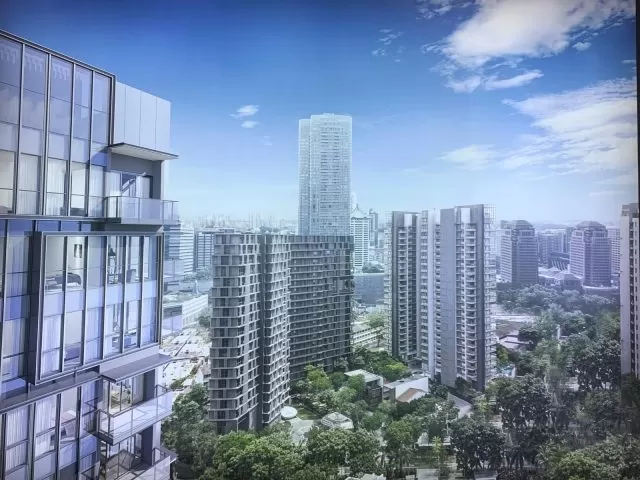
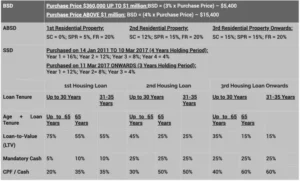
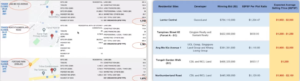
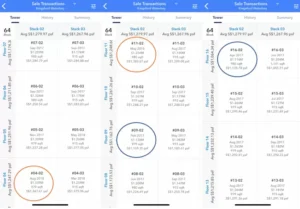
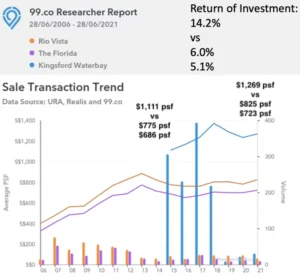 New Launch vs Resale — The Pricing Difference Explained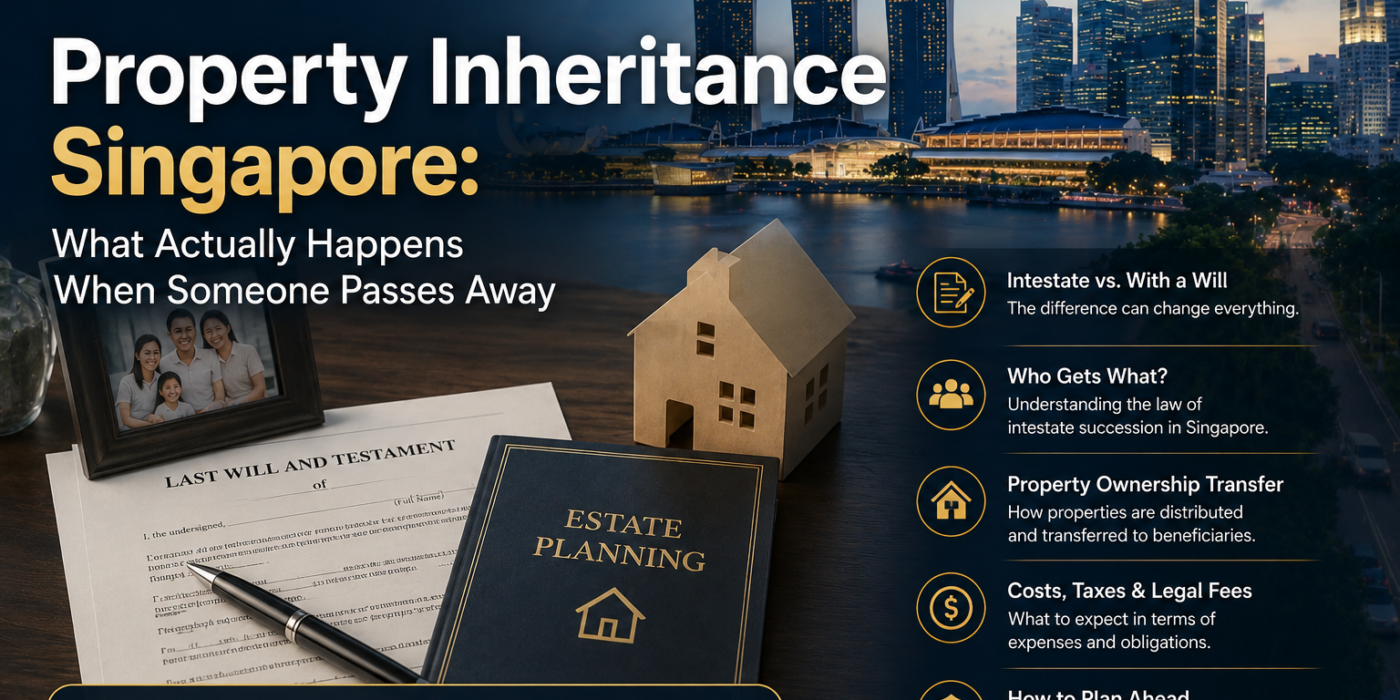
 TLDR
TLDR
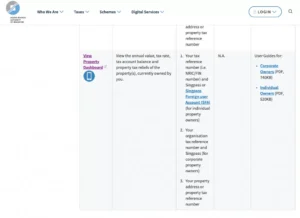 For properties where the owner lives there as their primary residence, or where the property is left vacant.
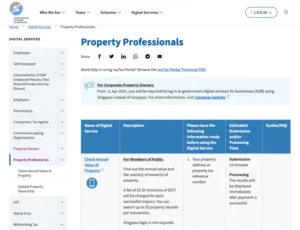 For properties that are fully rented out to tenants. These rates are higher across all AV brackets.

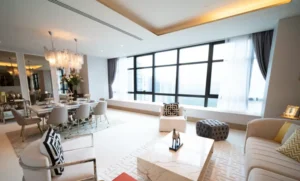

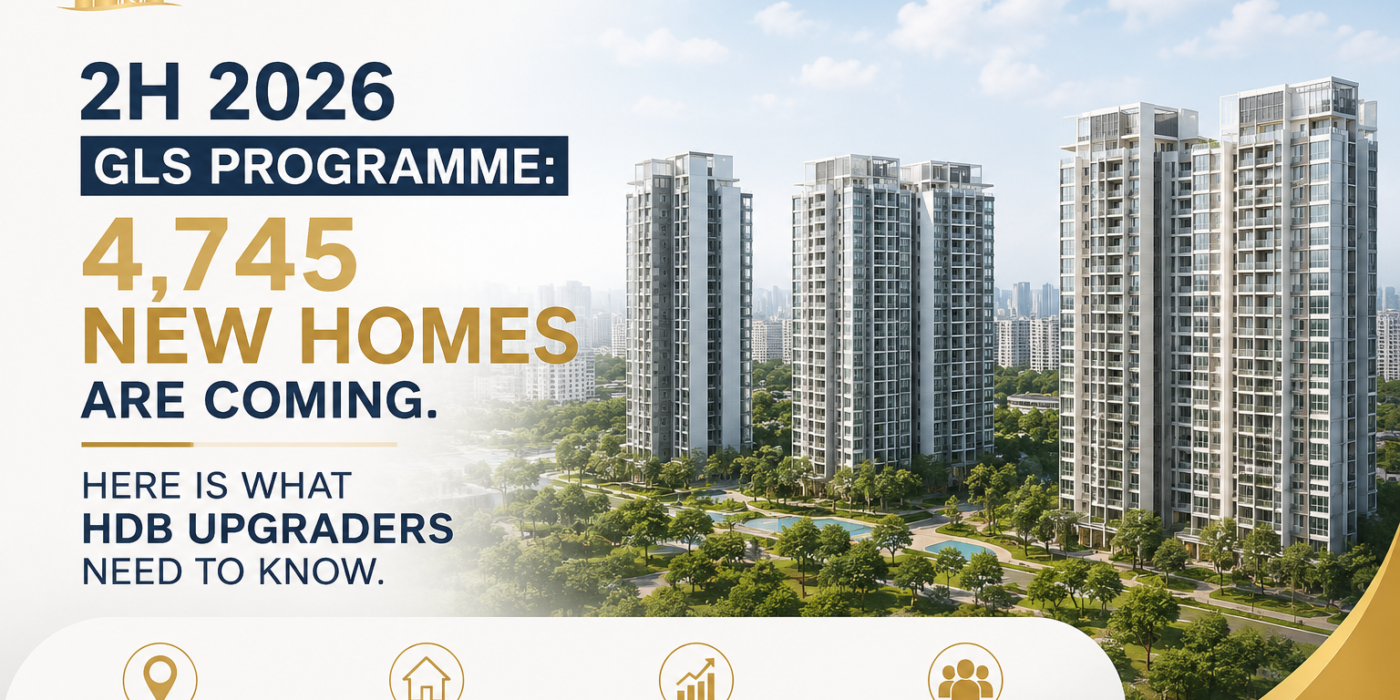
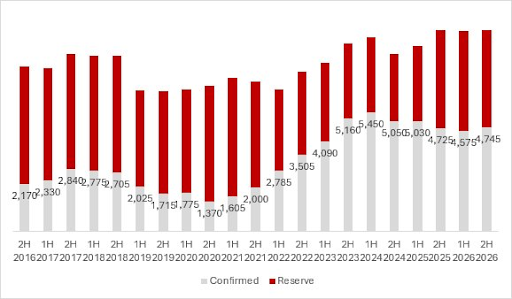
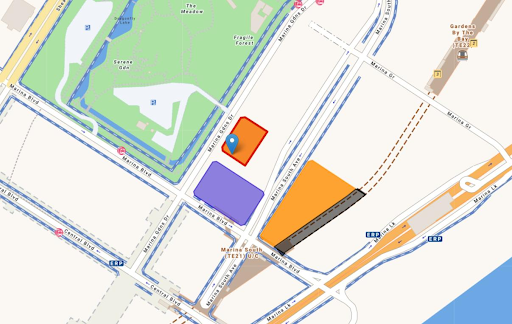
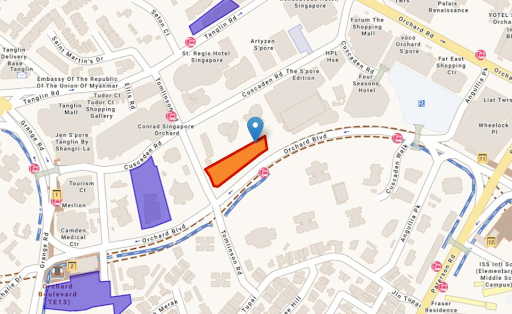
![Tanjong Rhu Close 505 Units (RCR, City Fringe) [Must-Watch]](https://sgluxurycondo.com/wp-content/uploads/2026/06/Tanjong-Rhu-Close-505-Units-RCR-City-Fringe-Must-Watch.png)