Lakeview Estate Enbloc Attempt Failed
CategoriesGuide tips & tricks

The Real Dangers of Buying an En Bloc Property in Singapore

Property Risk Series

The Real Dangers of Buying an En Bloc Property in Singapore

By James Lim  |  SG Luxury Condo  |  Updated April 2026  |  10 min read

TL;DR

Buying a condo because it "might go en bloc" sounds like a shortcut to a windfall. For most HDB upgraders, it is one of the riskiest moves in Singapore property. In 2025, only two residential en blocs succeeded across the entire island. Here are the seven dangers you need to understand before committing.

  • Most en bloc attempts fail. In 2025, only 2 out of the entire market succeeded.
  • Rising GLS supply means developers have less reason to chase older condos.
  • The process can trap your family in limbo for two to five years.
  • You almost certainly overpay when buying an en bloc-rumoured condo.
  • Corporate unit holders and dissenting owners can kill the deal.
  • Living in an ageing building while you wait carries real hidden costs.
  • When it succeeds, replacement costs and ABSD may eat your payout.
Freehold condominium Casa Sophia sold en bloc

Every few years, Singapore's property market heats up and the word 'en bloc' starts spreading through WhatsApp groups. Stories of ordinary condo owners collecting million-dollar cheques make headlines. Friends of friends walk away with life-changing sums. The en bloc sale of the freehold Tulip Garden in 2018 netted some owners between $4.3 million and $7.6 million per unit. It is the kind of story that sticks.

So naturally, some buyers start looking for 'potential en bloc' condos to buy into — hoping to ride the same wave. Property agents sometimes encourage this. "Don't worry," they might say, "older properties mean more en bloc potential." That is how some buyers end up with 40-year-old properties they struggle to sell when the en bloc never comes.

Buying a property specifically because it might go en bloc carries serious risks that most people underestimate. Especially if you are an HDB upgrader stepping into private property for the first time. Let us walk through each risk honestly — using real data from Singapore's market in 2024 and 2025.

What Does 'Buying an En Bloc Property' Actually Mean?

An en bloc sale (formally called a collective sale) is when the majority of owners in a strata development agree to sell the entire development to a single buyer — usually a developer — at once. For private condominiums over ten years old, at least 80% of owners by share value and strata area must consent. Developers pay a premium over market rate because what they are really buying is the land, which they plan to redevelop into a higher-density project.

When a buyer targets a “potential en bloc” property, they are not buying for the home itself. They are betting that enough neighbours will agree to sell, that the Strata Titles Board will approve it, that a developer will bid above the reserve price, and that all of this will happen before their own finances need to move on. That is a lot of dominoes to fall in the right order.

1

Risk 1: The En Bloc May Never Happen — and 2025 Proves It

En bloc attempts fail far more often than they succeed. In the whole of 2025, only two residential en bloc sales went through in Singapore: Chiku Mansions and River Valley Apartments — both freehold developments over 40 years old. That is it. Out of hundreds of older condos in Singapore, two crossed the finish line.

The bigger structural problem is that developers now have a far easier option: Government Land Sales. The government has been deliberately ramping up GLS supply. As of the second half of 2025, the confirmed GLS list yielded around 4,725 private housing units, with the total annual pipeline exceeding 9,200 units. For developers, GLS tenders offer clearer planning parameters, transparent bidding, and a fixed launch timeline of about 15 months — versus the uncertainty of wrangling 80% owner consent in an en bloc. When GLS land is available, developers simply do not need to bother with the complexity of a collective sale.

2Residential en blocs completed in all of 2025, across Singapore
9,200+GLS housing units in 2025 pipeline competing for developer attention
80%Minimum owner consent required — just to start the formal process

Reaching the 80% consent threshold is itself a significant hurdle. Owners have different financial needs, ages, and life plans. Some have lived in the development for decades and do not want to leave. Others are investors with unrealistic price expectations. And then there are corporate unit owners — companies that purchased for investment — who are generally not interested in selling collectively at all. If a development has 50 units and corporations own just 12, hitting 80% can become nearly impossible.

⚠ Risk Alert

Pine Grove attempted an en bloc sale five separate times starting from 2008 before eventually abandoning the effort. Some developments have been 'about to go en bloc' for over a decade. If the agent is pitching en bloc potential as a selling feature, ask: how many attempts have already failed?

2

Risk 2: You Could Be Stuck in Limbo for Years

Even a successful en bloc sale takes years to complete. From the first extraordinary general meeting to the day you receive your cheque, you are looking at a minimum of two years — often three to five. During that time, you cannot renovate meaningfully, you cannot make major financial decisions around the property, and your life plans are effectively on hold.

For HDB upgraders, this is especially painful. You have already committed your CPF savings and your borrowing capacity to this purchase. Your children’s school enrolment choices, your workplace proximity, your retirement planning — all of these depend on where and how you live. Years of uncertainty is not a minor inconvenience. It is a disruption to your whole family’s trajectory.

Industry observers note that many successful en bloc sales took three separate attempts to go through. The first two times usually failed because of owners’ unrealistic price expectations or unfavourable market conditions. That means some developments spent ten or more years in collective sale discussions before anything happened. During all that time, residents were living with uncertainty and watching their building’s maintenance and morale slowly decline.

James's Take

If you are buying your first private property as an HDB upgrader, your priority should be a home that works for your family right now — not a bet on what might happen in three to five years. Stability of tenure matters more than speculative upside at this stage of your property journey.

3

Risk 3: The Building Deteriorates Around You While You Wait

Here is a risk most people overlook. When a condo is in active en bloc discussions, maintenance spending often stalls. Management committees hold off on major repairs, expecting the whole building to be torn down soon. But if the sale fails — or drags on for years — residents are left in a building that has been neglected, with a depleted sinking fund and no easy way to fund urgent repairs.

Take Loyang Valley as a real example. The development’s third collective sale attempt, which closed in September 2025, received expressions of interest but no firm bids. As reported by The Straits Times, the ageing swimming pool, landscaping, roofing and piping all now need refurbishment — with maintenance fees having been held flat for two years during the sale push. Residents now face a fee increase to be announced at the next AGM.

Real World Example

More than 1,000 of Singapore's approximately 3,750 private residential developments are now at least 30 years old — a number expected to rise to 1,160 by 2035 if none go en bloc (ERA Singapore data). As these buildings age, they face deteriorating infrastructure, insufficient sinking funds, and resistance from owners to pay special levies for major repairs. This is the building you may be buying into.
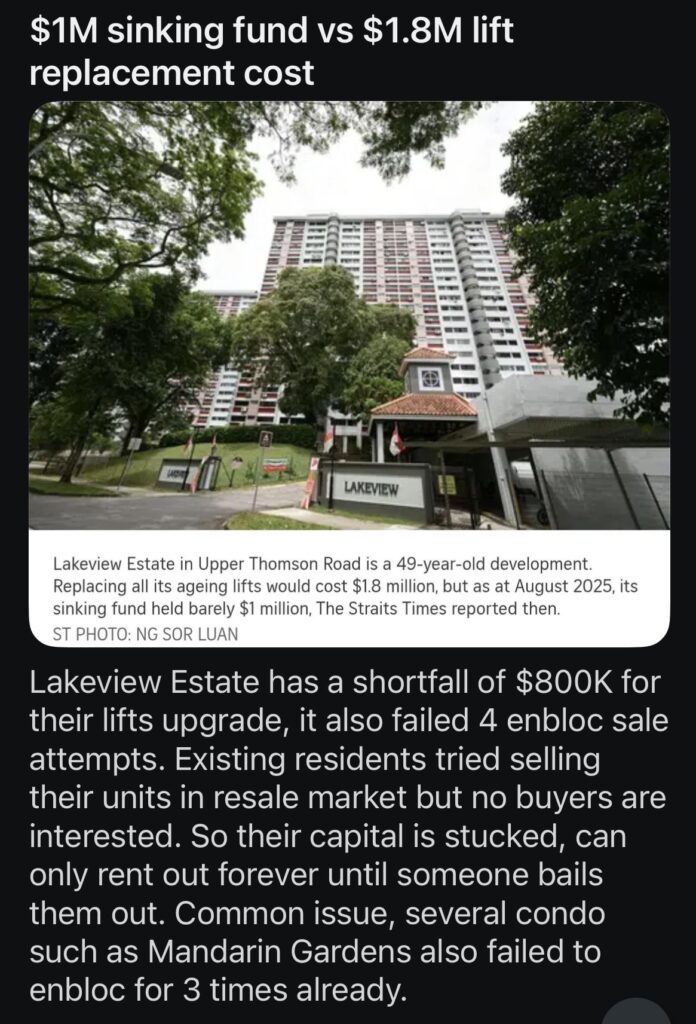
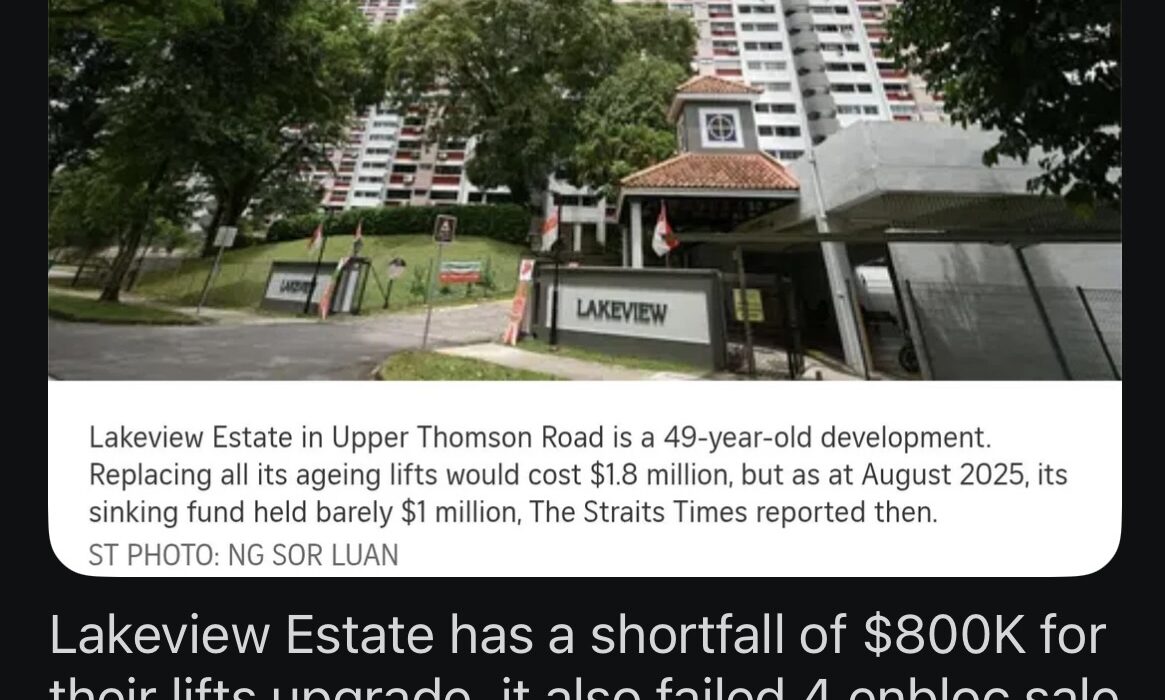
Lakeview Estate Enbloc Attempt Failed
Problems of En Bloc with Lakeview Estate

Older condos with 30-plus years of wear typically need electrical and plumbing system replacements, roof refurbishments, lift overhauls, and pool restorations — all expensive. Buyers of older condominiums should always check the MCST’s audited financial statements to understand the sinking fund balance and any history of special levies. A thin fund in an ageing building is a direct financial risk to you as the new owner — regardless of what happens with the en bloc.

⚠ Risk Alert

Always request the MCST's audited financial statements before buying an older condo. A thin sinking fund in an ageing building means you could face a special levy bill — on top of your mortgage — not long after you move in.

4

Risk 4: You Are Probably Overpaying on Entry

The moment a development becomes known as a potential en bloc target, buyers start paying above its real market value. This 'en bloc premium' reflects the hope of a future payout. As property analysts note, the profit margin may be lower for every subsequent buyer as the development ages — because each new buyer enters at a higher en bloc-inflated price while the payout formula remains roughly fixed.

The psf price you pay on the secondary market may already reflect an en bloc premium of 15% to 30% above what the unit would otherwise fetch based on its age and condition. If the en bloc fails, you are left holding an overpriced, ageing condo with a limited pool of resale buyers — because most buyers in their right mind are not keen on a 35-year-old building with a cloudy en bloc history and stalled maintenance.

Ageing condos with strong en bloc potential sit on large freehold or 999-year leasehold land, have low plot ratios, and are in districts with strong redevelopment demand. These factors make the land genuinely valuable to a developer. But “valuable to a developer” and “good value for you as a buyer and occupant” are two entirely different things.

5

Risk 5: Minority Owners and Corporate Holders Can Block the Sale

Singapore’s collective sale legislation is designed to protect dissenting minority owners. Any owner who does not sign the Collective Sale Agreement can file an objection with the STB once the application is submitted. Common grounds include the sale proceeds being less than their unit’s estimated market value, an inequitable distribution method, or a lack of good faith in the process.

Beyond individual dissenters, corporate unit owners are a hidden risk that many buyers do not think about. Companies that purchase units for investment typically do not want the hassle of relocating or finding an alternative property. They did not buy for en bloc purposes, and they often vote against it. If a development has a significant number of corporately held units, the 80% threshold may simply never be reachable — regardless of how many individual residents want to sell.

How to Check Before You Buy

Ask your agent to pull the development's ownership records. If a significant portion of units are registered under company names, treat this as a red flag. The STB's published decisions database also shows which past objections succeeded — and how long they dragged proceedings out. You can check STB decisions on the SLA website at sla.gov.sg.

6

Risk 6: Even If It Succeeds, Replacement Costs Have Surged

When your en bloc sale goes through and you collect your payout, you still need somewhere to live. URA data from January to July 2025 shows that the median price of newer leasehold condos under five years old was $2,479 psf — 122% higher than the $1,115 psf median for condos that are 40 or more years old. That is more than double. Your payout buys far less new home than it appears on paper.

Consider this scenario. You buy into a potential en bloc condo at $1.5 million. Three years later, the sale goes through and you receive $2 million. That sounds like a $500,000 gain. But to buy a comparable newer home in a similar location, you may now need $2.4 million or more — because the psf of newer condos has moved sharply higher. Your windfall has not kept pace with what it actually costs to replace your home.

This replacement-cost trap is especially acute because en bloc activity tends to cluster in property bull markets, which is precisely when new home prices are at their highest. The two cycles reinforce each other in the worst possible way for the homeowner who needs to buy again.

James's Take

Some owners who received en bloc payouts in 2018 discovered that the proceeds were barely enough to buy a comparable unit in a new development nearby. After factoring in moving costs, interim rental, agent fees, and legal fees, some came out financially flat — after years of disruption. Always ask your agent to model the full replacement cost, not just the headline payout number.

7

Risk 7: ABSD Complications Can Turn a Profit into a Loss

If you buy a replacement private property before your en bloc sale is legally completed, you are purchasing a second property — which means ABSD applies. As of April 2023, Singapore Citizens pay 20% ABSD on a second residential property. For a $2 million replacement home, that is $400,000 in ABSD alone. The en bloc timeline is not in your control, and that timing mismatch can be extremely costly.

The government does offer an ABSD remission for married couples where one spouse is a Singapore Citizen, but the conditions are strict: you must sell your current home within six months of completing the replacement purchase. In a collective sale, completion dates are set by the developer, not you. STB hearings and court challenges can push your timeline off by months. Buyers who miscalculate this timing have paid hundreds of thousands of dollars in unexpected ABSD.

High property prices and elevated ABSD rates have been identified as one of the key reasons en bloc activity has slowed — because owners who receive payouts face very high re-entry costs into the market. Fewer owners want to sell, consent is harder to gather, and more attempts fail. For a full breakdown of ABSD rates and how they affect your upgrade calculations, read our complete ABSD guide.

ScenarioProfileABSD RateRisk Level
Buy replacement BEFORE en bloc completesSC, 2nd property20%High
Buy replacement AFTER en bloc completesSC, 1st property (sold)0%Timing-dependent
Married couple, sell within 6 monthsSC + SC, qualifying criteriaPartial remissionMedium
PR buyer seeking replacementPR, 2nd property30%Very High

Who Should — and Should Not — Consider an En Bloc Property?

En bloc investing is not universally wrong. There are profiles for whom it can work.

It may suit you if: you already own multiple properties and are not dependent on this one as your primary home; your primary motivation is rental yield and en bloc is just a bonus if it happens; you are buying at a genuinely below-market price because the development is under the radar; you have a long investment horizon of five-plus years; and you have the financial resilience to carry the property through years of uncertainty and higher maintenance costs without stress.

It is likely wrong for you if: this is your first or only private property; you are an HDB upgrader who has stretched financially to make this purchase; you need housing stability for your children’s schooling or your own workplace; you have little buffer for special levies or unexpected maintenance costs; or your financial plan depends on a specific timeline for the payout.

Most HDB upgraders fall firmly into the second category. When you are making the biggest financial move of your life — stepping out of public housing into the private market — the goal should be a home that serves your family well right now, not a speculative bet on a process you cannot control. If you want to understand what a sound upgrade path looks like, read our guide on how HDB owners upgrade to private property in Singapore.

James's Take

En bloc stories make great headlines. But for every owner who walked away with a windfall, there are dozens more who sat through years of failed attempts, lived in a deteriorating building, paid unexpected special levies, and eventually sold on the open market at a loss relative to what they paid. With only two successful residential en blocs in all of 2025 — and GLS competition reducing developer appetite further — pick your property based on fundamentals: location, lease, facilities, and your family's actual needs.

Frequently Asked Questions

What percentage of en bloc attempts succeed in Singapore?

The success rate is low and falling. In all of 2025, only two residential en bloc sales were completed across Singapore — Chiku Mansions and River Valley Apartments, both freehold and over 40 years old. The government's ramped-up GLS programme, with over 9,200 potential units in 2025, gives developers a far less complicated route to land, reducing their appetite for complex collective sales. Many attempts fail to reach 80% consent; those that do may still be blocked at the STB or fail to attract bids above the reserve price.

Can minority owners stop an en bloc sale?

Yes. Dissenting owners can file formal objections with the Strata Titles Board on grounds including inequitable distribution, good faith failures, or sale proceeds being below market value. Corporate unit owners are also a significant hidden obstacle — companies that purchased for investment are generally not interested in collective sales, and if they hold enough share value, they can prevent the 80% threshold from ever being reached. Always check ownership records before buying into a potential en bloc development.

How long does an en bloc sale process take?

From the first EOGM to completion, the process typically takes two to five years. The Collective Sale Agreement is valid for twelve months, after which a new vote may be needed if the sale has not closed. STB hearings and potential High Court appeals can add further time. Industry professionals note that many successful en bloc sales required three separate attempts spanning a decade or more before going through.

Do I have to pay ABSD when I sell in an en bloc and buy a replacement property?

ABSD liability depends entirely on your timing. If you purchase a replacement property before the collective sale is legally completed, ABSD applies — at 20% for Singapore Citizens on a second property as of 2023. If you wait until after the en bloc is finished and you no longer own any property, your replacement purchase is treated as a first property with no ABSD. A partial ABSD remission is available for qualifying married couples who sell within six months of buying the replacement, but the conditions are strict and the en bloc timeline is not in your control.

Is buying a potential en bloc property a good investment strategy?

For most HDB upgraders, no. The strategy requires overpaying on entry due to the en bloc premium, living in an ageing building with rising maintenance costs, enduring years of uncertainty with no guaranteed outcome, and then competing in a hot replacement market where newer condos cost over 122% more per square foot than the ageing stock you are selling. With only two successful residential en blocs in 2025 and GLS supply reducing developer land appetite, the odds of a successful payout are lower than popular perception suggests.

Not Sure If That Condo Is Worth the Risk?

Get a frank, no-obligation assessment of any property you are considering. James will walk you through the real numbers — en bloc track record, sinking fund health, replacement costs, and ABSD exposure.

WhatsApp James at 9138 5008

No hard sell. Honest advice from a licensed Singapore property consultant.
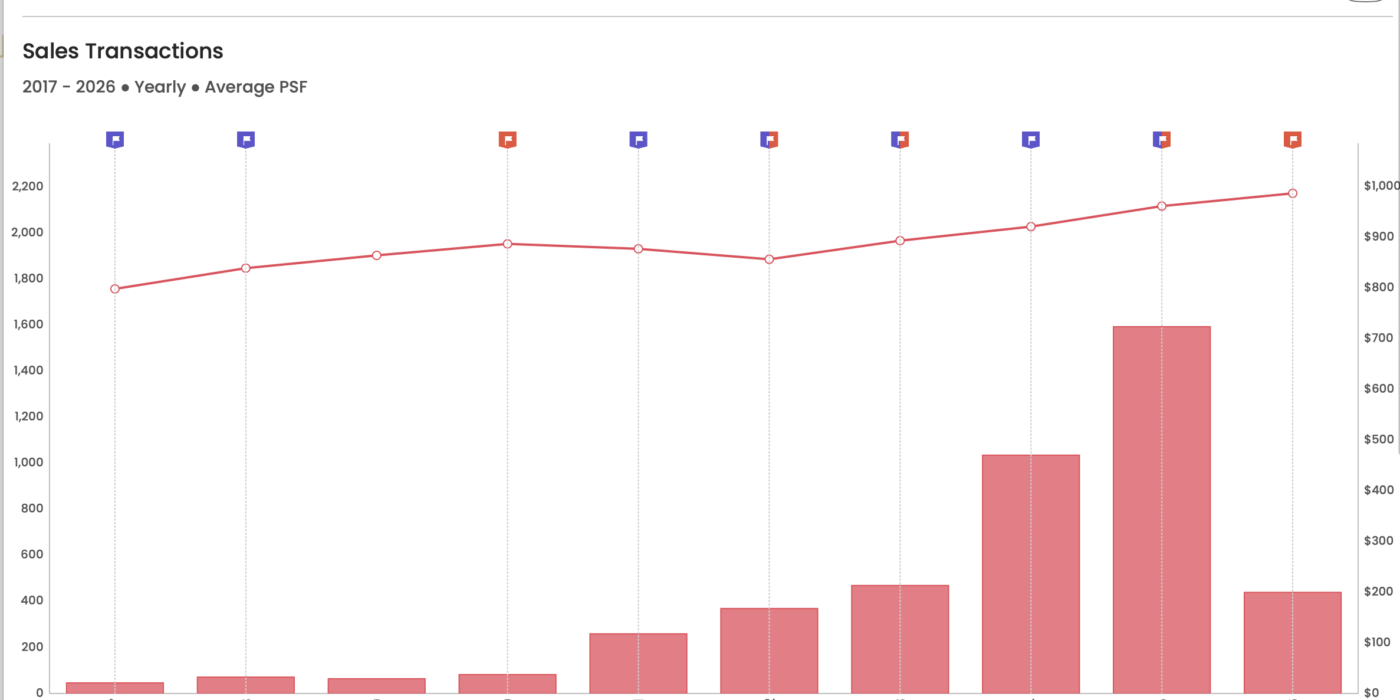
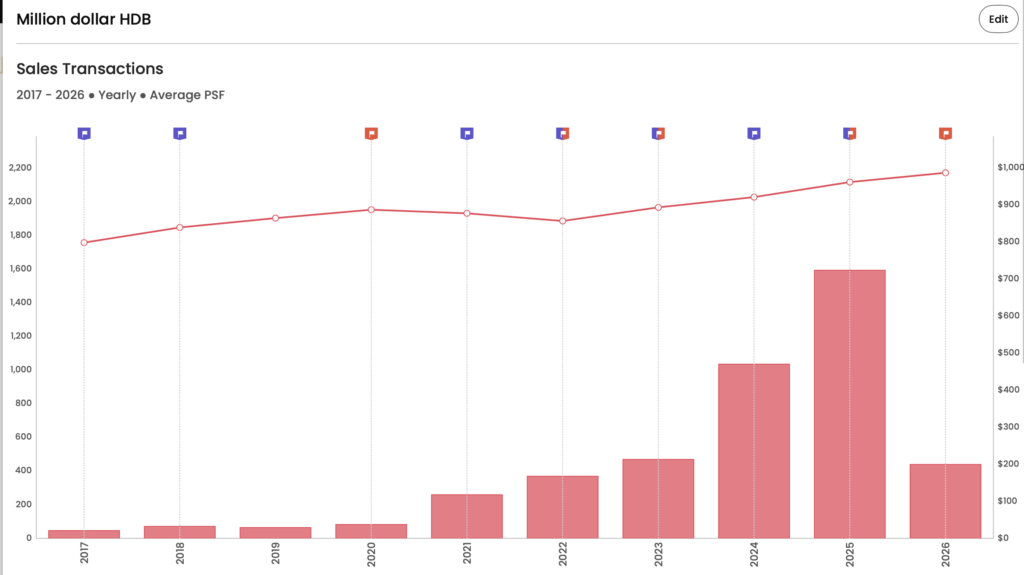
Number of Million Dollar HDB increasing yearly
CategoriesGuide tips & tricks

Is 2026 the Best Time to Upgrade to a Private Condo in Singapore?

2026 MARKET ANALYSIS

Is 2026 the Best Time to Upgrade from HDB to a Private Condo in Singapore?

By SG Luxury Condo Team  ·  April 2026  ·  12 min read

📋 What You Will Learn

  1. The One Question Every Upgrader Needs to Answer First
  2. What the Data Actually Says About 2026
  3. Why Your HDB Flat Is Worth More Than You Think
  4. What 2026 Private Condo Prices Really Look Like
  5. The Window of Opportunity — Is It Real?
  6. When You Should Wait Instead
  7. The Honest Verdict: A Simple Go/Wait Framework

The One Question Every Upgrader Needs to Answer First

Every week, I get some version of the same message from clients: “Should I upgrade now? Is this a good time?”

And every time, I give the same answer: It depends on which side of the transaction you are standing on.

As an HDB flat owner thinking of upgrading, you are actually involved in two deals at the same time — you are a seller (of your HDB flat) and a buyer (of a private condo). For 2026 to be a good year to upgrade, both sides of that equation need to work in your favour. So that is exactly how I am going to look at this — with real numbers, not sales talk.

“Timing the market is less important than time in the market. But knowing the market condition when you enter? That is not market timing — that is just being smart.”

What the Data Actually Says About 2026

3.4%
Full-year private condo price growth in 2025 (URA)
1,544
Million-dollar HDB flats sold in 2025 — all-time record
9,852
New condo units expected to launch in 2026 (ERA)

The 3.4% private condo price growth in 2025 tells us something important: the market is still rising, but it is no longer running away from buyers. Compare that to 2021, when prices surged 10.6% in a single year, or 2022 when they climbed another 8.6%. The pace has slowed significantly — which is actually good news if you are planning your purchase without panic-buying.

For 2026, Singapore’s top property research houses are forecasting moderate, steady growth. Here is a summary of their predictions:

📊 2026 Private Condo Price Growth Forecasts

CBRE
2% – 4%
Cushman & Wakefield
2% – 4%
Knight Frank
3% – 5%
PropNex
3% – 4%
Realion
2.5% – 4.5%

Sources: EdgeProp, ERA Research (January 2026).

Why Your HDB Flat Is Worth More Than You Think Right Now

Number of Million Dollar HDB increasing yearly
Volume of Million dollar HDB til Q1 2026

Here is the side of the equation that genuinely excites me as an advisor: HDB flat values have never been stronger in Singapore’s history.

In 2025 alone, a record 1,544 HDB flats were sold for $1 million or more — a 49% surge from 2024. And these were not all in Queenstown or Toa Payoh. Million-dollar deals spread to Woodlands, Tampines, Punggol, Sengkang, and Hougang — areas many people thought of as “ordinary” just five years ago. Moreover, just looking at Quarter 1 of 2026, number of million dollar HDB has already transacted over 400 units, close to half of 2024 figures.

📌 Real 2025 HDB Transaction Examples

5-room flat at SkyTerrace @ Dawson, Queenstown: $1.659 million

5-room flat at Pinnacle @ Duxton, Central Area: $1.6 million

Executive flat in Woodlands: $1.12 million

5-room flat in Punggol: $1.47 million

Sources: EdgeProp, 99.co (2025 data). These are select high-value transactions, not average prices.

Even ordinary 4-room and 5-room HDB flats in non-mature estates appreciated by 3.7% to 4.9% year-on-year in 2025. If your flat is worth $750,000 today, it was likely worth $715,000 a year ago. That $35,000 gain goes directly into your upgrade war chest.

The 2026 MOP Wave: Why More Options Are Coming

The number of HDB flats completing their 5-year MOP in 2026 is set to jump to 13,484 units — up from just about 8,000 in 2025. Over 60% of these flats are in mature estates — the highest figure in over a decade. ERA Singapore forecasts 26,000 to 27,000 HDB resale transactions in 2026, meaning an active, liquid market for sellers.

💡 What This Means Practically

If you are thinking of selling your HDB flat in 2026, you are entering a market where prices are near all-time highs and transaction volumes are expected to stay healthy. This means you are unlikely to be forced to accept a lowball offer — there are real buyers out there.

What 2026 Private Condo Prices Really Look Like

In the fourth quarter of 2025, the Outside Central Region (OCR) — where most HDB upgraders look first — led price growth among all private residential segments. The OCR covers Tampines, Canberra, Tengah, Jurong, and Woodlands — familiar locations for upgraders moving from nearby HDB estates. Here is a quick breakdown of what prices look like across the three regions in 2026:

RegionTypical PSF3-Bedroom Price RangeBest For
OCR
Tampines, Tengah, Jurong, Woodlands
$1,600–$2,000 psf$1.4M – $1.9MHDB upgraders, families
RCR
Queenstown, Bishan, Bedok, Serangoon
$2,200–$2,900 psf$1.9M – $2.8MMove-up buyers, investors
CCR
Orchard, Marina, Districts 9/10/11
$2,900–$4,500+ psf$3M+High-net-worth, foreign buyers

Executive Condominiums: The Upgrader's Secret Weapon

Executive Condominiums (ECs) offer private condo living at prices typically 15–25% below comparable private condos — and the 2026 EC pipeline is strong, with 5 new EC projects (~1,972 units) slated to launch this year. ECs like Coastal Cabana (launched January 2026 and already over two-thirds sold at launch) show just how hungry upgrader demand is. After 10 years, your EC becomes fully privatised and can be sold to anyone, including foreigners — making it a powerful wealth-building tool.

⚠️ One Risk to Watch in 2026

Global economic uncertainty from US trade tariff policies is a real wild card. Singapore's MTI has flagged that GDP growth could slow in 2026. This may not crash property prices, but it could cool buyer confidence and tighten bank loan approvals. Ensure your household income is stable before committing to a large mortgage.

The "Window of Opportunity" Argument — Is It Real?

Let me address the claim you will often hear from property agents: “2026 is a golden window — prices are still moderate, interest rates are falling, and HDB values are high. If you don’t buy now, you’ll miss out.” Is there truth to this? Honestly — yes, partially. But let me be precise about which parts are real and which parts are sales talk.

FactorHonest AssessmentFor Upgraders
SORA interest ratesFallen to ~1.1–1.5% from 3.5%+ peak✅ Real benefit
HDB resale equityPrices at all-time highs; $1M+ flats common✅ Real benefit
New condo supply~9,852 units launching in 2026✅ Real benefit — more choice
Condo price trajectoryGrowing 2–5% — not 10%+✅ Time to decide without panic
"Must buy NOW or miss out"Not supported by data❌ Not a real reason to rush
“A market rising 3% per year is not an emergency. It is an invitation to buy thoughtfully — which is exactly how you should be buying a $1.8 million property.”

When You Should Wait Instead

Not every HDB flat owner should upgrade in 2026 — even if market conditions are broadly favourable. Here are the clear signals that you should pump the brakes.

✅ You Are Ready to Upgrade If...

  • ✔ HDB MOP is completed (or ending soon)
  • ✔ Combined income above $10,000/month
  • ✔ 3–6 months emergency savings remain after purchase
  • ✔ Mortgage stays below 40–50% of take-home pay
  • ✔ Planning to stay for at least 5–7 years
  • ✔ Clear reasons beyond just status or investment

⏳ Consider Waiting If...

  • ⚠️ Combined income below $9,000–$10,000/month
  • ⚠️ Significant other debts (car, renovation loans)
  • ⚠️ Job or business income feels unstable in 2026
  • ⚠️ HDB MOP ends only in 2027 or later
  • ⚠️ No CPF withdrawal simulation done yet
  • ⚠️ Buying purely out of FOMO or social pressure

The Honest Verdict: A Simple Go/Wait Framework

✅ The 3-Check Upgrade Test for 2026

Check 1 — The Equity Check: After selling your HDB flat and accounting for CPF refunds and outstanding loans, will you have at least $80,000–$120,000 in combined cash and CPF OA for the condo down payment and costs? If yes, pass. If no, wait.

Check 2 — The Income Check: Does your combined household income allow you to service the new condo mortgage — plus maintenance fees and all existing debts — within 45% of your take-home pay? If yes, pass. If no, wait.

Check 3 — The Stability Check: Are both income earners in your household in stable employment or business, with no major financial shocks expected in the next 2–3 years? If yes, pass. If no, wait.

If you pass all 3 checks — and your MOP is completed — then yes: 2026 is a genuinely good year to upgrade. You have strong HDB equity to work with, more new condo supply to choose from, and interest rates that are the most favourable since 2021.

2026 is not the cheapest year to buy a condo in Singapore — those years are behind us. But it is also not the most expensive year ahead. It sits in a sensible window: prices are growing steadily but not explosively, interest rates are meaningfully lower than 2022–2023, and HDB values are high enough to give most upgraders a real financial foundation to work from.

If your 3 checks pass, stop waiting for the “perfect” moment that may never come. The families who succeed with property upgrades are not the ones who timed the market perfectly — they are the ones who took considered, well-prepared action when conditions were sensible. And in 2026, conditions are sensible.

Want to Know If 2026 Is Right for You Specifically?

Every family's financial picture is different. Let me run through your HDB equity, income, and TDSR numbers with you — for free, with no obligation. You will leave the conversation knowing exactly where you stand.

Get My Free Upgrade Assessment →
Disclaimer: This article is for general informational purposes only and does not constitute financial, legal, or property advice. Market forecasts cited are from third-party analysts and are not guarantees of future performance. Property prices, interest rates, and government policies are subject to change. Please consult a licensed property agent, financial advisor, and lawyer before making any property transaction decisions. SG Luxury Condo is a licensed real estate agency in Singapore.
Why Middle East Conflict Benefit Singapore Property
CategoriesGuide News

Why the Middle East Conflict Makes Buying Singapore Property Now a Smart Move

SPECIAL MARKET REPORT — MARCH 2026

Why the Middle East Conflict Makes Buying Singapore Property Now a Smart Move

By SG Luxury Condo Team  ·  March 2026  ·  13 min read

📋 What You Will Learn

  1. How a Faraway Conflict Changes Your Property Decision
  2. Rising Construction Costs Will Drive Future Property Prices Higher
  3. Low Interest Rates Create a Rare Window for Buyers
  4. Singapore Is Asia's Ultimate Safe Haven for Capital and Families
  5. Supply Chain Disruption Is Tightening Future Housing Supply
  6. Singapore's Growing Population Means Demand Is Only Going Up
  7. The Bottom Line: Why Waiting May Cost You More Than Buying

How a Faraway Conflict Changes Your Property Decision

You might be asking: What does a conflict in the Middle East have to do with me buying a condo in Singapore? It is a fair question — and the answer is more direct than you might think.

In late February 2026, the United States and Israel launched joint air strikes against Iran, triggering a region-wide escalation that has effectively shut down the Strait of Hormuz — the narrow waterway through which roughly 20 million barrels of crude oil pass every single day. According to the World Economic Forum, Brent crude oil prices jumped about 15% in the opening days of the conflict, then surged to $120 a barrel as it deepened and the market began pricing in the risk of sustained disruption.

Oil and energy costs are embedded in almost everything used to build a home — steel, cement, aluminium, glass, transport, logistics. When oil prices spike and shipping routes shut down, building things gets more expensive. Developers pay more to construct your future condo. And eventually, they pass that cost to you. But the story does not stop at construction costs. The Middle East conflict is also reshaping where global capital flows, how Singapore is perceived as a home for both people and wealth, and whether the supply of new condos will keep up with the growing number of people who want to live here.

“Global uncertainty is not a reason to stop. For the right Singapore property buyer, it is a reason to think clearly — and act before the window closes.”

Chapter 1: Rising Construction Costs Will Drive Future Property Prices Higher

Construction is one of the most energy-hungry industries in the world. Steel requires enormous amounts of electricity. Cement kilns run on fuel. Aluminium smelters consume vast amounts of power. All of these are powered by the kind of energy that is now being priced with a war premium.

At the centre of the disruption is the Strait of Hormuz, the narrow waterway through which some 20 million barrels of crude oil pass daily. Escalation around the critical waterway has increased logistics risk, lifted war-risk insurance and bunker costs, and added a risk premium to crude oil and liquefied natural gas (LNG). These costs are now filtering through to construction input prices, as noted in a March 2026 report by global construction consultant Linesight.

In the first week of March 2026, crude futures jumped by nearly 22% as markets priced Gulf risk. Aluminium prices reached a four-year high on the London Metal Exchange. According to Baker McKenzie’s Global Disputes Forecast 2026, Asia’s dependency on Middle Eastern energy means disruptions pass through to power and transport costs, which in turn inflate material inputs such as steel, cement and fabricated components.

+22%
Crude futures jump in first week of March 2026 as markets priced Gulf risk
3.45%
Revised tender price inflation forecast for 2026, up from 3.3% (Rider Levett Bucknall)
4-yr high
Aluminium prices on LME — a key construction material — in March 2026 (Linesight)

A condo that a developer prices at $1.8 million today was planned and costed before the current spike in material prices. The next wave of developments — those being designed, tendered, and launched over the next 12 to 24 months — will be costed with today’s elevated energy, steel, and aluminium prices baked in. That means higher launch prices for buyers who wait.

In Malaysia, housing contractors have already warned that the ongoing instability in global supply chains is making it difficult to provide accurate cost estimates during the early stages of a project, adding that this can lead to cost overruns, construction delays, and developers postponing or restructuring the launch of housing projects. What applies in Malaysia applies across the region — including Singapore.

Chapter 2: Low Interest Rates Create a Rare Window for Buyers

💡 What This Means for HDB Upgraders

If you are considering upgrading from your HDB flat to a private condo, the condos you are looking at today — especially new launches already under construction — were priced before the current energy cost spike. Waiting for "better deals" in 2027 may instead mean facing higher launch prices as developers reprice based on today's elevated construction costs. View our latest new launch listings to see current pricing before it changes.

SORA — Singapore’s benchmark home loan interest rate — has been falling steadily since its 2023 peak of over 3.5%. As of early 2026, SORA-linked home loan rates sit at approximately 1.1% to 1.5%. This gives you lower monthly mortgage repayments than at any point since 2021.

📊 What SORA Rate Movement Means for Your Monthly Payment

On a $1.35 million bank loan (75% LTV on a $1.8M condo) over 25 years:

At 3.5% (2023 peak): Monthly repayment ≈ $6,760

At 2.0% (stress test floor): Monthly repayment ≈ $5,720

At 1.3% (current SORA-linked rate, early 2026): Monthly repayment ≈ $5,150

*Illustrative figures only. Actual rates depend on bank package and individual credit profile. Bank stress tests use a floor rate of 4%.

Here is the nuance the Middle East conflict introduces: rising energy costs and potential supply disruptions will place upward pressure on inflation, either pushing it higher or preventing it from falling as quickly as expected. This means the current window of relatively low rates is not guaranteed to stay open indefinitely. If the conflict drives a sustained global inflation resurgence, central banks may have to pause or reverse rate cuts. The window of sub-2% SORA-linked mortgage rates may be shorter than it looks.

History shows that by the time it becomes obvious interest rates are rising, the window has already closed for most buyers. The time to lock in a loan at today’s rates is now, not after the inflation picture becomes clearer. Check out our complete HDB upgrade financing guide for a breakdown of how to structure your loan in today’s rate environment.

Chapter 3: Singapore Is Asia's Ultimate Safe Haven for Capital and Families

The Capital Inflow Is Already Happening

In 2025, Singapore’s three largest banks attracted a combined S$77 billion in net new wealth money. DBS reported S$39 billion in fresh inflows and OCBC added S$27 billion. The source is clear: ultra-high-net-worth individuals across Asia, particularly from China, India, and the Middle East, are moving assets out of perceived hotspots. The Iran-GCC conflict inflicted significant damage on the UAE’s infrastructure and civilian sites, directly undermining the Gulf’s reputation as a safe haven. Firms like JPMorgan and Partners Group have cancelled or relocated major investor gatherings from Dubai. When global wealth moves, it needs somewhere to land — and increasingly, a large portion of that capital is landing in Singapore real estate.

Huttons Asia CEO Mark Yip has said: “It would not be a surprise to see more wealth coming to Singapore and contributing to demand for properties.” This is because ultra-high-net-worth individuals want stability and low taxes.

Why Singapore Keeps Getting Chosen

Singapore AdvantageWhat It Means for Property Owners
Political neutrality and stabilityNo risk of property confiscation or sudden policy reversal
Strong Singapore Dollar (SGD)Your property value is denominated in a currency that holds its global value
English common law legal systemTransparent, enforceable property rights with no legal ambiguity
World-class financial infrastructureLiquid market — you can sell when you need to
Low crime, excellent schools, healthcareConsistent demand from locals and expats — supports rental yield
Consistent MAS regulatory frameworkCooling measures prevent speculative bubbles — no sudden market collapses

ERA Singapore has documented the historical evidence: during the first Gulf War (1990–1991), Singapore’s Private Residential Property Price Index maintained its growth throughout the conflict and rose by roughly 160% over the following five years. During the Iraq War (2003–2011), the PPI rose by around 82.9% throughout the conflict. An upward trend in private property prices has been observed since the outbreak of the Russia–Ukraine conflict in 2022 as well.

The pattern is consistent: Singapore property does not crash during Middle East conflicts. It continues — and often accelerates — its long-term upward trend. Singapore’s stability makes it the natural beneficiary of the capital flight that follows every period of global uncertainty.

“Every major global conflict in the past 30 years has ended with Singapore property prices higher than when it started. That is not coincidence. That is structural advantage.”

💡 Explore Singapore's Top Condos

Browse our curated listings of Singapore's top private condos to see what your budget can unlock in today's market — from OCR family condos to CCR luxury residences that are seeing the strongest safe-haven interest from international buyers.

Chapter 4: Supply Chain Disruption Is Tightening Future Housing Supply

When construction costs rise sharply and supply chains become unpredictable, developers face a difficult choice: launch new projects at higher prices and risk slower sales, or delay launches until they have more cost certainty. Armed escalation across the Middle East has disrupted airspace and critical maritime corridors, notably the Strait of Hormuz and Red Sea/Suez, forcing costly rerouting of vessels and increasing war risk insurance and freight rates. According to Baker McKenzie, construction supply chains in the Gulf are already experiencing delivery delays, price volatility and repricing of non-energy cargo, with knock-on effects for Asia Pacific contractors dependent on these corridors.

1

Delayed New Launches

Developers who cannot accurately price steel, aluminium, and MEP components will delay project launches rather than risk selling at prices that do not cover their final construction cost. Fewer launches = fewer options for buyers = upward pressure on available units.

2

Extended Construction Timelines

When one stage slips — production, supply and delivery — the delay compounds on any project underway. The next wave of supply enters the market later than planned, stretching the gap between demand and available units.

3

Higher Replacement Cost of Existing Stock

When it becomes more expensive to build new properties, the replacement cost of existing ones rises. This puts a floor under resale prices — sellers of existing condos can justifiably ask for more, knowing that rebuilding today would cost significantly more than it did when the property was first constructed.

Singapore is a city-state with a total land area of just 733 square kilometres. There is no equivalent of suburban sprawl here. Every square metre of buildable land is finite, and the government tightly controls what gets released through the Government Land Sales (GLS) programme. Supply chain disruption slowing new completions, combined with tight land supply and rising construction costs that deter new launches, creates a perfect storm for constrained housing supply at exactly the moment when demand is rising.

You can explore currently available new launch condos on our listings page — properties priced and launched before the current cost spike, while supply is still relatively available.

Chapter 5: Singapore's Growing Population Means Demand Is Only Going Up

Population Growth: The Numbers from Singapore's Own Government

Singapore’s total population stood at 6.11 million as at June 2025, a 1.2% increase from June 2024. The annualised population growth rate of 1.5% over the past five years (2020–2025) was higher than the 0.5% over the preceding five-year period (2015–2020). The Non-Resident population stood at 1.91 million, an increase of 2.7% — this growing pool of employment pass holders and skilled professionals directly supports rental demand for private condos.

📌 Singapore's Population in Numbers (2025)

Total population: 6.11 million (record high)

5-year annualised growth rate: 1.5% per year

Non-resident population growth: +2.7% year-on-year

New PRs granted in 2024: ~35,264

New citizenships granted in 2024: ~22,766

Median household income: S$12,446/month — first time crossing $12,000 mark

Source: Singapore Department of Statistics (DOS), Population in Brief 2025; ERA Research, March 2026.

The Middle East Conflict Amplifies This Demand

When the Gulf becomes unstable — when Dubai’s reputation as a safe business hub is damaged by missile strikes on its infrastructure — Singapore is the natural destination for displaced wealth and displaced people. Multinational corporations often centralise operations in politically stable cities during uncertain times. Family offices, financial institutions, and regional headquarters that were based in Dubai are actively reviewing their presence and exploring Singapore as an alternative base. Every new high-income professional relocating from the Gulf to Singapore needs to live somewhere — and most will rent or eventually buy private property.

💡 What This Means for Your Rental Yield

The growing expat and non-resident population is a strong tailwind for rental demand. Current rental yields for OCR condos range from 3.5% to 4.5% per annum. See our guide on Singapore investment properties with strong rental yields to find the best-performing areas for income returns.

Chapter 6: The Bottom Line — Why Waiting May Cost You More Than Buying

FactorCurrent SituationImplication for Buyers
🏗️ Construction costsSteel +22%; aluminium 4-yr high; tender inflation revised upwardFuture condos will be launched at higher prices than today
💰 Interest ratesSORA at ~1.1–1.5%, near multi-year lowsMonthly repayments cheaper now than in 12–18 months
🏙️ Singapore safe havenS$77B in new wealth inflows to SG banks in 2025More capital = more demand = sustained price floor + upward pressure
🔗 Supply chain disruptionStrait of Hormuz effectively closed; shipping costs surgingFuture supply tightening as demand rises
👥 Population growth6.11M (+1.2%); 35K new PRs; $77B wealth migration to SGMore people need homes; rental yields and capital values supported

Put these five forces together and a picture emerges: the cost of building a new condo will be higher in 2027 than in 2026. Supply may be tighter. And demand from both locals and arriving wealth is growing. The result of rising costs, tighter supply, and growing demand is higher prices.

History is the most convincing argument. Singapore property survived the Gulf War, the Asian Financial Crisis, SARS, the Iraq War, the Global Financial Crisis, COVID-19, and the Russia–Ukraine conflict. In every case, those who bought during the uncertainty and held for five or more years were rewarded. The Middle East conflict of 2026 will, in time, be another chapter in that same story.

⚠️ A Word of Balance

Not every scenario is positive. If the Middle East conflict leads to a prolonged global recession, Singapore's open, trade-dependent economy could face headwinds — and property market sentiment could cool in the short term. As always, buy within your means, maintain an emergency fund, and choose properties with strong fundamentals: good location, reputable developer, and the right size for your needs.

If you are ready to take the next step — whether exploring your upgrade options, understanding your CPF and financing position, or finding the right new launch for your budget — we would love to help. Browse our contact page to reach our team.

Find Out If Now Is the Right Time for You

Global market conditions are moving fast. Book a free, no-obligation consultation with our team and we will map out your personal upgrade timeline — your MOP, your finances, and the best options available right now.

Get My Free Property Consultation →
Disclaimer: This article is for general informational and educational purposes only. It does not constitute financial, legal, or property investment advice. All data cited is sourced from publicly available reports as at March 2026, including EdgeProp Singapore, ERA Singapore, Baker McKenzie, World Economic Forum, Linesight, Rider Levett Bucknall, and Singapore Department of Statistics. Market conditions, geopolitical situations, and economic forecasts are subject to rapid change. Please consult a licensed property agent, financial advisor, and lawyer before making any property transaction. SG Luxury Condo is a licensed real estate agency in Singapore.
Average Non-Landed Property Prices in 2025
CategoriesGuide tips & tricks

From Investments to Keys in Hand: How Smart Investing Helps You Buy Your Dream Home in Singapore

From Investments to Keys in Hand: How Smart Investing Helps You Buy Your Dream Home in Singapore

From Investing to Homeownership: Turning Long-Term Plans Into Reality

Buying a home is one of life’s biggest financial milestones. For many Singaporeans, it marks independence, family growth, or a long-awaited upgrade to a dream property. Whether you are purchasing your first flat or planning your forever home, the journey starts long before you receive the keys.

While saving is essential, relying on cash alone may not be enough in today’s rising property market. A thoughtful investment strategy can help bridge the gap between where you are now and the home you want in the future.

Why Property Ownership Matters So Much in Singapore

Singapore has long been known for its strong property market and high homeownership rate. With over 90% of residents owning a home, property remains one of the most trusted ways to build and preserve wealth locally.

Several factors support this mindset:

  • Stable economic growth and strong governance

  • Limited land supply, which supports long-term property values

  • Property viewed as a tangible and relatively stable asset

That said, affordability has become a growing challenge. Since 2021, both private and public housing prices have risen sharply due to strong demand and supply constraints following the pandemic.

As prices increase faster than wages, planning ahead has never been more important.

Understanding the True Cost of Buying a Home

When buying property in Singapore, the purchase price is only part of the equation. Buyers must also prepare for upfront costs such as:

  • Minimum 25% down payment for private property

  • Buyer’s Stamp Duty (BSD)

  • Legal and administrative fees

  • Additional Buyer’s Stamp Duty (ABSD), where applicable

For example, a $2 million property can require over $570,000 in upfront cash, even before renovation or furnishing costs. For Singapore Permanent Residents and foreigners, ABSD significantly increases this amount.

This reality highlights why early financial preparation is essential.

Affordability is often the largest stumbling block when it comes to property. Prices have gained significantly since 2021, driven by the surge in demand and shortage of new homes built as a result of the COVID-19 pandemic. Between 3Q 2021 to 3Q 2025, non-landed private homes and HDB resale prices have risen 30% and 35% respectively.

Table 1: HDB Prices in 4Q 2025


Price Range ($) – BTO (October 2025)


3-room

4-room

5-room

Standard

$295,000 – $448,000

$344,000 – $624,000

$466,000 – $857,000

Plus

$340,000 – $434,000

$514,000 – $650,000

N.a

Prime

$408,000 – $552,000

$541,000 – $778,000

N.A


Average Price ($) – Resale


3-room

4-room

5-room

Mature Estate

$474,000

$772,000

$937,000

Non-mature Estate

$457,000

$604,000

$714,000

Source: HDB as of 8 Jan 2026, *Rounded to the nearest ‘000

Average Non-Landed Property Prices in 2025
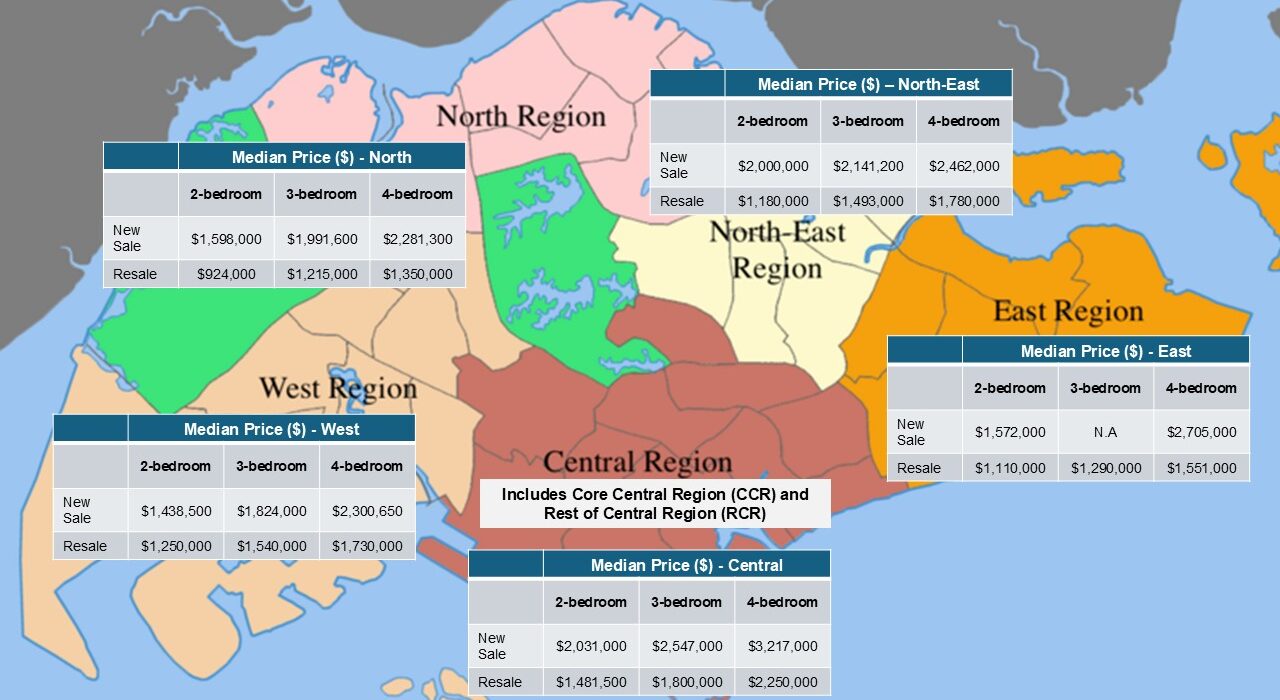
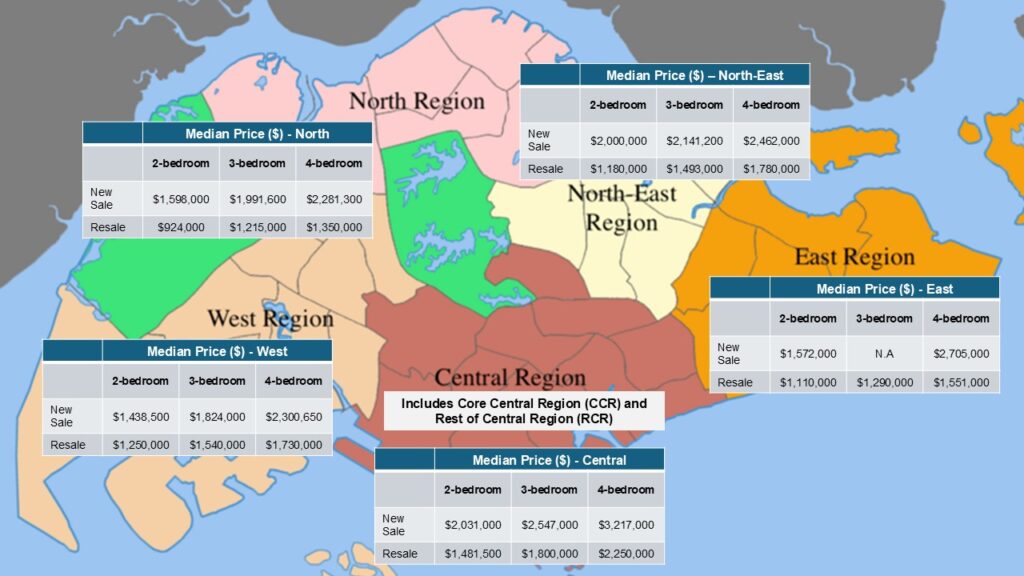
Median Private Property Prices in 4Q 2025

Why Saving Alone May Not Be Enough

Many aspiring homeowners focus solely on saving for a down payment. While discipline is admirable, cash savings face one major challenge: inflation.

With inflation averaging around 3% annually, money sitting in a low-interest savings account gradually loses purchasing power. Over time, the same amount of cash buys less property, not more.

This creates a gap between rising home prices and stagnant savings, even for consistent savers.

Costs of purchasing a home in Singapore

Property Value

Buyer Stamp Duty

25% Downpayment*

Legal Fees^

Total Capital Outlay

$500,000

$9,600

$125,000

$3,000

$137,600

$750,000

$17,100

$187,500

$3,000

$207,600

$1,000,000

$24,600

$250,000

$3,000

$277,600

$1,500,000

$44,600

$375,000

$3,000

$422,600

$2,000,000

$69,600

$500,000

$3,000

$572,600

$2,500,000

$94,600

$625,000

$3,000

$722,600

$3,000,000

$119,600

$750,000

$3,000

$872,600

$3,500,000

$149,600

$875,000

$3,000

$1,027,600

$4,000,000

$179,600

$1,000,000

$3,000

$1,182,600

$4,500,000

$209,600

$1,125,000

$3,000

$1,337,600

$5,000,000

$239,600

$1,250,000

$3,000

$1,492,600

*Based on minimum down payment ^Estimated amount.

How Investing Helps Close the Gap

Investing allows your money to grow at a faster pace than inflation over the long term. By putting your capital to work in the markets, you give yourself a better chance of keeping up with, or even outpacing property price growth.

Key benefits of investing for homeownership include:

  • Long-term wealth accumulation through compounding

  • Higher potential returns compared to cash savings

  • Flexibility to scale investments as income grows

Starting early makes a powerful difference. Even modest monthly investments can grow substantially over time when compounded consistently.

Building an Investment Strategy for Property Goals

A successful investment plan balances growth and risk. Markets naturally fluctuate, so short-term volatility is unavoidable. However, history shows that staying invested over the long term has rewarded disciplined investors.

To manage risk effectively:

  • Diversify across asset classes such as equities and bonds

  • Invest globally rather than relying on a single market

  • Match your portfolio risk level to your time horizon

A structured, long-term portfolio can support your property goals while reducing emotional decision-making during market swings.

The Power of Regular Investing

For beginners, a recurring investment plan can be a practical starting point. By investing a fixed amount monthly, you benefit from dollar-cost averaging, which helps smooth out market ups and downs over time.

Regular investing also:

  • Encourages discipline

  • Reduces the stress of timing the market

  • Fits naturally into monthly budgeting

As your income increases, you can gradually raise your investment contributions to accelerate progress toward your down payment target.

Laying the Financial Foundation for Your Future Home

Buying a home in Singapore is a long-term journey, not a last-minute decision. By combining smart saving habits with consistent investing, you build a stronger financial foundation and improve your ability to afford the home you truly want.

Whether your goal is your first flat, a larger family home, or a long-term upgrade, starting early and staying invested can make the difference between compromise and choice.

Your dream home is not just about location or layout — it is built on years of thoughtful financial planning.

Private Property Transaction Volume after Covid
CategoriesNews

4Q 2025 URA Property Statistics: Private Home Demand Stays Resilient

2025 URA Property Statistics: Private Home Demand Stays Resilient

Singapore’s private residential property market ended 2025 on a stable and confident note. According to the latest URA Real Estate Statistics for 4Q 2025, private home prices continued to rise, transaction volumes remained healthy, and buyer confidence carried through from the strong momentum seen in the third quarter.

While overall sales volumes moderated slightly due to fewer launches and the typical year-end slowdown, the underlying demand for private homes stayed intact. More importantly, the data points to a firm outlook heading into 2026, supported by controlled supply, stable economic conditions, and sustained owner-occupier demand.

For HDB upgraders, first-time private buyers, and long-term investors, the 4Q 2025 figures provide valuable insight into where the market stands today—and where it may be heading next.

Private Home Prices Continue a Steady Uptrend in 4Q 2025

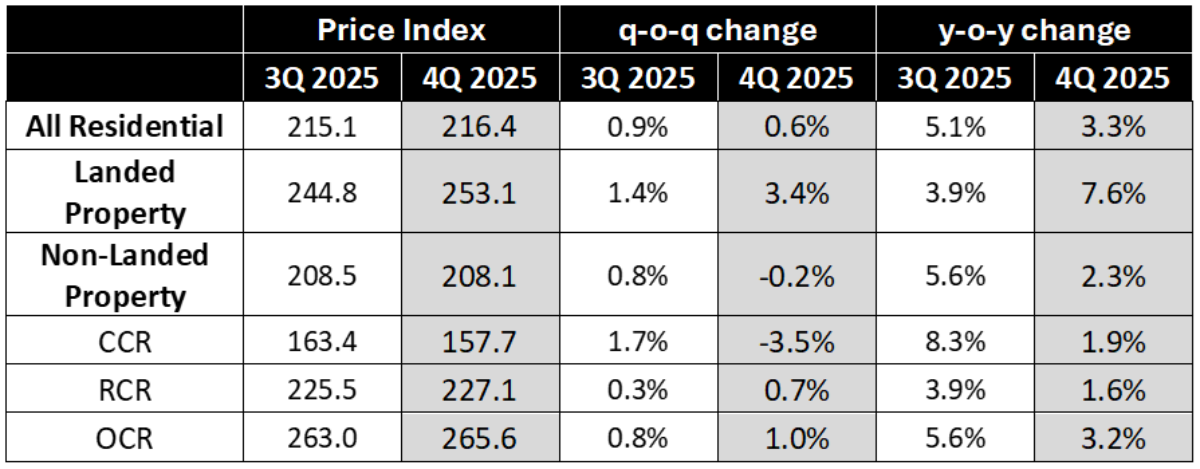
In the fourth quarter of 2025, Singapore’s All-Residential Private Property Price Index rose by 0.6% quarter-on-quarter, extending the growth seen in the previous quarter. While this was slightly slower than the 0.9% increase in 3Q 2025, it still marked the fifth consecutive quarter of price growth, reinforcing the market’s underlying stability.

On a year-on-year basis, private home prices rose 3.3% in 2025, with much of the growth driven by the landed housing segment. This gradual pace of appreciation suggests that the market is expanding in a controlled and sustainable manner, rather than overheating.

For buyers who have been waiting on the sidelines, the data shows that prices are not retreating—but neither are they surging aggressively. This environment tends to favour decisive buyers who are financially ready, rather than those hoping for sharp price corrections.

Transaction Volumes Dip Seasonally, But Full-Year Activity Remains Strong

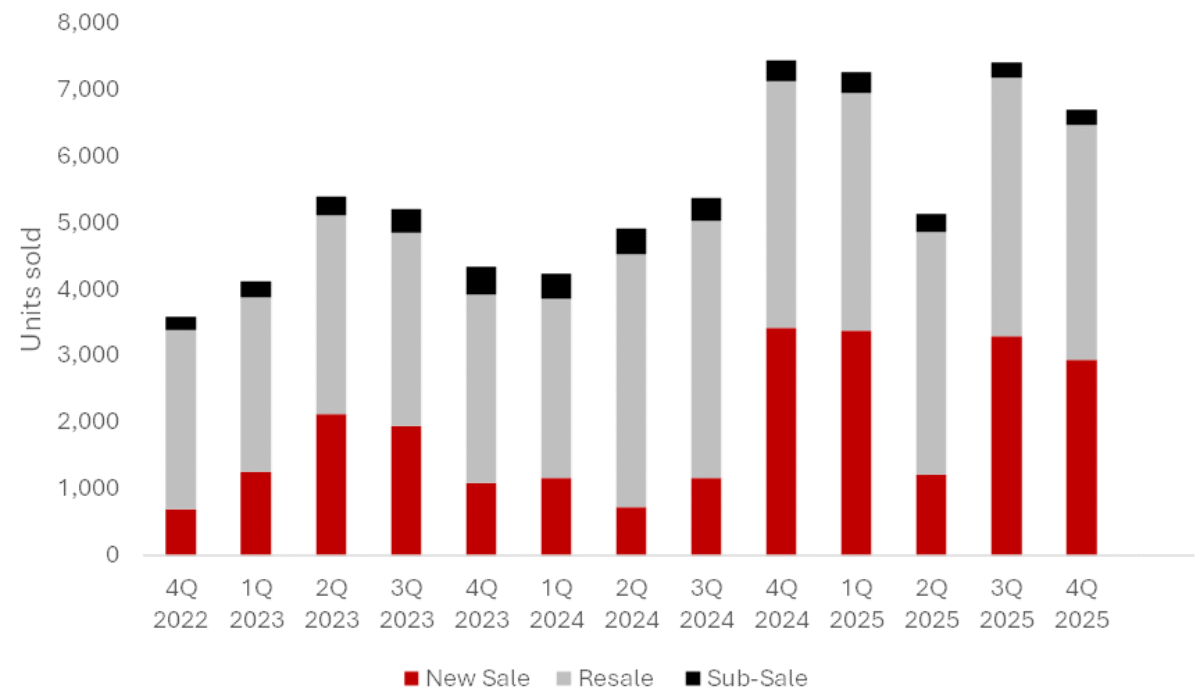
Private Property Transaction Volume after Covid
Private Non-Landed Transaction Volume

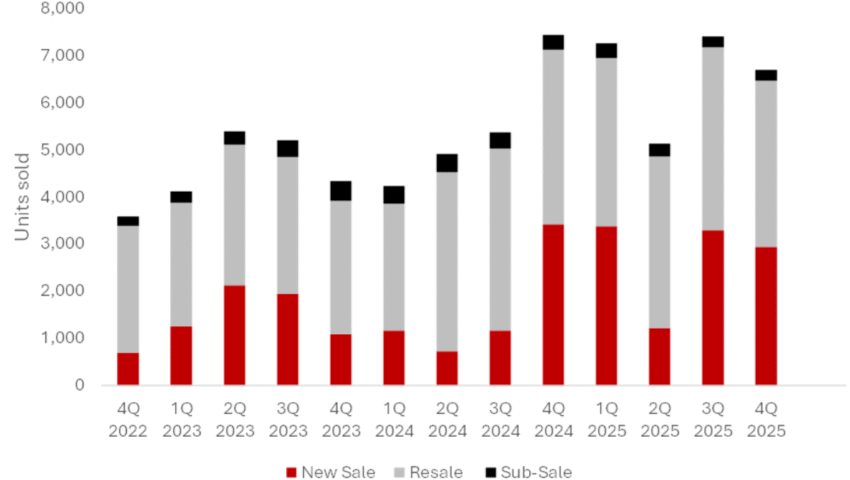
A total of 6,699 private home transactions were recorded in 4Q 2025, representing a 9.5% quarter-on-quarter decline. This moderation came after a very strong 3Q 2025, which saw heightened activity driven by eight major project launches.

The softer fourth-quarter performance was largely expected. Developers typically slow down launches toward the end of the year, and buyer activity often dips in December due to school holidays and year-end travel. Importantly, this was a seasonal slowdown rather than a demand-driven pullback.

For the full year, total private home sales reached 26,492 units, highlighting the resilience of Singapore’s housing market even amid global uncertainties earlier in the year.

New Home Sales Remain the Key Demand Driver

Despite fewer launches in 4Q 2025, the primary (new home) market remained robust. Developers sold 2,940 new private homes during the quarter, only a modest decline from the previous quarter’s strong showing.

Across the whole of 2025, 10,815 new homes were sold, making it the best-performing year since 2021. This reflects sustained confidence among buyers, particularly owner-occupiers who are less sensitive to short-term market fluctuations.

A key trend worth noting is the high take-up rates at launch. In 4Q 2025, four out of five new launches achieved over 80% sales on launch day. This mirrors the strong launch-day demand seen in 3Q 2025 and suggests that well-priced, well-located projects continue to attract immediate buyer interest.

For HDB upgraders, this highlights an important reality: desirable new launches do not stay available for long, especially when supply is limited.

Fewer Completions Are Pushing Buyers Toward New Launches

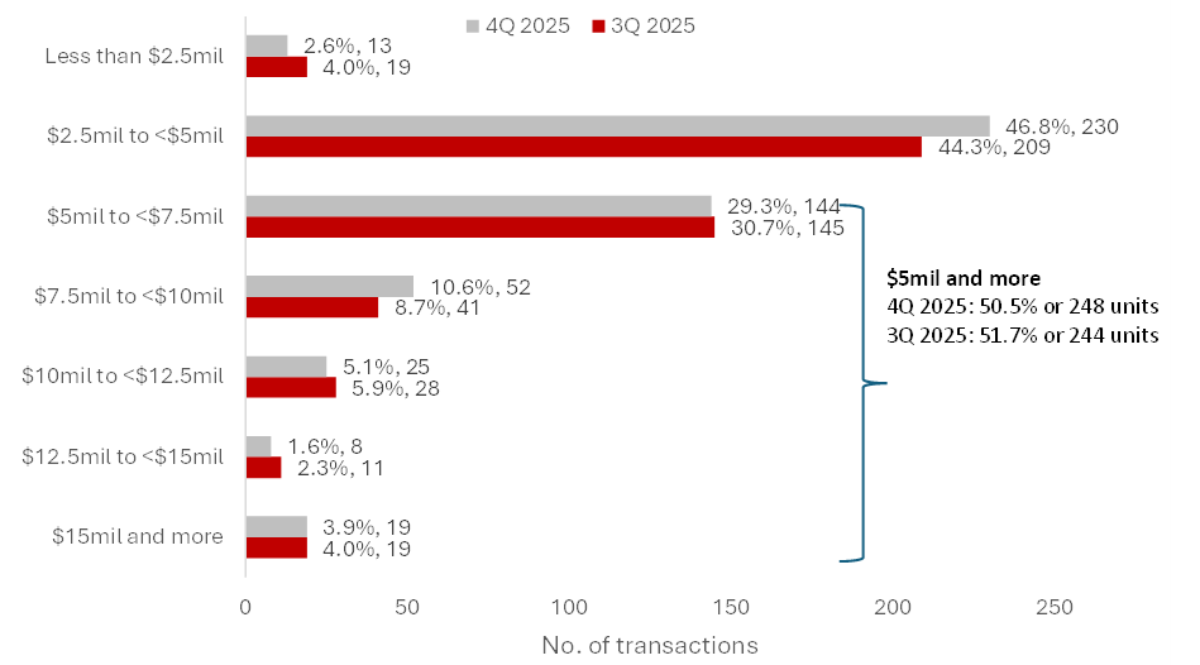
Private Property Transactions by Pricing
New Non-landed Home Transactions by Price Quantum

One structural factor shaping the market is the low number of private home completions. In 2025, only 6,123 private homes (excluding ECs) were completed, significantly lower than the 8,460 units completed in 2024.

This reduced completion pipeline has limited resale and sub-sale supply, pushing more buyers toward the new home market. As a result, developers with ready projects have benefited from spillover demand, especially in popular city-fringe and suburban locations.

This supply dynamic is expected to remain relevant in the near term, which helps explain why developers continue to enjoy strong sales momentum despite fewer launches.

Unsold Inventory Continues to Decline

Unsold Units declining
Declining No of Unsold Private Homes

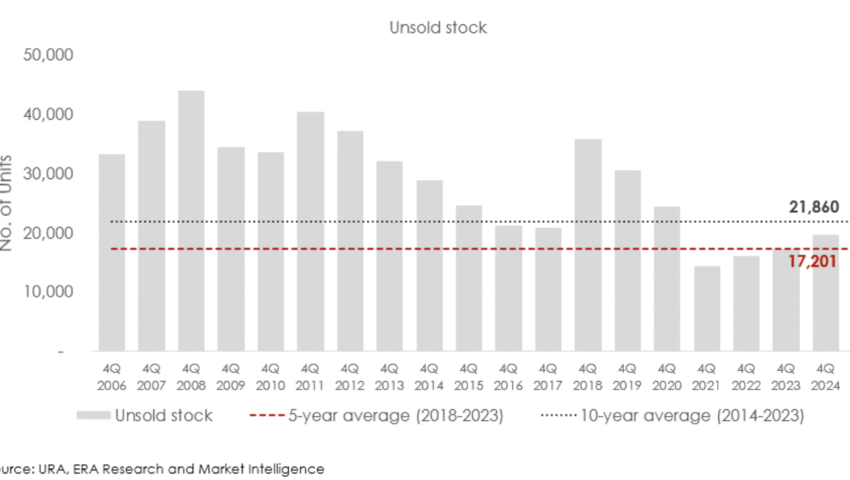
Unsold private residential stock fell 5.2% quarter-on-quarter to 16,193 units in 4Q 2025. This decline came even after several new projects were launched, reflecting healthy absorption rates across the market.

Lower unsold inventory levels generally support price stability, as developers face less pressure to discount aggressively. It also reinforces the idea that demand is keeping pace with supply, particularly for projects that align well with buyer expectations around pricing, location, and layout.

Non-Landed vs Landed Homes: Diverging Price Performance

Change in URA Private Property Price Indexes for 3Q 2025 and 4Q 2025

Non-Landed Homes See More Moderate Growth

Non-landed private homes recorded slower price growth in 4Q 2025, with prices edging down slightly after stronger gains in the previous quarter. This moderation was largely due to a smaller number of launches compared to 3Q 2025, when eight projects entered the market.

That said, price performance varied significantly by region.

Outside Central Region (OCR) non-landed homes saw the strongest growth, rising 1.0% quarter-on-quarter, supported by the strong performance of Faber Residence, which achieved over 90% sales during the quarter.

Rest of Central Region (RCR) prices rose 0.7% quarter-on-quarter, continuing the upward momentum from earlier launches such as Zyon Grand, Penrith, and The Sen.

Core Central Region (CCR) prices declined 3.5% quarter-on-quarter, ending four consecutive quarters of growth. This was largely due to lower transaction volumes, rather than weak interest, as pricing expectations between buyers and sellers temporarily diverged.

Landed Homes Outperform on the Back of Upgrader Demand

Landed Price Quantum 3Q 2025 versus 4Q 2025

The landed housing segment was a standout performer in 4Q 2025. Prices rose 3.4% quarter-on-quarter, accelerating from the previous quarter and marking the fourth consecutive quarter of growth.

On a year-on-year basis, landed home prices climbed 7.7% in 2025, significantly outpacing non-landed homes. This trend reflects growing interest from condominium owners who were able to upgrade as their property values appreciated.

Transaction volumes for landed homes also increased, with 491 transactions in 4Q 2025, bringing the full-year total to 1,852 transactions, an 11.2% increase over 2024.

Demand was particularly resilient in the OCR and RCR, where buyers found a better balance between space, affordability, and location. In contrast, CCR landed transactions slowed as higher prices led to a temporary standoff between buyers and sellers.

Resale and Sub-Sale Markets Hold Steady

The resale private home market recorded 3,529 transactions in 4Q 2025, a slight moderation from the previous quarter. However, full-year resale transactions totalled 14,622 units, largely in line with 2024 levels.

This consistency highlights the resilience of the resale segment, even as it competes with attractive new launches and faces seasonal slowdowns.

Sub-sale activity remained muted, with only 230 transactions in 4Q 2025. The limited number of new completions in 2025 reduced opportunities for sub-sale transactions, a trend that is likely to persist until completion volumes rise again.

Rental Market Begins to Stabilise

After several years of strong rental growth, the private residential rental market showed signs of stabilisation in 4Q 2025. The All-Residential Rental Price Index dipped 0.5% quarter-on-quarter, reversing the modest increase seen in the previous quarter.

Non-landed rents declined marginally, while landed rents saw a steeper adjustment. Despite this short-term pullback, overall private rents still rose 1.9% for the full year, indicating that rental demand remains structurally supported.

Looking ahead, a growing supply pipeline—combined with policies such as the extended occupancy cap—is expected to keep rental growth in check through 2026 and 2027. For tenants, this could translate into more stable and negotiable rental conditions.

Upcoming Launches in 2026: Supply Remains Managed

The new launch pipeline in 2026 is shaping up to be active but controlled. The year began with the successful launch of Coastal Cabana EC, which sold more than two-thirds of its units shortly after launch.

For the full year, around 19 private residential projects comprising approximately 9,852 units, along with five EC developments offering nearly 2,000 units, are expected to enter the market. These projects span the CCR, RCR, and OCR, catering to a wide range of buyer profiles.

The continued release of land through the GLS programme reflects the government’s commitment to maintaining a stable housing supply and preventing excessive price volatility.

Market Outlook for 2026: Stability with Moderate Growth

The slight pullback in transactions during 4Q 2025 does not signal a weakening market. Instead, it reflects a natural pause following an exceptionally strong third quarter and the usual year-end slowdown.

Heading into 2026, Singapore’s private residential market is expected to remain resilient, supported by:

  • Strong owner-occupier demand
  • Limited unsold inventory
  • Controlled supply from GLS sites
  • Stable employment and income conditions

Barring unexpected global shocks, new home sales in 2026 are projected to range between 9,000 and 10,000 units, while resale transactions are expected to remain in the 13,000 to 14,000 range.

For buyers, this suggests a market that rewards preparation and decisiveness rather than speculation. Prices are likely to trend upward gradually, making well-timed purchases more important than trying to time a market bottom.

Final Thoughts: What This Means for Buyers and Upgraders

The 4Q 2025 URA statistics confirm that Singapore’s private property market remains fundamentally healthy. Demand has proven resilient, supply is being carefully managed, and price growth continues at a sustainable pace.

For HDB upgraders, the ongoing strength in both resale HDB prices and private home demand presents a window of opportunity to transition into private housing with confidence. For first-time private buyers, the coming year offers a diverse range of new launches across different regions and price points.

As always, the key lies in understanding your budget, timing your move strategically, and choosing projects that align with both lifestyle needs and long-term value.

Springleaf New Launch Condo
CategoriesGuide News

Singapore Property Sales Report: What August 2025 Means for First-Home Buyers & HDB Upgraders

Singapore Property Sales Report: What August 2025 Means for First-Home Buyers & HDB Upgraders

Springleaf New Launch Condo

Buying your first home, or upgrading from an HDB flat, is a major decision. You want value, location, timing, future growth—and avoiding pitfalls. The latest developer sales results for August 2025 provide a compelling window into where the Singapore private housing market is headed. Here’s what you need to know, how to interpret the numbers, and what factors matter most for you.

Key Figures: Surge in Sales & What It Signals

In August 2025, developer sales in the private home (non-landed) segment (excluding Executive Condominiums, or ECs) jumped to 2,142 new homes sold. This is the highest monthly total since November 2024.

Compared to July 2025, that’s an increase of approximately 128%, and when measured year-on-year versus August 2024, it is over ten times as many units sold.

Including ECs, total developer sales were even higher (2,338 units) in August, reflecting continued interest in that segment from upgraders and those wanting more space while keeping cost more manageable. 

What’s fueling this surge? It’s largely driven by fresh new launches. Five major projects—Springleaf Residence, River Green, Promenade Peak, Canberra Crescent Residences, Artisan 8—accounted for about 88% of August’s non-EC developer sales. Also, the number of units launched in August rose sharply vs July (49% higher).

For first-home buyers and upgraders, this kind of momentum means more choices, more competitive pricing in some projects, and possibly better negotiating or timing windows—especially in projects that are less premium or slightly further out.

Breakdown by Region: CCR, RCR, OCR

Private New Home Sales Comparison
Private New Home Sales July vs August

When you’re upgrading from an HDB flat, where your new home is matters a lot: proximity to MRT / work / schools, neighbourhood quality, and long-term value. Here’s how things looked by region in August.

  • CCR (Core Central Region): 513 units sold in August—this is a strong rebound. CCR has been quiet in past months, but August saw demand rise significantly. Some of the headline projects here were River Green (451 units sold, ~86% of its total) with a median price around S$3,111 psf. Also, UpperHouse at Orchard Boulevard moved solidly.

  • RCR (Rest of Central Region, city-fringe): RCR had 476 units sold, a slight decrease from July but still showing strength. Projects like Promenade Peak (333 units sold) and Artisan 8 contributed. RCR gives a bit more space for money, often slightly lower quantum per unit but still fairly central. 

  • OCR (Outside Central Region, more mass-market / suburban): This region took the lead in volume in August with 1,153 units sold (non-EC). That’s a major jump from July’s OCR sales (which were very low). Projects like Springleaf Residence (884 of its 941 units sold, almost full take-up) and Canberra Crescent Residences sold well here. OCR is attractive for first-home buyers / HDB upgraders who need more space per dollar.

Pricing & Quantum: What Buyers Paid

One of the biggest concerns for HDB upgraders or first-timers is “How much will this cost me?“ Quantum (total purchase price), psf (price per square foot), and what portion of units in a launch are below certain thresholds, matter a lot.

Here are some of the numbers that stand out in August 2025:

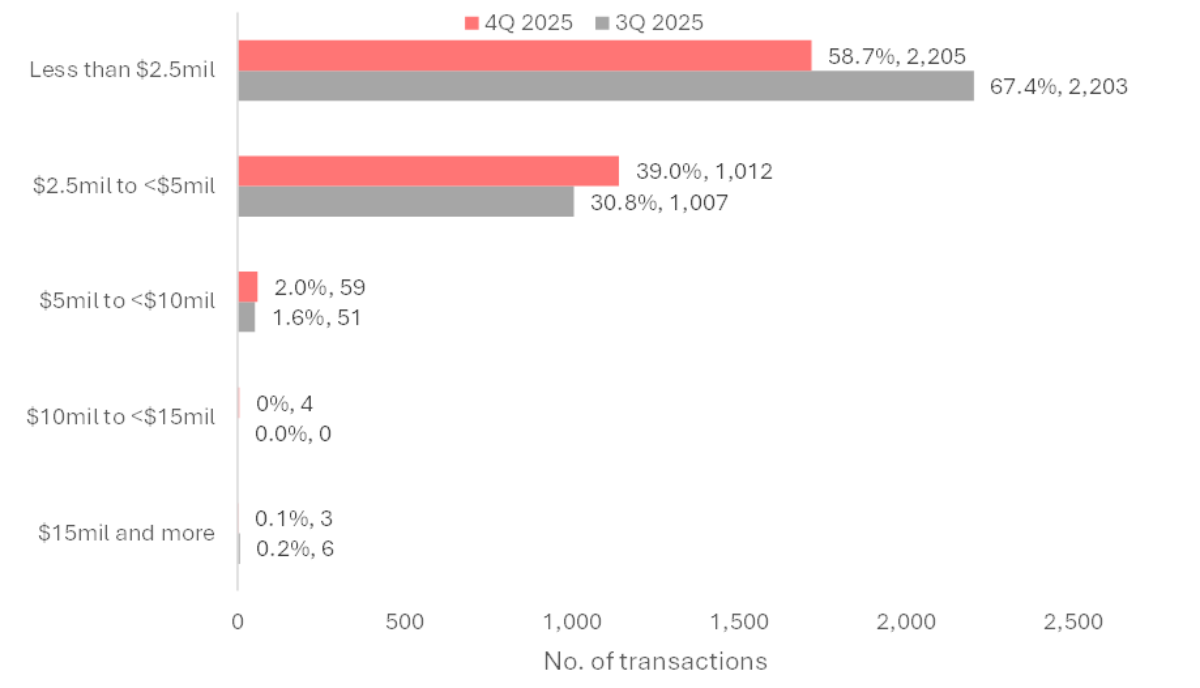
  • A large portion (around 79-80%) of units sold in the major new launches were priced below S$2.5 million. That means most of what people bought were mid-market range, not ultra luxury

  • Median psf in the OCR projects were generally lower. For example, Springleaf Residence had a median price of S$2,166 psf, Canberra Crescent Residences about S$1,991 psf

  • In CCR, median psf is much higher: River Green ~ S$3,111 psf; UpperHouse ~ S$3,353 psf, etc. 

  • For ECs, Otto Place EC continues to see strong demand. In August, 196 EC units were sold, nearly fully sold (Otto Place ~90% sold by end-August). Median price ~ S$1,760 psf. ECs remain attractive as a “step between HDB and private condo” option. 

So for HDB upgraders: if you’re considering private, OCR and RCR launches offer more affordable quantum for space; CCR demands premium, but may offer prestige or future capital appreciation.

Buyer Profile & Foreign Participation

Another key factor: who is buying? And how much foreign/PR participation is there? These affect policies, competition, and sometimes sentiment.

  • Singaporeans dominated buyer volume: in August ~ 90.6% of buyers were citizens. PRs made up about 8%, and foreigners only ~ 1.4%.

  • This means that most of the demand is from local owner-occupiers or upgraders, not foreign investors. For HDB upgraders, this reduces one element of external competition (though competition from other locals is still strong).

  • Price thresholds matter: many bought units under S$2.5M. Very few super-luxury units; even within CCR, a portion of units is priced more “affordably” (relatively) under that threshold. This pricing mix seems deliberate by developers to hit that “sweet spot” which many upgraders / first-homeowners aim for.

Price range ARTISAN 8 CANBERRA CRESCENT RESIDENCES PROMENADE PEAK RIVER GREEN SPRINGLEAF RESIDENCE Total
Below $1 mil6.7%1.4%0.0%0.0%0.9%0.6%
$1 mil to <$1.5 mil6.7%38.4%6.0%17.5%38.2%27.4%
$1.5 mil to <$2 mil53.3%45.5%38.1%44.6%25.3%34.6%
$2 mil to <$2.5 mil13.3%12.8%21.0%14.0%17.4%16.7%
$2.5 mil to <$3 mil20.0%1.9%6.9%18.2%14.3%12.6%
$3 mil to <$3.5 mil0.0%0.0%11.7%5.3%3.8%5.1%
$3.5 mil to <$4 mil0.0%0.0%6.6%0.4%0.0%1.3%
$4 mil to <$5 mil0.0%0.0%4.8%0.0%0.0%0.8%
$5 mil to <$7 mil0.0%0.0%4.8%0.0%0.0%0.8%
Total100%100%100%100%100%100%
Proportion below $2.5 mil80.0%98.1%65.2%76.1%81.9%79.4%

Timing & Launch Strategy: What August Tells Us

Lynderwoods showflat high demand
New Launch balloting

Timing of launches, especially around cultural dates and “quiet months,” is often underappreciated by buyers. August 2025 is illustrative:

  • Developers pushed out multiple launches before the Lunar Seventh Month (starts 23 August in 2025) to avoid the traditional lull. Auctions/launches drop during Ghost Month, typically less demand. 

  • As a result, projects like Springleaf Residence, River Green, etc., launched earlier in the month and captured buyer interest before the expected slowdown. That means timing your decision (and being ready when showrooms open) can make a difference.

  • The number of new units launched in August (for sale) was 2,496 (excluding ECs), significantly more than in July. That means more fresh inventory, more choice. 

So, if you’re a buyer, observing launch calendars, showflat previews, and being ready to act early matters a lot. Waiting for discounts may or may not work, depending on supply and demand.

What This Means for HDB Upgraders & First-Home Buyers

Putting together all the data above, what are the takeaways for people in your situation?

  1. Budgeting & Quantum Expectations
    If you’re upgrading from an HDB flat, expect that a private 2- to 3-bedroom in OCR or RCR may cost in the range of S$1.5M to S$2.5M (depending on location, amenities, psf). CCR options will generally cost more (often S$2.5M+). Make sure you include all additional costs (stamp duties, legal fees, renovations).

  2. Location vs Price Trade-Off

    • Want to stay close to the city, shorter commute? CCR or near MRT RCR homes are appealing but come at higher psf.

    • If you can compromise somewhat on location, OCR releases like Springleaf / Canberra Crescent offer much more space per dollar. For many upgraders, this is a sweet compromise.

  3. New Launch vs Waiting
    New launches in “good” projects are selling fast. If you find a project that matches your criteria, acting early helps. Missed launch may mean higher prices later or less favourable unit choices (higher floors, odd facing). But rushing without due diligence (on developer reputation, contract terms, connectivity etc.) could lead to regrets.

  4. Financing & Affordability
    Lower mortgage rates (or expectations thereof), stable income, and healthy loan-to-value (LTV) ratios are encouraging. But don’t overextend. Make sure monthly repayment fits comfortably with your other expenses. Also be aware of future maintenance, property tax, and renovation costs.

  5. Consider ECs (Executive Condominiums)
    ECs like Otto Place are appealing for upgraders who want private lifestyle features but at lower quantum. They offer a middle ground. Keep an eye on upcoming ECs (e.g. Coastal Cabana, Tampines Street 95) as they may offer good value.

  6. Policy Risks & Resale Potential
    Policies (like Additional Buyer’s Stamp Duty (ABSD), Loan-to-Value limits, cooling measures) can shift, especially for CCR and higher-quantum properties. Always leave room in your planning. Also, consider resale potential: homes nearer MRTs, good schools, good connectivity & amenities tend to retain or increase value better.

  7. Emotional & Lifestyle Factors
    First-home buyers often look for functionality: size, layout, amenities, travel time, schools. Upgraders may also value prestige, view, brand, or future resale. Be clear what’s your priority: are you buying to live or partly to invest? Does prestige matter, or maximizing usable space?

Risks & What to Watch Out For

While numbers are encouraging, not everything is perfect. Here are the risks:

  • Seasonality Slowdowns: After a strong August, slowing in September is expected, because of Ghost Month and fewer launches. That may temporarily relieve pressure, but could also mean fewer options.

  • Rising Costs: Land prices, construction costs, labour, materials—all continue to rise. That may force developers to raise asking prices or reduce “sweet-spot” units. If you wait too long, you may pay more.

  • Financing Headwinds: If interest rates rise, or bank policy becomes more conservative, your mortgage costs could go up. This impacts monthly cashflow.

  • Competition: Good projects (location + developer + pricing) are attracting many buyers. Getting in early helps, but you need to be ready with financing, decision-making, and possibly some flexibility.

What First-Home Buyers & Upgraders Should Do Now

To make the most of this market while minimizing risk, here are practical steps:

  1. Define Your Priorities Clearly
    Decide what matters most: commute time, school proximity, size vs prestige, view vs cost. Make a checklist.

  2. Set a Firm Budget
    Including not just purchase price, but stamp duty, legal costs, maintenance, renovations. Use mortgage calculators. Talk to lenders — get in-principle approvals so you know how much you can borrow.

  3. Monitor New Launch Calendars
    Keep an eye on upcoming projects: in August the launches drove most of the sales. Look at upcoming ones: Penrith, Zyon Grand, The Sen etc. These may offer units in your preferred region / price bracket.

  4. Be At Showflats Early
    Project showflats open, or preview, often before formal sales. Attending early lets you see unit facing, layout, offer schemes etc. Also, early applications sometimes get better units (lower storeys, better view).

  5. Understand the Lease & Tenure Differences
    Especially in CCR vs RCR vs OCR, lease tenure, freehold vs leasehold, and remaining lease life can affect value/resale. Also check developer reputation and track record.

  6. Negotiate & Compare
    Don’t accept the first offer without comparing similar projects (location, psf, amenities). Sometimes developers throw in perks (fitting, furniture, rebates). These can ease the burden.

  7. Plan for the Long Term
    Even if you buy to live, think about resale or rental potential, in case life changes. Proximity to future MRTs, master plan enhancements, or upcoming infrastructure will matter.

Looking Ahead: What to Expect in 2H & Into 2026

With the strong performance in August, what might the rest of 2025 and early 2026 look like for private new home launches and sales?

  • Experts now expect total new home sales (excluding ECs) for the full year 2025 to reach between 9,000-10,000 units, up from earlier forecasts of 8,000-9,000.

  • Several projects are expected to launch in Q4 2025: Penrith, The Sen, Zyon Grand, Faber Residence, Skye at Holland etc. Buyers should watch these closely.

  • Pricing pressure may increase, especially in CCR, as demand returns and land/construction cost increases persist. Developers will likely try to balance “quantum” appeal vs profit margin.

  • More units in OCR may be introduced to meet demand from upgraders and first-home buyers who want space/value. EC launches may be fewer; many upcoming EC projects are further ahead (Q1 2026 etc).

  • Policy environment is likely to remain stable but could be adjusted (e.g. ABSD, loan-to-value) if markets overheat. Buyers should monitor policy announcements.

Real-Life Examples: Projects That Could Be Good Fits

Here are some actual projects from August 2025 that may suit upgraders / first-home buyers. I’m selecting ones that combine good value, location, and realistic quantum.

ProjectRegionUnits & Take-UpMedian / Typical Price PSFWhat Makes It Attractive
Springleaf ResidenceOCR (Upper Thomson)~884 of 941 units sold (≈94%)~ S$2,166 psfLarge launch, strong take-up, fairly central, but more affordable than CCR; good if you want balance of space + accessibility.
Canberra Crescent ResidencesOCRSold ~211 units in month (56%)~ S$1,991 psfLower psf, decent project; good for upgraders who want lower quantum but modern amenities.
River GreenCCR (River Valley / Great World area)~451 units sold (≈86% of launch over time)~ S$3,111 psfVery premium; iconic location; great if you can stretch budget and want prestige.
Promenade PeakRCR~333 units sold (≈56% of units)~ S$2,919 psfCity-fringe option with RCR location; good middle ground if CCR quantum is too steep.
Otto Place ECEC segment~191 units sold in August; nearly sold out~ S$1,760 psfEC often has lower entry quantum; good stepping stone from HDB to private.

These help show what you can expect in real terms: where price per square foot will likely be, and how fast units sell in good projects.

Conclusion

August 2025 was a landmark month for Singapore private developer sales. For first-home buyers and those upgrading from an HDB flat, it brings renewed optimism: more launches, more units below S$2.5 million, and better options in OCR and RCR. CCR is also waking up again, though you pay a premium.

If you’re planning to buy soon, now is a strong moment: with good launches, competitive pricing, and healthy market activity. But don’t rush blindly. Clarify your budget, location priorities, unit type, and factor in all costs. Be ready for sales spikes, but also for quieter months ahead. With careful planning, you can pick a home that fits your needs, lifestyle, and financial comfort—both now and in the long-term.

Bayshore Road GLS Site
CategoriesGuide News

Vela Bay: A Landmark Breakthrough in East Coast Living

Vela Bay: A Landmark Breakthrough in East Coast Living

Bayshore Road GLS Site
Bayshore Residences Location map

<TLDR>

The Bayshore Road GLS site which will be called Vela Bay, launched by URA in November 2024 and closed in March 2025, drew eight bids, with Sing-Haiyi Garnet winning at S$658.9 million or S$1,388 psf ppr—setting a new suburban record. Boasting prime MRT access, sea-views, and located at the heart of the 60 ha Bayshore Master-Planned precinct, the site exemplifies strong developer confidence and pent-up homebuyer demand in a rejuvenating East Coast district.

1. The Site in Context: Location, Launch, and Scale

Launch and Tender Timeline
URA launched the Bayshore Road GLS site on 26 November 2024, with the tender closing on 18 March 2025.

Parcel Details and Yield

  • Land Size: Approximately 10,497.3 m² (or ~112,992 sq ft).

  • Gross Floor Area (GFA): Maximum of 44,089 m² (~474,570 sq ft), projected to yield around 515 private housing units.

This makes it a medium-scale, highly strategic GLS site, ideal for both major and mid-tier developers.

Location Bayshore
Region Outside Central Region (OCR)
Planning Area Bedok
Site Area 1.05 HA / 10,500 sqm (113,021 sqft)
Gross Plot Ratio 4.2
Land Use Zoning Residential (non-landed)
Maximum Gross Floor Area (GFA) 44,100 sqm (474,688 sqft)
Estimated Housing Units 515

2. Developer Competition and Record Bid

Intensity of Bidding
The tender attracted eight bids, marking the highest turnout for a private residential GLS since Jalan Tembusu in 2022.

Winning Bid Details

  • Winner: Sing-Haiyi Garnet (a JV between SingHaiyi Group and Haiyi Holdings) – S$658.9 million.

  • Land Rate: S$1,388 psf ppr.

Competitive Margin and Market Sentiment

  • The winning bid exceeded the next highest offer by a mere 0.8%, reflecting closely matched valuations.

  • Notably, business analysts also interpret the ~20% premium over some expectations as an indicator of developer confidence in this site’s potential.

3. Record-Breaking Suburban GLS Benchmark

New Highest Suburban GLS Land Rate
At S$1,388 psf ppr, this surpasses the previous OCR (Outside Central Region) record held by Clementi Avenue 1 (S$1,250 psf ppr) and slightly exceeds Lorong 1 Toa Payoh (S$1,360 psf ppr).

Blurring of Market Segments
The land rate even rivals those seen in RCR and CCR GLS plots—such as Zion Road (RCR) at S$1,202–1,304 psf ppr and Holland Drive (CCR) at S$1,285 psf ppr—indicating developers are increasingly valuing site merit over zoning labels.

4. Why the Fierce Developer Interest?

4.1 First Movers in a New Waterfront Precinct

Located in the 60 ha Bayshore precinct, this is the first private residential site released under a master plan aiming to deliver 3,000 private and 7,000 HDB flats (~10,000 new homes). Developers coveted the first-mover advantage in shaping this new East Coast estate.

4.2 Excellent Connectivity

  • Bayshore MRT Station, at the doorstep and part of TEL Stage 4, opened 23 June 2024, providing seamless access to Downtown and beyond.

  • Proximity to East Coast Parkway (ECP) ensures fast private-vehicle access to city center and Changi Airport (approx. 15-minute drive).

4.3 Lifestyle and Scenic Appeal

Some future units are expected to offer unobstructed sea views and direct access to East Coast Park, elevating their desirability.

4.4 Pent-up Demand from Upgraders and Investors

  • No significant private condo launch in Bayshore since Costa Del Sol (2000) or The Bayshore (~1990s), creating pent-up demand.

  • Potential buyers include:

    • HDB upgraders from Marine Parade and Bedok; around 2,012 flats will fulfill their MOP within two years, offering financial flexibility for condo upgrades.

    • Landed homeowners from enclaves like Kew and Sennett estates seeking modern, low-maintenance living.

    • Investors drawn by rental prospects and strong locational attributes.

4.5 Developer-Friendly Scale

The site’s modest yet substantial scale appealed to mid-tier developers with lower risk appetites, allowing for aggressive, yet manageable bids.

5. Site’s Value Drivers and Visionary Planning

5.1 Masterplan

Bayshore will be a new housing estate, planned as an extension of Bedok town. It is located along East Coast Park, with two MRT Stations (Bayshore and Bedok South) within the estate. Designated as a car-lite district, there will be a transit proximity corridor that acts as a community spine with sheltered walkways and cycling paths. The entire estate will inject approximately 10,000 new homes, of which around 30% is meant for private housing.  Bayshore is zoned as a car-lite precinct.

The Masterplan for Bayshore area is set to enhance overall connectivity and increase the availability of amenities in the area for residents, both existing and new. As a new estate, there will be smart and sustainable features, while the living environment will encourage active lifestyles and healthy living.

The plot is the first private residential site in the up-and-coming Bayshore precinct and an inaugural project under the Bayshore Master Plan.

5.2 Car-Lite, Sustainable Urban Design

The Bayshore MRT Station will serve residents, located just across the road. Being on the Thomson-East Coast Line (TEL), commuters can travel directly to Marina Bay, Orchard, Upper Thomson and Woodlands.

For drivers, there is direct access to major roads such as the East Coast Parkway (ECP) Expressway which directly connects to central Singapore within a 15-minute commute time and Changi Airport.

Additional cycling networks will be developed in-line with the government’s vision to develop a car-lite neighbourhood, while connecting Bayshore with Round Island Route and the upcoming corridor from East Coast Park to Changi Beach.

The Bayshore precinct has been designated as a car-lite development, featuring dedicated walking and cycling networks, wider pavements, and proximity to public transportation.

5.3 Green and Transit-Oriented Design

Plans include a 1 km public transit street, green corridors, and integration with Cycle Round Island Route, linking Bayshore to East Coast Park and Changi Beach.

5.4 Infrastructure Enhancements

LTA plans include a new flyover to ECP by 2030, a bus-priority transit corridor, cycling paths along the flyover, and improved connectivity to Bedok South MRT station (opening 2H 2026).

5.5 Community Amenities and Planning Synergies

SchoolDistance to site
Temasek Primary SchoolWithin 1km
Temasek Secondary SchoolWithin 1km
Bedok Green Primary SchoolBetween 1km to 2km
Bedok View Secondary SchoolBetween 1km to 2km
Victoria School (Secondary)Between 1km to 2km
Bedok South Secondary SchoolBetween 1km to 2km

Within a 1–2 km radius are educational institutions such as Temasek Primary, Secondary, and Junior College, and upcoming mixed-use developments above Bedok South MRT.

By 2026, another three stations (Bedok South, Sungei Bedok and Xilin) will be completed. This will provide residents with rail access to the Singapore University of Technology and Design (SUTD), the only university in the east.

6. Launch Price Forecasts & Market Impact

Expected Selling Prices
Analysts project launch prices from S$2,500–2,700 psf, with averages above S$2,800 psf depending on design and fit-out quality.

Broader Market Significance

  • The top bid surpassing recent RCR/CCR rates signals that location quality now trumps regional classification in developer assessment.

  • The sale reaffirms strong market resilience and renewed buyer sentiment since late 2024’s buoyant new home launches in Singapore.

  • From 2020 to 2024 September, the median price psf of non-landed homes in Bayshore, District 16 and OCR have increased by 29.7%, 30.5% and 24.7% respectively. The growth in all areas are relatively paced at the same rate, with District 16 leading the increase in prices.
Planning Area/DistrictMedian Prices of Properties in 3Q 2020Median Prices of Properties in 3Q 2024% Change in Median Price
Bayshore$1,161$1,50629.7%
District 16$1,161$1,51530.5%
Outside Central Region$1,318$1,64324.7%

However, prices in District 16 could have been propped up by new launches in the area, whereas median prices in Bayshore are based on recorded resale transactions given the lack of new projects.

7. Potential Demand/Buyer Profile

With the Bayshore area being largely undeveloped since existing projects launched more than two decades ago, the addition of 515 out of an estimated 3,000 new private homes leads major initiatives in rejuvenating the area.

The site could also potentially attract HDB upgraders given that an estimated 2,012 flats will also fulfil their MOP within the next two years. The median price of 5-room and 4-room flats of less than 15 years transacted in Bedok at $976,500 and $815,000 respectively from January 2024, which could contribute to the down payment for a new home in Bayshore.

The Bayshore area is located in proximity to numerous private landed housing enclaves, such as the Kew and Sennett Estates. Demand could come from the sizable population of landed home owners, with older owners seeking to right-size their homes, or from larger families who want to live in the same project.

The last new launch at Siglap Road (Seaside Residences) in April 2017 saw 70% of  released units sold at launch. With 60% of the buyers identified from the East, the new launch with an attractive location and pricing highlights the pent-up demand in the area.

Buyers who see owning a private property as a long-term investment may see this Bayshore development as a viable option. Although future HDB estates nearby in Bayshore are likely to be classified as Plus, they could still generate upgrader demand. This provides a potential exit strategy in the future, as they could then right-size if they choose to.

While we can expect strong demand for this estate, developers having a strategic unit mix will be crucial for Bayshore Road’s eventual developer to address the diverse needs of different buyer segments. This includes catering to investors seeking rental opportunities, landed property owners right-sizing from nearby enclaves like the Kew and Sennett estates, and families (including HDB upgraders) relocating from nearby Tampines and Bedok.

With the right unit mix and pricing, we can expect the future development to be poised to draw significant buyer interest from aspiring first-movers, as well as upgraders. Homeowners from the many nearby projects, which are at least 20 years old, may consider moving to a brand-new development with the same locational attributes and a refreshed lease.

8. Multitude of Opportunities to be Leveraged on by Developers

Older condos along East Coast Parkway have significant en bloc potential, however, they could be unsuccessful due to the development’s large size. Previous en-bloc efforts of Laguna Park have failed, with the most recent tender in 2019 at $1.48 billion closing with no applicants. Mandarin Gardens had also failed to secure the required 80% threshold. A successful en bloc launch of the development could have seen reserve price of $2.88 billion ($953 psf ppr).

The last GLS site along East Coast Parkway at Siglap Road (Seaside Residences) was awarded at $624 mil ($858 psf ppr) to the highest of eight bids in 2017. The site’s premium location boasting the unique characteristic of sea views could have attracted developers to contend for the site.

Bayshore Road site is one of the more attractive sites on the 2024 GLS Confirmed List. Having observed lukewarm responses for previous sites, developers could have withheld bids to attempt competing for Bayshore.

The palatable size of the development could also be an attractive attribute for smaller developers, which they can leverage on to place competitive bids with lower risks.

9. Developer Sentiment & Market Interpretation

Analyst Commentary on Bidding Behavior

  • ERA’s Marcus Chu noted strong developer interest due to site appeal and manageable size, leading to aggressive bids.

  • Knight Frank (Leonard Tay) emphasized that developers held back on other tenders to focus on Bayshore, given its attractive positioning.

  • PropNex’s Wong Siew Ying described the result as bullish, pointing to pent-up demand and first-mover advantage as key motivators.

Individual comments:

“With no new private homes in Bayshore for over 20 years… we may expect keen demand for the future project here when it is launched.” — Justin Quek, OrangeTee & Tie Singapore Business Review.

10. Developers Could Compete for First-Mover Advantage in New Township

The Bayshore Road site marks the first GLS site in Bedok since 2020 and Bayshore area since 1997, highlighting the scarcity of new private residential homes. Given its prime location next to an MRT station, developers are more willing to fork out a premium to secure the attractive site.

The upcoming Bayshore estate also draws similarities to the township development in Lentor whereby new launches in the area consecutively set the bar for future launch prices. It will be in the developers’ best interest to leverage on first-mover advantage in penetrating the market for private residential homes in Bayshore.

The wave of new launches in November garnered overwhelming response. Emerald of Katong achieved a record-high with 99% of the development sold, along with Chuan Park with 76% sales during its launch weekend. This strong indication of homebuyer optimism could translate to strong developer confidence in future GLS performance.

11. Future Outlook and Strategic Considerations for Developers

11.1 Importance of Unit Mix

To satisfy diverse buyer segments—investors, HDB upgraders, and right-sizers—developers must craft a strategic mix of unit types (e.g., compact 1-bedroom through family-oriented 4-bedroom units) and price points.

11.2 Phased Construction and Launch Timeline

Given land tender in March 2025, planning, permits, and construction suggest launches likely from late 2026 onwards, with completion over the early 2030s.
In parallel, HDB’s Bayshore Vista and Bayshore Palms (BTO) were launched in October 2024, and future precinct development will follow incrementally.

11.3 Positioning as a Signature East Coast Coastal Development

With its core attributes—sea views, seamless connectivity, and sustainable precinct design—the project has the potential to become a flagship in East Coast living.

12. Frequently Asked Questions

Q1: Why did the Bayshore GLS attract so many bids?
A: It combined a strategic location (MRT and ECP), sea-views, pent-up demand due to no major launches since 2000, and manageable parcel size—boosting developer confidence.

Q2: What are expected selling prices for new units?
A: Industry analysts estimate S$2,500–2,700 psf entry-level prices, with averages above S$2,800 psf, depending on design and finishes.

Q3: What infrastructure will support resident lifestyle?
A: Features include Bayshore MRT (TEL), ECP access, upcoming flyover and transit corridor, educational amenities, green pedestrian/cycling paths, and future mixed-use nodes.

Conclusion

The Bayshore Road GLS site attracted strong developer interest, with eight bidders competing in a highly competitive round. Sing-Haiyi Garnet had the highest bid of $658.8 million ($1,388 psf ppr), narrowly edging out the next highest bidder by 0.8%.

Despite headwinds faced by developers in the market, the Bayshore site is one of the land parcels many developers have been waiting for this year. The site’s allure and expected pent-up demand from buyers could give them confidence and provide the impetus for the aggressive bidding. Moreover, the plot’s palatable size could be draw for smaller-scale developers which resulted in the strong interest.

While bids amongst the top four bidders were aggressive, with a difference of 8%, there was a significant 35.9% gap between the lowest and highest bids. This reflects mixed market sentiments and the buying appetite of future buyers. Nonetheless, this site sets a new OCR land price benchmark, surpassing previous records in Clementi (now Elta) while being similar to Toa Payoh (now The Orie) in the RCR.

CategoriesNews

July–August 2025 New Launch Surge: What It Means for Buyers

July–August 2025 New Launch Surge: What It Means for Condo Buyers in Singapore

If you’re eyeing a new condo upgrade this year, things just got interesting. July 2025 saw a massive rebound in new private home sales. And if early August is anything to go by—you’re going to want to sit up and pay attention. More launches, strong take-up, and cooling price gaps between core and fringe zones are shaking up what buyers can expect. Here’s what’s really going on—without the fluff.

Lynderwoods showflat high demand
New Launch balloting

1. Sales Spiked—Why It Matters

High Transaction Volume in Aug 2025
Spike in Price and Volume in Aug 2025

In July, developers moved 940 new private homes (excluding executive condos)—a 245.6% jump from June and 63.2% higher year-on-year. That means buyers are back. Property demand is turning up the heat again.

And the action didn’t stop there. Early August saw three big launches—River Green, Promenade Peak, and Canberra Crescent Residences—sell over 900 units in just the first two weeks. We could see more than 1,500 total new home sales by end of August, the strongest monthly tally since late 2024.

2. Where the Buyers Are Coming In

Rest of Central Region (RCR) continued to shine, owning over half of July’s sales. LyndenWoods sold out 331 units at a median of S$2,463 psf with a stunning 97% take-up.

Meanwhile, Core Central Region (CCR) came roaring back. Projects like The Robertson Opus and UpperHouse at Orchard Boulevard together accounted for 357 units—CCR’s best monthly showing in over four years. Their median prices clocked above S$3,250 psf.

OCR demand was quieter—but that’s about to change as new launches like Canberra Crescent and Springleaf pick up steam.

3. What Drove the Buying Boom?

Declining New Home
Limited Supply in Singapore Property Market
  • Sweet-spot pricing: Many units were priced under S$2.5m, keeping them attractive even in CCR. About 73% of LyndenWoods units fell under that threshold.

  • Local buyer dominance: Singaporeans made up 86% of purchases, PRs about 12%. Foreign demand remains modest.

  • Luxury segment recovery: A handful of S$5m+ deals, including a duplex penthouse at 21 Anderson for S$52m, show high-end demand remains resilient.

  • Limited Supply: Declining New Home Supply with lower than average unsold units in the market.

4. What It Means for You (If You’re Upgrading)

SignalMeaning for Buyers
RCR launching strongJump early into fringe projects for better value
CCR comebackPrime luxury returns—value narrowing vs RCR
Strong local uptakeBe ready to move fast; months-long decision windows may be gone
August supply boostMore choices—but competition will be fierce

5. August Outlook and Beyond

Up and Down of Singapore's Private Housing Market
Price trend of Singapore Housing Market

Experts expect Q3 2025 to finish with 4,500 new units launched, and full-year developer sales (excluding ECs) could hit 8,000 to 9,000—way ahead of 2023 and 2024. That means more options and potentially more value—but prices are likely to hold firm.

Conclusion

July’s rebound tells us buyers are confident again. Whether you’re upgrading soon or planning ahead, the window is opening—but it won’t stay open forever. If you’ve been waiting on the sidelines hoping for prices to soften, you might be too late.

Pro tip: Start watching upcoming projects now, especially in RCR. Check developer pricing, sales pace, and compare PSF before making your move. Competitive launches are returning—and early buyers stand to gain.

CCR vs RCR Price Gap
CategoriesGuide tips & tricks

PSF Prediction Model: What Will 2025–2026 Launch Prices Really Be?

PSF Prediction Model: What Will 2025–2026 Launch Prices Really Be?

Introduction: Why Everyone’s Watching PSF in 2025

If you’re thinking about upgrading to a private condo or investing in a new launch unit, you’ve probably asked this: “Will PSF keep going up… or are prices about to correct?”

Since 2020, we’ve seen per-square-foot (PSF) prices in Singapore’s condo market climb aggressively. In 2023, many OCR launches were pushing $2,100 PSF. In 2024, even mass-market condos started inching toward $2,300 PSF. Now, in 2025, the biggest question is: what’s next?

That’s where the PSF Prediction Model comes in. Let’s break it down in simple terms, so you can see where the market is really heading — and what that means for you.

What Is PSF and Why It Matters

“PSF” stands for Price Per Square Foot. It’s the standard way Singapore measures condo prices. It is a tool to compare how a condominium’s pricing with its surrounding properties. Due to post-harmonisation, air-con ledges is no longer part of the floor-plan hence for newer properties in 2024 onwards, developers only include the “inside” space. The total non-inclusive space is around 6% of the property size.

For example, a 720 sqft in internal space of a 2BR size is actually 764 sqft which is the same as in the past. In fact, due to lifestyle habits, property sizes are actually bigger and less wasted space as compared to 10 years ago.

Due to post-harmonisation, it seems like there is a huge increase in PSF. The reality is after factoring the pre-harmonisation size, PSF have not increase by a lot.

The key is if you want to look at PSF as a comparison to know how expensive a property is, do ask:
1. Is this property pre or post-harmonization
2. Do an apple to apple comparison, compare pre to pre, post to post or convert from post to pre-harmonisation to give you the actual picture.

Why Are PSF Prices Still Climbing?

1. Land Costs Are Not Dropping

GLS (Government Land Sales) results in 2024 showed developers still paying top dollar. In fact, the Marina South and Zion Road sites were sold at bullish prices, pushing breakeven costs to over $2,400 PSF for some plots. Developers won’t sell at a loss — which means higher launch prices.

2. Construction Costs Are Still High

Manpower and materials haven’t gone back to pre-COVID rates. The BCA’s Construction Cost Index (Under Construction Demand, Tender Price Index & Construction materials) remains elevated in 2025. In fact, construction costs has risen by close to 40% for the past 10 years! This adds pressure on launch pricing.

3. Buyer Demand is Still Resilient

Despite ABSD and higher interest rates, certain launches like River Green Residences and Promenade Peak saw strong take-up. Singaporeans still want private property — and upgraders are leading the charge.

Inside the PSF Prediction Model (2025–2026)

We analysed over 70 new launches between 2022 to 2025 and compared them against GLS prices, construction data, URA zoning shifts, and buyer patterns.

🔮 Here’s What the Model Tells Us:

YearOCR Launch Avg PSFRCR Launch Avg PSFCCR Launch Avg PSF
2022$1,680$2,150$2,750
2023$1,930$2,380$2,890
2024$2,080$2,500$3,050
2025$2,200–$2,350$2,550–$2,750$3,100–$3,300
2026$2,300–$2,500$2,650–$2,850$3,200–$3,500

⚠️ Note:

  • CCR price growth is flattening — limited demand at $3,500 PSF.

  • OCR still has room to grow, especially near MRTs or growth nodes (Lentor, Tampines, Beauty World).

  • RCR will see the most action due to balanced affordability and upside.

CCR vs RCR Price Gap
Price and Opportunity Gap in CCR

In fact, looking at the price difference between RCR and CCR, we see the price difference has narrowed to an all time low. People want properties in RCR or in city fringes as it’s affordable and yet near to city centre. However with the strong demand in RCR and the lowering cost of CCR, people may shift to CCR instead.

What Buyers Miss When They Only Look at PSF

Let’s be real — PSF can be misleading if you’re not careful. A $2,200 PSF unit at 600 sqft might be cheaper than a $1,800 PSF unit at 1,000 sqft. You’re paying for layout, stack, view, and developer branding too. Moreover, buyers may compare a resale pre-harmonisation size and a new launch post-harmonisation size.

Use PSF to compare apples to apples — not blindly across all districts.

What Will Push Prices Higher (Even If the Market Slows)

✅ Future-Proof Zones

The URA Masterplan 2025 outlines new growth corridors in areas like:

  • Jurong Lake District

  • Paya Lebar Airbase

  • Tengah Park District

These areas will anchor RCR and OCR growth. Expect higher land bids and PSF growth once the supporting infrastructure is clearer.

✅ Shrinking Launch Supply

GLS supply is up — but launches are down. Many sites are still under planning or held by developers for future launches. This limited supply supports prices in the short term.

Buyer Psychology: FOMO, Safety, and First-Mover Advantage

In 2025, we see 3 major trends driving demand even at high PSF:

1. Fear of Missing Out

Buyers remember One Bernam and AMO Residence — people who hesitated missed $300k upside. That memory lingers.

2. Desire for Certainty

New launches come with 1-year defects warranty, progressive payment, and brand-new facilities. It gives peace of mind to first-time upgraders.

3. First-Mover Wins

Early birds who enter a launch (first 30% sold) often get the best prices. Later phases are launched higher — and set new benchmarks.

Case Study: 2 Buyers, Same Budget — Different Outcomes

Buyer A: Buys New Launch at $2,200 PSF

  • 2-Bedder, 667 sqft, Total: $1.467M

  • Pays only ~30% of the mortgage for the first 2 years

  • Expects completion in 2029

  • Can sell after MOP or enjoy appreciation from first batch valuation

Buyer B: Buys Resale at $1,900 PSF

  • 2-Bedder, 850 sqft, Total: $1.615M

  • Pays full loan immediately

  • Has to spend on renovation

  • Potential for slower appreciation due to surrounding resale prices

➡️ Who wins long term? Depends — but in a rising market, Buyer A often has the edge due to leverage, lower upfront cost, and newer facilities. Personal Opinion: Looking at historical trend, I’m still very certain Buyer A will win long-term. Refer to New Launch vs Resale Data over the last 10 years for statistics data.

So… Will PSF Crash in 2026?

Unlikely. Unless we see a major economic downturn, most signs point to slower growth, not a sharp fall. Developers are cautious but not desperate. And land costs are locked in.

The only thing that could cause prices to flatten is if buyers become more price-sensitive due to higher interest rates or economic pressure.


Final Thoughts: Is 2025 the Right Time to Buy?

If you’re waiting for prices to drop, you’re betting against land costs, construction, and demand — all of which are still trending up.

But if you can afford it, buying early in a launch still gives you the best odds for long-term capital gain.


🔍 Bonus: 3 Launches to Watch in Late 2025

  1. Zion Road GLS (RCR) — Potential riverfront icon, pricing from $2,700 PSF

  2. Tampines East (OCR) — Great for families, early pricing estimated ~$2,100 PSF

  3. Media Circle One-North (RCR) — For investors, great tenant pool, launching ~Q4 2025


Want to Know Which Launch Matches Your Budget?

Use our free Mortgage Affordability calculator or speak to our consultants for a tailored shortlist based on your income, timeline, and exit strategy.

HDB Price Trend and Number of Transactions
CategoriesNews

2Q 2025 Private & HDB Report: What Upgraders Must Know 🏡

Q2 2025 Private Residential & HDB Resale Report: What Upgraders Must Know

Singapore’s property market in 2Q 2025 remained remarkably resilient, even as transaction volumes softened. For upgraders planning the leap from HDB to private homes, these insights are essential in shaping your timing and strategy.

🔹 Private Residential Market: Prices Gain, Volumes Dip

Singapore Private Condominium Price Index Q2 2025
Private Condo Price Index 2012-2025

URA’s flash data shows private home prices up 0.5% quarter-on-quarter, reflecting steady demand despite 40.2% fewer transactions (4,340 units) compared to Q1 2025 

  • CCR units (Central Core Region) saw the strongest price rise at +2.3% q-o-q

  • OCR segment (Outside Central Region) grew 0.9% q-o-q

  • RCR region (Rest of Central Region) saw a mild 1.1% decline 

What’s behind it?

  • Calendar factors like elections and June school holidays slowed new project launches

  • Recent CCR projects—such as Bloomsbury Residences, One Marina Gardens, 21 Anderson, and Arina East—offered boutique, freehold options that drew discerning buyers 

On resale and sub-sale private properties:

  • Resale transactions fell 18.6% to 2,547 units

  • Sub-sale dipped 37.9% to 187 units

  • But resale prices still climbed 1.8% (median $1,749 psf), and sub-sale remained elevated (~$2,059 psf)

What this means for upgraders:

  1. Fewer new launches mean strong pricing on proven private homes.

  2. CCR remains the standout growth potential, especially boutique freehold offerings.

  3. Secondary market still offers attractive pricing if you’re ready to move fast.

🔹 HDB Resale: Record Prices, Tight Supply

HDB Price Trend and Number of Transactions
HDB Price Index & Transaction Volume 2022-2025

Meanwhile, HDB resale prices continue their steady climb, reaching an RPI of 202.8 (+0.9% q-o-q) in Q2 2025—marking 21 straight quarters of growth.

However, transaction numbers slid to 6,981 units (−5% y-o-y)—a seasonal lull amid holiday calm and the upcoming July BTO/SBF launches.

Key trends:

  • MOP supply hit a decade low, with only 6,974 flats eligible—an 11-year low—tightening central estate resale options.

  • A record 408 flats – mostly 4-room units in mature estates – crossed the $1 million mark.

  • Yet ~73% of flats remain within affordability range:

    • 50% priced S$500k–750k

    • 23% at S$250k–500k

Why it matters for upgraders:

  • Higher resale prices mean your HDB can generate more cashflow toward your private property deposit.

  • Low supply plus BTO/SBF delays makes timely resale action critical.

Why Fewer Transactions Didn’t Sink Prices

While overall demand eased slightly, steadfast demand in mature estates and a strong labour market helped support prices. Despite weaker economic forecasts, including Singapore’s 2025 GDP growth being revised down to 0–2%, unemployment remains low—providing stability for housing demand ERA.

Additionally, the upcoming July BTO and SBF exercises—which will add around 8,500 units across popular estates like Bukit Merah, Clementi, Toa Payoh, Tampines, and Simei—led some buyers to pause resale purchases, with many expected to return if they miss out on these flats.

MOP Supply Hits Decade-Low; Million-Dollar Flats on the Rise

Total Number of MOP Flats Upcoming
No of MOP Flats

Only 6,974 HDB flats will reach Minimum Occupation Period (MOP) in 2025—the fewest since 2014—limiting fresh resale supply, particularly in central estates. As a result, pricier homes stayed resilient: 408 flats sold for S$1 million or more in Q2 (4.4% of all transactions), up from 384 in Q1 and 236 a year ago. Notably, many were 4-room flats in mature areas, underscoring strong demand among home-upgraders and private-property right-sizers.

Despite luxury activity, three-quarters of resale flats remained within reach: 50% between S$500k–750k, and 23% between S$250k–500k, making them attractive to average-income buyers.

Policy Shifts Could Benefit Private Upgraders

Discussions are underway to abolish the 15-month wait-out period that requires private-home owners to wait before buying a resale flat. With MOP-supply set to surge in 2026–27, removing this rule could offer private-home owners greater flexibility to right-size

🔹 Market Outlook: Timing Is Everything

Private market:

  • 4,154 units expected in Q3 2025 (15 total launches in 2H), with CCR leading the recovery.

  • Expect steady sales momentum in RCR and OCR.

HDB resale:

  • BTO/SBF in July may temporarily relieve demand—but unsuccessful applicants may return to resale in 2H.

  • The 15-month wait-out period for downgrading private property owners may be scrapped soon—boosting flexibility for right-sizers.

What This Means for Home-Upgraders in 2025

  • Stable Price Growth: Expect HDB prices to rise around 3–6% annually, supported by low supply and steady demand.

  • Smart Entry Strategy: With fewer flats hitting MOP this year, competition for resale flats—especially in mature estates—is strong.

  • Watch July BTO/SBF Results: If unsuccessful, many buyers will re-enter the resale market, adding momentum.

  • Policy Relief Soon?: Removing the wait-out rule could ease private-home planners transitioning back to resale flats.

✅ Strategy Tips for Singapore Upgraders

ConsiderationWhat It Means
HDB resale pricingHigher sale value funds bigger deposits
Private launch timingGuard against supply dips in Q2, H2 recovery in Q3
CCR launchesIdeal for long-term private buyers
Policy tweaksWatch for wait-out period removal

🔹 Final Word

In Q2 2025, both private and HDB resale sectors showed strength—prices holding firm even as volumes softened. For home-upgraders, this offers clarity: leverage strong resale prices, time your purchase around launch cycles, and prepare to move decisively once supply picks up.

For upgraders eyeing a private property purchase, Q2 2025 was proof that HDB resale remains a resilient stepping stone. Whether waiting out BTO cycles, strategising timing, or preparing for policy loosening, the market today favors those who stay informed and act purposefully.

Ready to map your upgrade journey? Book a tailored strategy session at sgluxurycondo.com today.

Free 30 min Consultation Call
IT'S TIME TO DISCOVER
Your Dream Luxury Condo Home

CONTACT AGENT

Senior Realtor

JAMES LIM

Property Consultant & Analyst

Contact Us

FORM-ONE (footer and popup)

© 2025
SGLUXURYCONDO
ALL RIGHTS RESERVED.

USE OF THIS SITE CONSTITUTES ACCEPTANCE OF OUR TERMS OF USE AND PRIVACY POLICY